Transferring Breathing Training from Swimming: The Impact of Swimming Respiration on Running Breathing Rhythm
Introduction
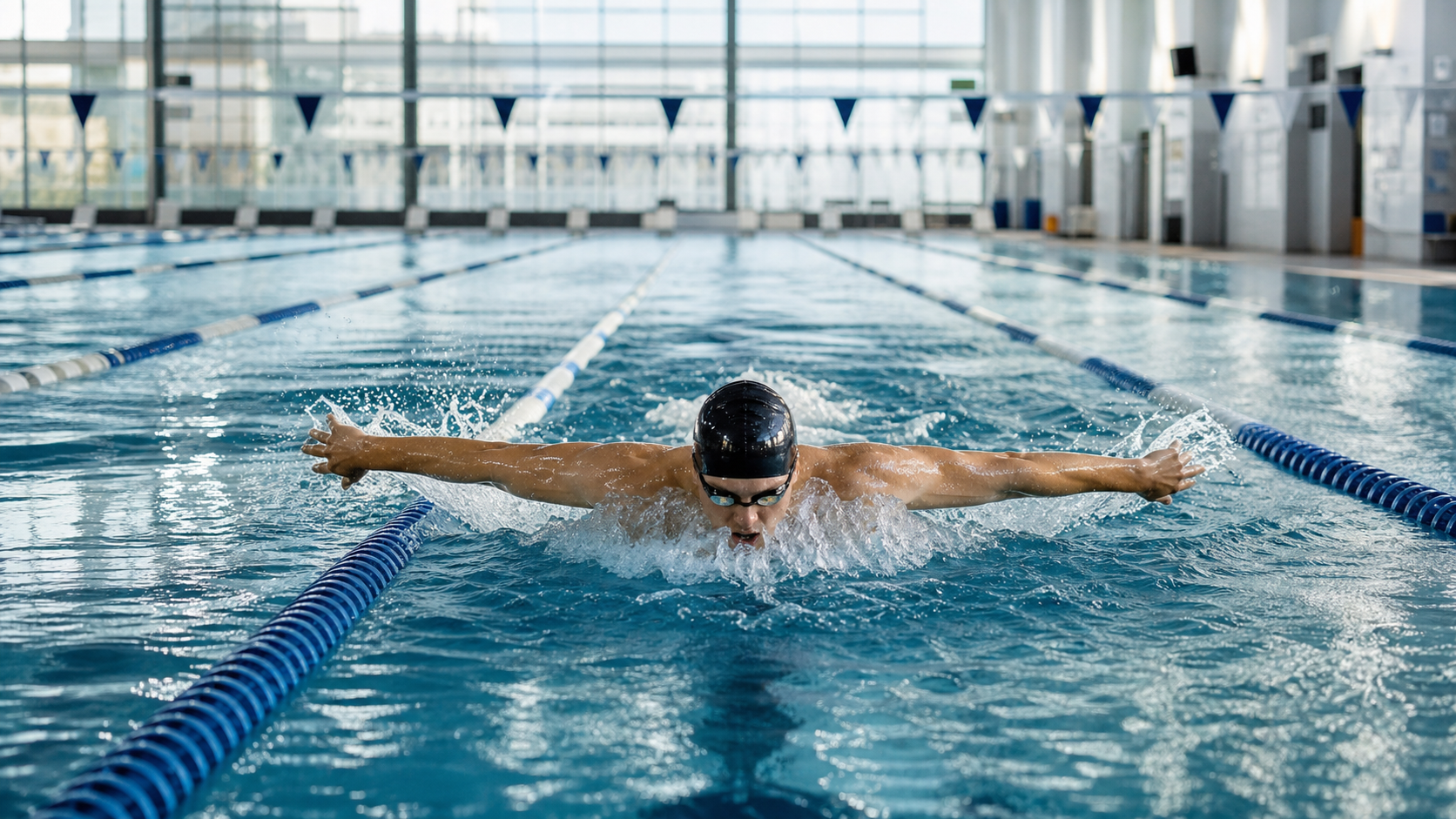
Among all endurance sports, swimming presents the most unique challenge to the respiratory system. In the water, athletes cannot “breathe anytime” like they can when running or cycling; instead, they must match their breathing to the stroke rhythm and complete quick, efficient breaths at specific moments. This forced breathing training, over the long term, can significantly strengthen the power and coordination of the respiratory muscles, and these improvements can manifest as increased efficiency in land-based sports.
The Physiological Uniqueness of Swimming Respiration
The Constraints of the Breathing Window
The breathing motion in freestyle swimming is completed in approximately 0.3–0.5 seconds, which means:
- Exhalation and inhalation must alternate within an extremely short time frame
- The diaphragm and intercostal muscles need to contract quickly and forcefully
- Breathing timing must be highly coordinated with the stroke rhythm
In contrast, breathing during running and cycling is virtually unrestricted by time, so the “forced training” effect on the respiratory muscles is far less pronounced than in swimming.
The Unique Training of Underwater Exhalation
When swimming, after the face enters the water, continuous underwater exhalation (breathing out) is performed. This action:
- Trains the diaphragm to exhale against resistance (water pressure)
- Gradually enhances the strength and endurance of the respiratory muscles
- Reduces carbon dioxide accumulation in the “dead space,” improving ventilation efficiency
Transfer Benefits of Swimming Breathing Training to Land-Based Sports
Enhanced Respiratory Muscle Strength
Research shows that regular swimming training can significantly improve maximum inspiratory pressure (MIP) and maximum expiratory pressure (MEP), two indicators directly related to ventilation efficiency during high-intensity exercise.
| Respiratory Muscle Indicator | Untrained Individuals | Improvement After 8 Weeks of Swimming Training | Impact on Land-Based Sports |
|---|---|---|---|
| Maximum Inspiratory Pressure (MIP) | Baseline value | 15–25% improvement | Deeper and faster inhalation at high intensity |
| Maximum Expiratory Pressure (MEP) | Baseline value | 10–20% improvement | Effective CO₂ removal, delaying the sensation of lactate buildup |
| Respiratory Muscle Endurance | Baseline value | Significant improvement | Breathing less likely to “break down” in the later stages of long runs |
Improved Breathing Symmetry Through Bilateral Breathing
Many runners have a habitual unilateral diaphragmatic breathing tendency while running (always inhaling when the same foot lands), which can lead to asymmetrical body rotation and, over time, increase the risk of hip or knee injuries. Practicing bilateral breathing in swimming (alternating direction every 3 or 5 strokes) can:
- Train balanced development of the respiratory muscles on both sides
- Improve left-right coordination and symmetry of the body
- When transferred to running, promote an even stride rhythm
Training Carbon Dioxide Tolerance
The restricted breathing inherent in swimming naturally enhances an athlete’s tolerance to rising blood CO₂ levels (hypercapnic tolerance). High CO₂ tolerance means:
- A higher threshold for feeling “out of breath” while running
- The ability to maintain rhythmic breathing at higher intensities
- Faster recovery during high-intensity intervals (more efficient CO₂ clearance)
Cross-Discipline Application of Breathing Rhythm
Running Breathing Rhythm
Research suggests that runners adopt “rhythmic breathing”—adjusting breathing to a fixed stride ratio, such as “inhale for 3 steps, exhale for 2 steps” (3:2 pattern). The rhythmic breathing habits developed through swimming training can help runners more naturally find and maintain this rhythm.
Deep Breathing Application in Cycling Climbs
On steep climbs, cyclists often revert to rapid, shallow breathing. The “quick but deep breathing” ability cultivated through swimming training can help maintain a deeper breathing depth during climbs, increasing the volume of air exchanged per breath and delaying the point of blowing up.
Practical Swimming Workouts for Breathing Training
Progressive Breath-Limiting Training
The following are swimming drills specifically designed to strengthen the respiratory muscles:
- Normal breathing set (warm-up): 100m, breathing every 2 strokes
- Restricted breathing set 1: 100m, breathing every 3 strokes
- Restricted breathing set 2: 100m, breathing every 5 strokes (intermediate)
- Extreme breathing set: 50m, breathing every 7 strokes (advanced, experienced swimmers only)
- Recovery set: 100m with normal breathing to recover
Important safety reminder: Breath-limiting training is not the same as breath-hold swimming. If you experience any signs of dizziness or blurred vision, stop immediately and return to normal breathing. Excessive breath restriction in deep water carries the risk of shallow water blackout. A lifeguard must be present, and beginners are advised against extreme breath-limiting training.
Practical Recommendations
- Breathing assessment for runners: Observe your breathing while running—if you feel breathless even during easy runs, it may be a sign of insufficient respiratory muscle strength. Adding 2 swimming sessions per week is the best remedy.
- Habit of counting breaths in swimming: Consciously count your breathing frequency during each swim, gradually progressing from “breathing every 2 strokes” to “breathing every 3 strokes”—this is the most direct way to improve breathing efficiency.
- Avoid high-intensity breath-limiting training before races: In the two weeks leading up to a race, return to a normal breathing frequency so your body can approach the event with the most relaxed breathing pattern.
Conclusion
Breathing training in swimming is a severely underestimated cross-discipline benefit. For runners and cyclists, a few swimming sessions each week not only enhance aerobic capacity but also quietly build greater cardiorespiratory efficiency on the invisible level of breathing. The next time you feel your breathing remains steady in the latter half of a marathon, or you’re no longer gasping for air as if suffocating on a climb, those changes may well come from the breathing drills you’ve done time and again in the pool.
Related Reading
- Swimming Lung Capacity Training: The Physiology of Breath-Hold Drills and Breathing Rhythm
- The Respiratory Physiology of Swimming: The Relationship Between Breathing Rhythm and Blood Oxygen Saturation
- Swimming as Respiratory Training: Lung Capacity and Asthma Improvement
- Swimming Breathing Pattern Training: Building Tolerance with 3-Stroke and 5-Stroke Breathing
#公路車 #Vo2Max #最大攝氧量 測驗 體驗 | 心肺測試
6 年前
實景訓練台) 彰化經典百K 高強度喵團 90分鐘 跟著一起練功 2019 Indoor workout Changhua Classic 100 Taiwan
7 年前
西進武嶺 免費訓練分析服務 Intervals | 練不夠還是練過頭?你哪一種類型選手?AI模型告訴你! | 備戰神器 | 公路車 訓練 | CT Yeh
4 年前
2025 海鷗團體繞圈賽 網路直播 超激烈裁判長視角 / EIPC 李廷威、Waypoint 等眾多高手競爭 / feat. 卡密兒主持 / 海鷗繞圈賽
9 個月前
戰略) Zwift Race 如何咬在第一集團 如何評估自己要開多少推力 (請開1.5倍速看)
7 年前
2023桃園團體繞圈賽 / 海鷗繞圈賽 | 全程空拍數據版 | 公路車 | CT Yeh
2 年前
靠單車減肥35公斤 心得分享與整理
7 年前
[教學] Premiere 影片 手震 修正 教學 防抖 單眼 影像 GoPro 穩定 Video Stabilization
8 年前