Introduction
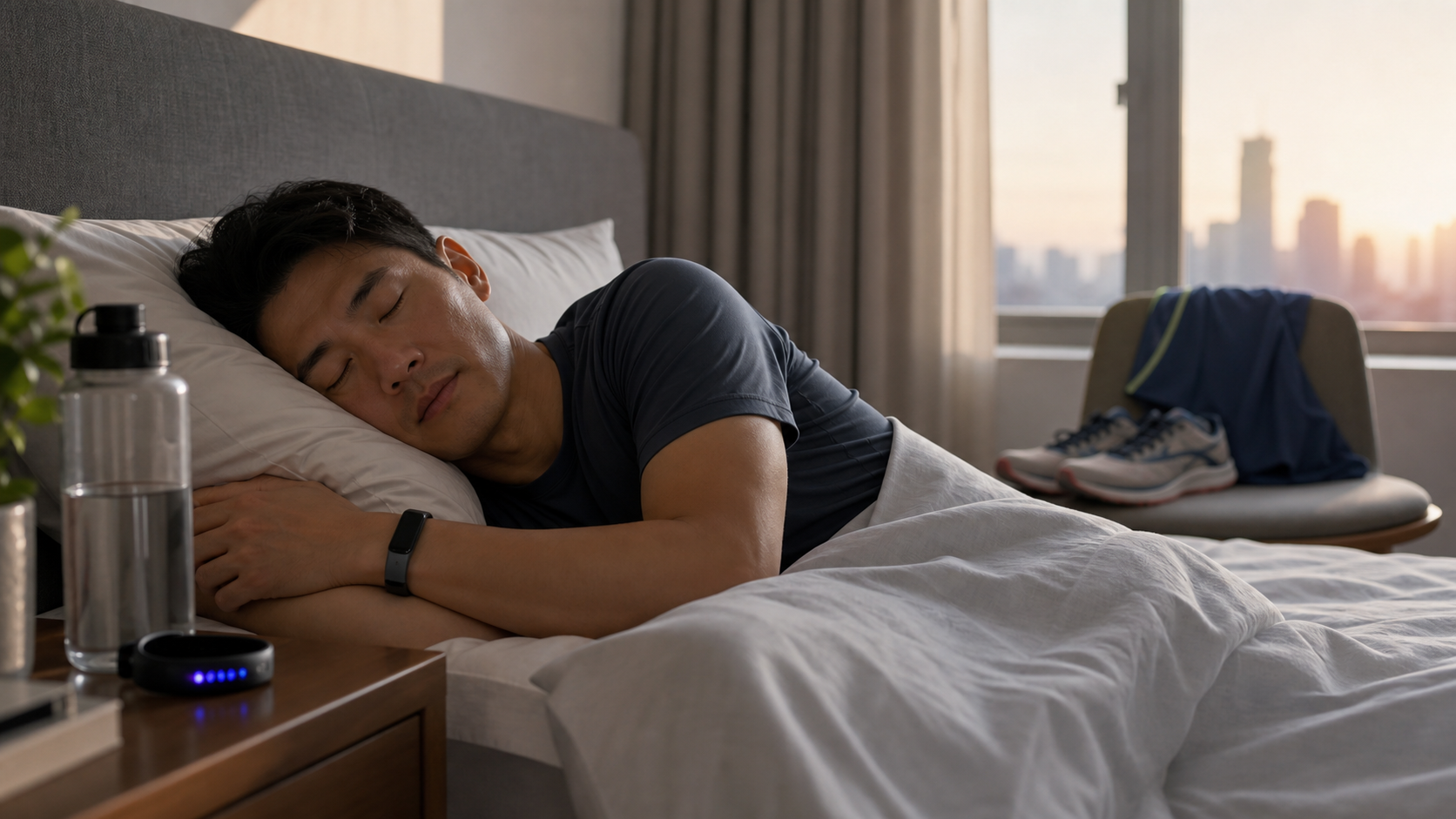
If you were asked, “What is your most important training session each day?”, most runners would answer with some kind of running workout. But the sports science answer is: sleep.
The benefits of training don’t occur during the workout itself, but during recovery—and the core of recovery is sleep. 70–80% of growth hormone secretion is concentrated in deep sleep; muscle protein synthesis peaks during sleep; and the repair of neuromuscular fatigue is also largely completed during deep sleep.
Now, wearable devices give us the first opportunity to quantify this process.
The Physiological Structure of Sleep and Its Relationship to Running Recovery
A complete sleep cycle lasts about 90 minutes and includes:
| Sleep Stage | Proportion | Primary Recovery Function |
|---|---|---|
| Light Sleep (N1/N2) | 50–60% | Memory consolidation, clearance of metabolic byproducts |
| Deep Sleep (N3, Slow-Wave Sleep) | 15–25% | Growth hormone secretion, muscle repair |
| REM Sleep (Rapid Eye Movement) | 20–25% | Emotional regulation, motor memory integration |
For runners, the deep sleep percentage is the most critical metric—after a night following high-intensity training, the body typically automatically increases the proportion of deep sleep to meet repair demands.
A Guide to Interpreting Garmin Sleep Monitoring
Accuracy of Sleep Staging
Garmin uses accelerometer and heart rate variability (HRV) data to estimate sleep stages. Research comparing it to the gold standard of polysomnography (PSG) shows:
- Total sleep time error: ± 20–30 minutes
- Deep sleep detection accuracy: approximately 60–70% (tends to underestimate; actual deep sleep may be greater)
- Reliability for trend tracking: good (reliably reflects changes in trends)
The key point: Don’t treat a single night’s numbers as absolute truth; instead, track multi-week trends.
Interpreting Key Metrics
1. Sleep Score (0–100)
- 80–100: Excellent, good training recovery
- 60–79: Normal, proceed with planned training
- 40–59: Low, consider reducing the day’s training intensity
- < 40: Poor, recommend active recovery or rest
2. Deep Sleep Duration
- Recommended target: at least 1 hour per night (15–20% of total sleep)
- After high-intensity training, deep sleep typically increases naturally the following night
3. HRV (Heart Rate Variability)
HRV is one of the most sensitive indicators of sleep recovery status:
- Higher HRV (relative to personal baseline): autonomic nervous system recovery is good, can handle greater training load
- Lower HRV (for 3+ consecutive days): fatigue is accumulating, should reduce intensity
Garmin’s “Body Battery” feature integrates sleep quality, HRV, and activity data to provide a recovery score from 0–100, serving as a practical guide for quickly determining training intensity.
Practical Approaches to Using Sleep Data to Guide Training Load
Daily Decision Matrix
| Sleep Score | Body Battery | Recommended Training Intensity |
|---|---|---|
| ≥ 80 | ≥ 70 | Train as planned; high-intensity sessions can be performed |
| 60–79 | 50–70 | Normal training; avoid additional intensity |
| 40–59 | 30–50 | Reduce intensity by 20–30%, or switch to an easy run |
| < 40 | < 30 | Switch to active recovery (walking, yoga) |
Sleep Management for Important Races
1 week before the race:
- Go to bed 30–60 minutes earlier to increase sleep opportunity
- Avoid alcohol (disrupts deep sleep) and caffeine (stop after 2 PM)
- The quality of deep sleep in the final 2 nights before the race has the greatest impact on race performance
The night before the race:
- Don’t force yourself to “sleep well”—pre-race anxiety causing light sleep is very common, and research shows that mild sleep deprivation the night before has a very small impact on next-day performance
- What matters more is adequate sleep 2–3 nights before the race
Post-race recovery period:
- For the first 1–3 nights after a race, sleep quality is often poor (due to elevated cortisol and adrenaline levels); this is normal
- It’s recommended to allow yourself to sleep 30–60 minutes longer after a race
Runner-Specific Strategies for Improving Sleep Quality
- Impact of training timing: High-intensity training performed after 8 PM can delay sleep onset and reduce the proportion of deep sleep. It’s recommended to schedule high-intensity sessions in the morning or afternoon
- Post-run body temperature management: Taking a warm shower (rather than a cold bath) after training helps with the body temperature drop following heat dissipation, promoting sleep onset
- Carbohydrates and sleep: Moderate carbohydrates at dinner (as a precursor to serotonin synthesis from tryptophan) may help with falling asleep, but excessive amounts can impair sleep quality
- Screen management before bed: Blue light suppresses melatonin secretion; it’s recommended to stop using your phone and computer 60 minutes before bed (or use night mode)
Special Challenges for Taiwanese Runners
Taiwan’s summer heat and high humidity mean ambient temperature is a major killer of deep sleep. Research shows the optimal sleep temperature is 18–22°C. In summer, without air conditioning, the proportion of deep sleep drops significantly, which partly explains why Taiwanese runners generally experience poorer recovery during summer training.
Practical Recommendations
- Set a consistent bedtime and wake-up time, including on weekends—the regularity of your circadian rhythm matters more than total sleep hours
- Body Battery < 40 for 3+ consecutive days is a signal to enforce a recovery week
- Don’t impulsively increase training volume just because your “sleep score is high”—sleep score is only one of many recovery indicators
Conclusion
Sleep data is the most honest entry on your training calendar. When you continue high-intensity training after consecutive nights of sleep deprivation, you’re not progressing—you’re depleting your reserves. Treat sleep as part of your training, and your body will reward you with faster progress.
Related Reading
- Sleep and Running Recovery: Growth Hormone Secretion and Muscle Repair During Deep Sleep
- Sleep and Road Running Recovery: The Scientific Impact of Sleep Quality on Repair
- The Science of Sleep for Road Running: How Deep Sleep Accelerates Muscle Synthesis and Motor Memory Consolidation
- The Science of Sleep for Road Runners: The Link Between Deep Sleep and Training Adaptation
西進武嶺 免費訓練分析服務 Intervals | 練不夠還是練過頭?你哪一種類型選手?AI模型告訴你! | 備戰神器 | 公路車 訓練 | CT Yeh
4 年前
Garmin Edge 1050 旗艦車錶 全台首測!/ 環法冠軍指定 / 對比Edge 1040改進哪些? / 公路車 / CT Yeh
2 年前
2026 車錶排行榜!誰是最多車友正在使用?練家子最愛哪款?🏆 (2萬名車友數據) / 公路車 / CT Yeh
5 個月前
全台首發神車錶! iGPSPORT iGS630 兩趟一日北高的續航! 超強導航、功率訓練、超人性APP! Garmin & Bryton 有對手了嗎? | 公路車 |CT Yeh
3 年前
2025 自行車錶排行榜 兩萬車友大數據 / Garmin Bryton 排名會大洗牌嗎? / 全新的碼表前身分析 /公路車 / CT Yeh
1 年前
單車AI教練!全新 ChatGPT4o 幫你分析訓練成果!排武嶺課表,分析騎車姿勢! 太神了! / 公路車 / CT Yeh / feat. 緯緯
2 年前
CT暗黑廚房) 車友必備 宇宙無敵鮮蚵湯 幫助訓練恢復 天然食補 好市多 超肥鮮蚵 破PR
7 年前
#公路車 #Vo2Max #最大攝氧量 測驗 體驗 | 心肺測試
6 年前