Complete Guide to Bicycle Chain Maintenance: When to Use Dry Lube vs. Wet Lube and How to Do It Right
Introduction
The lifespan of a bicycle drivetrain largely depends on how well the chain is maintained. A well-maintained 11-speed or 12-speed chain can last 3,000–5,000 km under typical riding conditions in Taiwan. In contrast, a chain that is neglected or lubricated incorrectly may show noticeable wear after just 1,500 km, accelerating wear on the chainrings and cassette as well — and the eventual replacement cost far exceeds the price of a bottle of lube.
Bicycle chain lubricants on the market generally fall into two categories: dry lube and wet lube, each suited to different conditions and application methods. Many riders find it confusing to choose between them, so this article systematically explains the differences and offers practical recommendations for Taiwan’s four seasons.
Characteristics and Ideal Use Cases for Dry Lube
Dry lube is typically wax-based or PTFE-based (polytetrafluoroethylene, commonly known as Teflon). After application, the carrier solvent evaporates, leaving a thin waxy lubricating layer between the chain pins and links.
Core characteristics:
- Non-tacky once dry: Doesn’t attract road dust or grit, keeping the chain clean
- Slightly higher efficiency: Under dry conditions, the thin waxy film has a lower coefficient of friction than a wet oil film
- Lower durability: The lubricating layer wears off quickly in water or after extended riding, requiring more frequent reapplication
- Easy to clean: If the chain needs cleaning, the dry waxy layer is easier to remove than a wet oil film
Best suited for:
- Dry weather, sunny summer rides
- Clean mountain road conditions (such as Wuling or Taipingshan)
- Minimizing friction loss before a race
- Dusty riding environments (since it’s not tacky, dust is less likely to accumulate)
Not suited for:
- Rainy or wet, slippery road conditions (the lubricating layer disappears quickly in water)
- Long rides exceeding 6–8 hours without a chance to reapply
Characteristics and Ideal Use Cases for Wet Lube
Wet lube is based on mineral oil or synthetic oil and remains in a liquid film state after application, offering excellent water resistance and long-lasting lubrication.
Core characteristics:
- Strong water resistance: In rain or wet conditions, the oil film isn’t quickly washed away by water
- High durability: A single application can last through a longer riding distance
- Attracts dust: The oil film itself is tacky, so dust and grit easily stick to it, forming a “grinding paste” that accelerates wear
- Harder to clean: The residual black buildup requires a dedicated chain degreaser to remove thoroughly
Comparison of main types:
| Type | Characteristics | Suitable Environment | Representative Product |
|---|---|---|---|
| Mineral oil-based | Inexpensive, widely available | General rainy conditions | Finish Line Wet |
| Synthetic oil-based | Stable at high temperatures | Tropical heat and humidity | Muc-Off Wet |
| Ceramic wet lube | Lower coefficient of friction | Racing + rain | Ceramic Speed UFO |
| Biodegradable | Eco-friendly formula | General use | Green Oil Wet |
Seasonal Strategy for Taiwan
Taiwan’s weather is highly variable, so matching your lubricant to the season is key to getting the best maintenance results:
- June–September (dry summer): Dry wax lube is the top choice, reapplied every 200–300 km
- October–November (cool, clear autumn): Either dry or light wet lube works, depending on the forecast
- December–March (rainy winter): Use wet lube, and clean off buildup after every ride to avoid grinding wear
- April–May (plum rain season): Wet lube is essential, and cleaning frequency should increase (clean every 150–200 km)
Recommendations for special conditions:
- Off-road or gravel surfaces: Wet lube is preferred, as the chain and cassette experience more friction
- Coastal riding (such as the East Coast or the West Coast): Use wet lube with an anti-salt-corrosion formula, and rinse off salt residue immediately after riding
Correct Chain Maintenance Steps
Regardless of which lubricant you use, following the correct application steps is essential to get the best results.
Cleaning steps (every 200–400 km, or when black buildup appears):
- Use a chain cleaner filled with chain degreaser and pedal backward for 30–60 seconds
- Wipe off the buildup on the outside with a dry cloth
- Rinse with clean water, then dry thoroughly or blow dry with an air gun (never apply lube to a wet chain)
Lubrication steps:
- Make sure the chain is completely dry
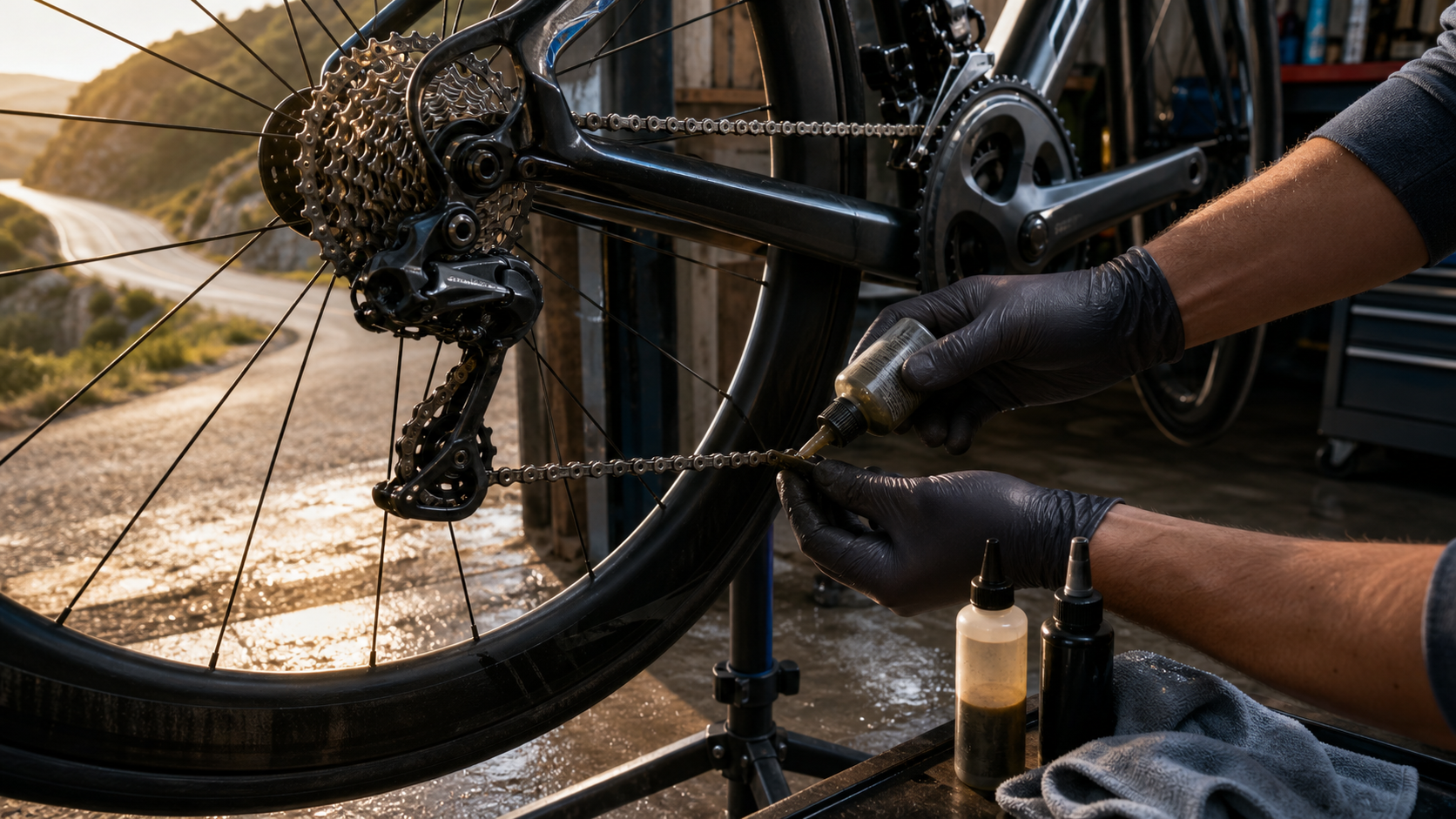
- Apply lube drop by drop to the inside of the chain (near the pins), moving link by link slowly
- Pedal for 2–3 minutes to let the lube penetrate evenly
- Key step: Wipe off excess lube on the outside with a dry cloth (only the inner pins need lubrication — the outside doesn’t need any oil)
Practical Tips
- Keep two bottles of lube on hand: One dry, one wet, and switch depending on the weather. The total cost is about NT$500–800, but it can substantially extend chain life.
- Avoid over-lubricating: Too much oil actually accelerates buildup — apply just enough to “soak into the links” each time.
- Chain wear indicator tool: Check chain elongation with a gauge every 1,000 km. Replace the chain once elongation exceeds 0.75% to protect the cassette and chainrings as well.
- Hot wax immersion (advanced): Fully wax-immersing the chain with a wax melter currently offers the lowest coefficient of friction, but it requires completely removing the chain — suited for advanced riders with the time for it.
- Clean immediately after rain: Grit on the chain is most abrasive right after a wet ride. It’s best to clean and re-lube the same day, before overnight drying lets the grit harden into the oil film.
Conclusion
Chain maintenance offers the best return on investment of any bicycle upkeep task. A NT$200–400 bottle of lube, used correctly, can extend the life of a NT$600–1,200 chain by 1,000 km while also preventing premature wear on the chainrings and cassette (replacement of which can cost thousands of NT dollars). Dry lube suits dry conditions and efficiency-focused riding; wet lube suits rain and long-lasting protection. Master this core logic, pair it with a regular cleaning habit, and your drivetrain will run at its best for much longer.
Related Reading
洗單車神器 吹水機! 實際洗車用用看 暴力洗鍊條大法 | 公路車 | CT Yeh
4 年前
自助洗車場 洗單車 50元有找 清鍊條大法 居然還有小小兵
7 年前
碟煞公路車 銑面器 !? 原來銑完差這麼多! 降低蹭碟機率! | TIME 公路車 保養小記錄 | CT Yeh
3 年前
鉅齒紋輪組!? ControlTech MEG-T50 EVO 碳纖維幅條輪組/ 功率對比實驗 / 公路車 / CT Yeh
2 年前
2025 自行車錶排行榜 兩萬車友大數據 / Garmin Bryton 排名會大洗牌嗎? / 全新的碼表前身分析 /公路車 / CT Yeh
1 年前
2026 車錶排行榜!誰是最多車友正在使用?練家子最愛哪款?🏆 (2萬名車友數據) / 公路車 / CT Yeh
5 個月前
靠單車減肥35公斤 心得分享與整理
7 年前
詳測) 小米 電動打氣筒 公路車胎要充多久? 值得買嗎? 米家充氣寶 小心燙手!
7 年前