Introduction
Many cyclists who take on long-distance rides find that what ultimately “defeats” them isn’t leg strength or cardiovascular fitness, but unbearable saddle soreness. Saddle soreness isn’t just uncomfortable—in severe cases, it can cause skin abrasions and sciatic nerve compression, affecting daily life for days afterward. The good news is that saddle soreness is largely preventable, and the key lies in equipment adjustment, riding posture, and recovery exercises during rest stops.
Root Causes of Saddle Soreness
Saddle soreness stems from three main causes:
- Equipment issues: Incorrect saddle height, saddles that are too hard, or shapes that don’t fit the rider’s pelvic width
- Posture issues: Shifting center of gravity while riding, rocking hips, or staying in one fixed position for extended periods
- Friction and pressure: Poor-quality cycling shorts, not using chamois cream, or prolonged continuous contact with the saddle
Equipment Adjustment: Prevention at the Source
Saddle Height
Both too-low and too-high saddle heights increase pressure on the saddle:
- Too low: Excessive knee bend causes the hips to bear more pressure
- Too high: The pelvis rocks side to side during pedaling, causing repeated friction on the sit bones
Standard setting: When the pedal is at its lowest point, the knee should be slightly bent at approximately 25–30 degrees (about 90% leg extension).
Saddle Fore-Aft Position and Tilt
| Adjustment Item | Problems with Too Far Forward / Backward | Recommended Setting |
|---|---|---|
| Fore-aft position | Too far forward: increased perineal pressure; too far back: rearward center of gravity affects power output | Knee cap aligned vertically above the pedal spindle |
| Tilt | Too high: increased perineal pressure; too low: forward sliding consumes stabilizing muscles | Level or slightly nose-down (0–2 degrees) |
Cycling Shorts and Chamois Cream
- Choose professional cycling shorts with high-density foam padding; do not wear underwear beneath cycling shorts on long rides
- Apply chamois cream to the area where the pad contacts the skin to reduce friction
- For rides exceeding 150km, it’s recommended to carry a spare pair of cycling shorts and change during rest stops
Dynamic Posture Adjustments While Riding
Staying in one fixed position for extended periods is one of the main causes of saddle soreness. Here are posture adjustment techniques to use while riding:
- Out of the Saddle: Every 15–20 minutes, stand and pedal for 20–30 seconds to relieve pressure on the hips
- Change hand positions: Alternate between different hand positions to shift upper-body weight distribution
- Fine-tune your seated position: On flat sections, occasionally sit further back (sit bones shifted rearward); on climbs, sit further forward (for better power output)
- Core stability: Strengthen your abdominal core to prevent excessive pelvic rocking while riding
Targeted Recovery Exercises at Rest Stops
Every time you stop at a feed station or rest point (recommended every 40–50km), perform the following exercises:
Immediately after getting off the saddle (2–3 minutes):
- Hold onto a railing or your bike and do 10–15 squats to promote blood circulation in the hips
- Stand and alternate high-knee marches 20 times to relieve the hips and thighs
- Rock the pelvis forward and backward (standing version of cat-cow pose) to relax the muscles around the sacrum
When sitting down to rest:
- Choose a hard wooden chair or stand instead of continuing to sit on a soft sofa, which adds pressure
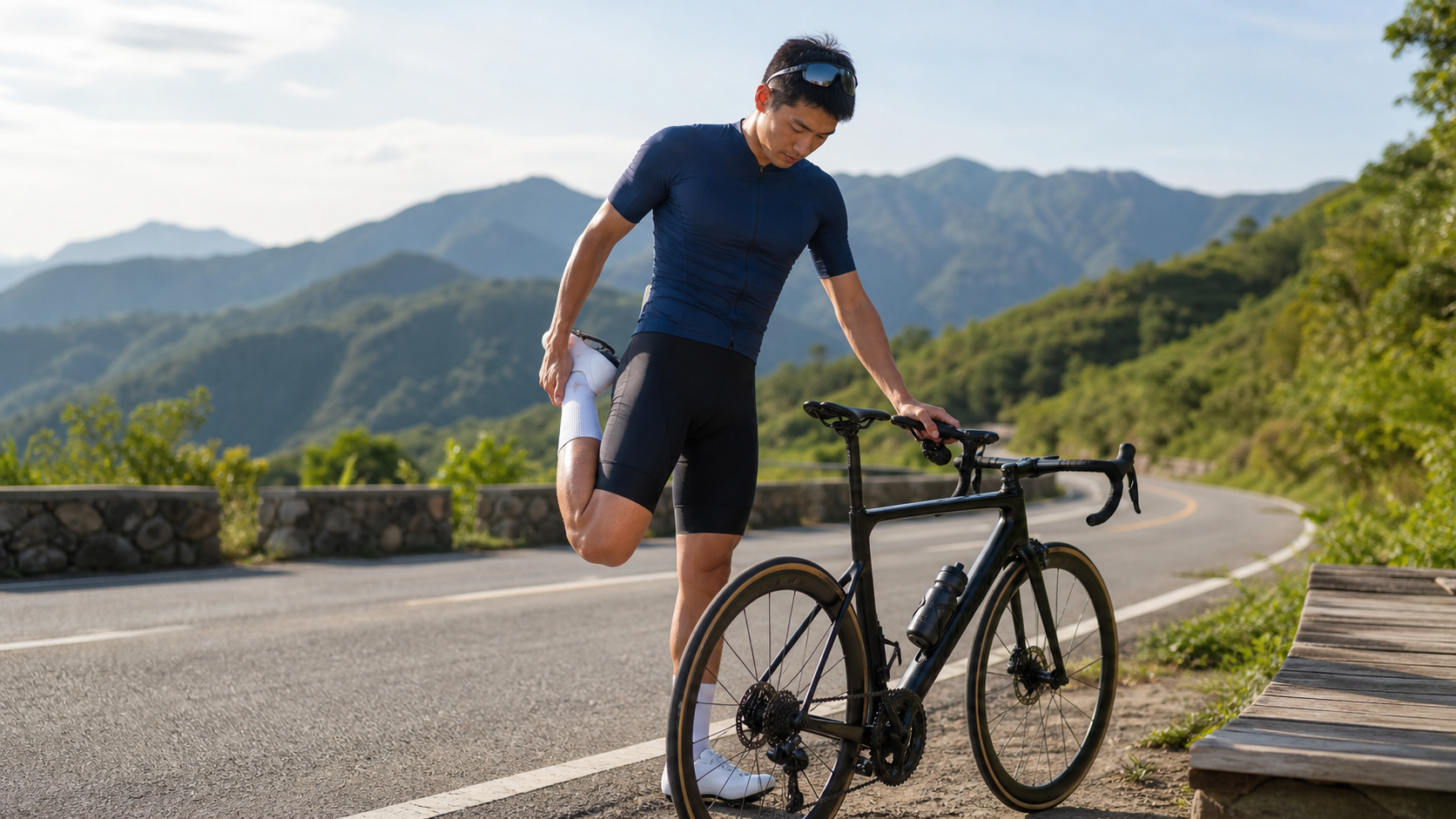
- Perform a hip stretch: place one foot on the chair seat, lean your body forward, and hold for 20–30 seconds
- Reapply chamois cream; if there are signs of skin abrasion, treat it immediately
Practical Tips
- Starting 2–3 weeks before a long ride, begin wearing your race-day cycling shorts for long training sessions to let your skin adapt
- Carry a small packet of chamois cream with you (petroleum jelly from the supermarket also works)
- If noticeable pain occurs mid-ride, first check whether it’s skin abrasion rather than just “toughing it out”
- Opportunities like changing a tire are great chances to stand up and move around—make full use of them
- Avoid prolonged sitting within 24 hours after a long ride to aid recovery of the affected area
Conclusion
Preventing saddle soreness is a systematic effort that requires full coordination across equipment, technique, and habits. Most importantly: don’t wait until it hurts to take action. Repeatedly test and adjust during training rides to find the setup that works best for you. When you can complete a 200km ride with zero hip discomfort, that’s when you’re truly ready.
Related Reading
- The Complete Guide to Bicycle Seatpost and Saddle Adjustment: The Ultimate Solution to Cycling Butt Pain
- Bike Fit for Long-Distance Riding: A Systematic Approach to Preventing Back Pain and Numbness After 5 Hours
- The Complete Guide to Choosing a Bicycle Saddle: Say Goodbye to the Pain Nightmare of Long-Distance Riding
- Butt Pain on Long Rides: Cause Analysis and Complete Solutions
一日北高常見問題大集合 | 攻略 | 路線 | 訓練 | 補給 | 自行車 單車 | 一日雙城 | 雙塔 | TWB北高360 | 屁股痛
6 年前
一日北高/長距離團騎 常見問題補充篇 / 組團或跟團的眉角 / 壯車友容易被瘦車友慢性拉爆 / 原來屁股痛可能是這個原因...? / 風場配速法 / 公路車 / CT Yeh
2 年前
#公路車 #Fitting 靠人工智慧APP 幫你調整單車
6 年前
摔車後補裝備: 好市多新款單車安全帽& Specialized Romin 北高整路屁股都不痛的坐墊 | 一千元居然有MIPS | CT Yeh | 公路車
4 年前
單車 一日北高 ( 雙城 ) 肥宅雙人瘋狂行 紀錄片 REACTO
10 年前
碟煞公路車 銑面器 !? 原來銑完差這麼多! 降低蹭碟機率! | TIME 公路車 保養小記錄 | CT Yeh
3 年前
靠單車減肥35公斤 心得分享與整理
7 年前
大禹嶺 到 武嶺牌樓 全程前後實況錄影 | 北進武嶺 | 東進武嶺 | KOM | 訓練台 | 坡度分析 | Taiwan KOM Last 10 km HARD | 公路車
6 年前