Introduction
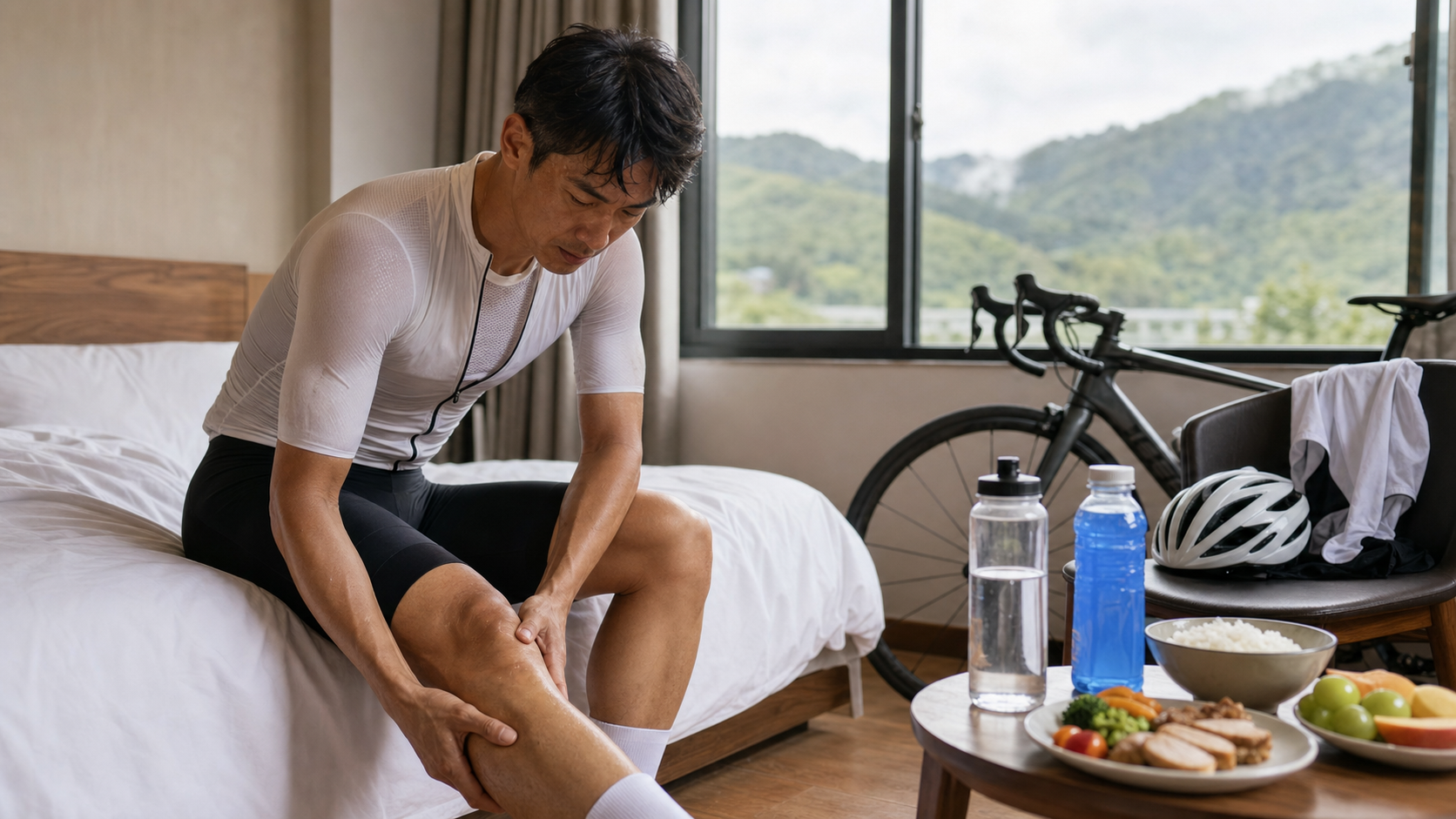
A single-day 200km challenge is certainly difficult, but the greater difficulty of consecutive multi-day riding (such as a round-island tour or multi-day mountain riding) lies in this: you need to complete high-intensity exercise loads again and again without being fully recovered. The quality of recovery on day one directly determines your performance on day two; recovery on day two determines whether you can finish day three normally. This article provides a systematic day-after recovery routine for multi-day riding.
Understanding Cumulative Fatigue in Multi-Day Riding
The main challenge of multi-day riding is Cumulative Fatigue. Each day of riding depletes muscle glycogen, causes minor muscle damage, and loses electrolytes and fluids. If recovery is insufficient, these damages accumulate day after day, and by the third or fourth day, you often experience:
- Legs feeling heavy as lead when getting up in the morning
- A noticeable drop in speed, with power output unable to be maintained
- Low mood and loss of motivation
- Muscle soreness that continues to worsen
The Golden 60 Minutes After Arriving at Accommodation
The 30–60 minutes after exercise ends is the “metabolic window,” when your body’s absorption efficiency for carbohydrates and protein is at its highest.
Do Immediately After Stopping (Within 15 Minutes)
- Light stretching: hold each stretch for 30 seconds on the quadriceps, hamstrings, and calves, but do not stretch to the point of pain
- Replenish liquid carbohydrates: a sports drink or juice containing carbs (about 30–40g of carbohydrates)
- Change out of riding gear and rinse off your body (lower core body temperature to speed up recovery)
After Showering (Within 30–60 Minutes)
| Recovery Element | Recommended Approach | Amount |
|---|---|---|
| Carbohydrate replenishment | White rice, noodles, potatoes | 100–150g carbohydrates |
| Protein replenishment | Chicken breast, tofu, eggs | 25–35g protein |
| Electrolytes | Soup, electrolyte drinks | Focus on sodium-containing foods |
| Antioxidants | Dark-colored vegetables, fruit | Moderate amount |
Before Bed (1–2 Hours)
- Replenish a small amount of carbohydrates + protein again (Greek yogurt + honey, milk + oatmeal)
- Contrast bath (if conditions allow): 3 minutes of hot water, then 1 minute of cold water, repeated 3 times
- Leg elevation: lie down with legs raised above heart level to promote venous return and reduce leg swelling
- Light foam roller massage: roll along the direction of the muscle fibers, do not apply excessive pressure on tender points
Sleep: The Most Important Recovery Tool
During multi-day riding, sleep quality matters more than any supplement. Aim for 7–9 hours of high-quality sleep:
- Go to bed early (departure times are usually very early) to allow the body’s hormone secretion (growth hormone) to take effect in darkness
- Ensure the sleeping environment is cool (23–26°C); high temperatures affect sleep depth
- Avoid using phone screens for more than 30 minutes before bed (blue light suppresses melatonin)
- If you have trouble falling asleep due to fatigue (overfatigue syndrome), try deep breathing relaxation or magnesium supplements
The Next Morning’s Pre-Departure Routine
After Waking Up (60–90 Minutes Before Departure)
- Replenish carbohydrates immediately after waking: white rice, toast, oatmeal, about 60–80g of carbohydrates
- Confirm the day’s route and mentally rehearse the difficult sections
- Do 5–10 minutes of light stretching and assess the condition of your legs
Pre-Departure Status Assessment
During consecutive multi-day riding, do a “subjective assessment” every morning before departure:
- Leg heaviness: 1–10 scale (above 7 indicates insufficient recovery)
- Motivation and mood: 1–10 scale (below 4 means you need to adjust the day’s plan)
- Location and severity of muscle soreness
If the assessment shows insufficient recovery, you should proactively lower the day’s intensity plan rather than push through and then collapse later.
Practical Tips
- Start strengthening your sleep a week before multi-day riding to build a good recovery foundation
- Carry portioned protein powder with you and mix it with water immediately after arriving at accommodation
- Wear compression socks during sleep to help promote circulation
- If the itinerary allows, schedule an “easy day” every 3 days (reduce riding distance by 40%, lower intensity)
- Ice water leg immersion (if conditions allow) can quickly reduce acute muscle inflammation
Conclusion
The real challenge of multi-day riding is not the determination you have at the start of each day, but whether you take recovery seriously after arriving each day. Many riders begin to collapse on the third or fourth day of a long ride, and the root cause is often not insufficient fitness, but insufficient recovery investment in the previous days. Treat recovery as part of your training, and your multi-day riding plan can truly succeed.
Related Reading
- Recovery and Nutrition Management for Multi-Day Races: Complete Training and Logistics Preparation for a Taiwan Challenge
- Multi-Day Race Recovery Guide: Best Recovery Strategies Between Stages
- Body Recovery After Long-Distance Riding: Diet, Sleep, and Light Activity Within 48 Hours
- Managing Cumulative Fatigue Across Consecutive Days of Riding: Round-Island or Multi-Day Race Strategies
一日北高常見問題大集合 | 攻略 | 路線 | 訓練 | 補給 | 自行車 單車 | 一日雙城 | 雙塔 | TWB北高360 | 屁股痛
6 年前
一日北高/長距離團騎 常見問題補充篇 / 組團或跟團的眉角 / 壯車友容易被瘦車友慢性拉爆 / 原來屁股痛可能是這個原因...? / 風場配速法 / 公路車 / CT Yeh
2 年前
一日北高 11小時 賽後心得分享篇 | TWB北高360 | 一日雙城 | 單車 | 公路車
6 年前
單車 一日北高 ( 雙城 ) 肥宅雙人瘋狂行 紀錄片 REACTO
10 年前
靠單車減肥35公斤 心得分享與整理
7 年前
一日北高前的高裝檢 | 北高 360 | 挑戰11小時的裝備 | 一日雙塔 | 補給
6 年前
#公路車 #Fitting 靠人工智慧APP 幫你調整單車
6 年前
2022 環花東挑戰賽 Day2 搭到特快車 高速真空吸引! 台東一路逆風殺回花蓮! 總排 ??| Feiyu Pocket 2s | 公路車 | CT Yeh
4 年前