Introduction
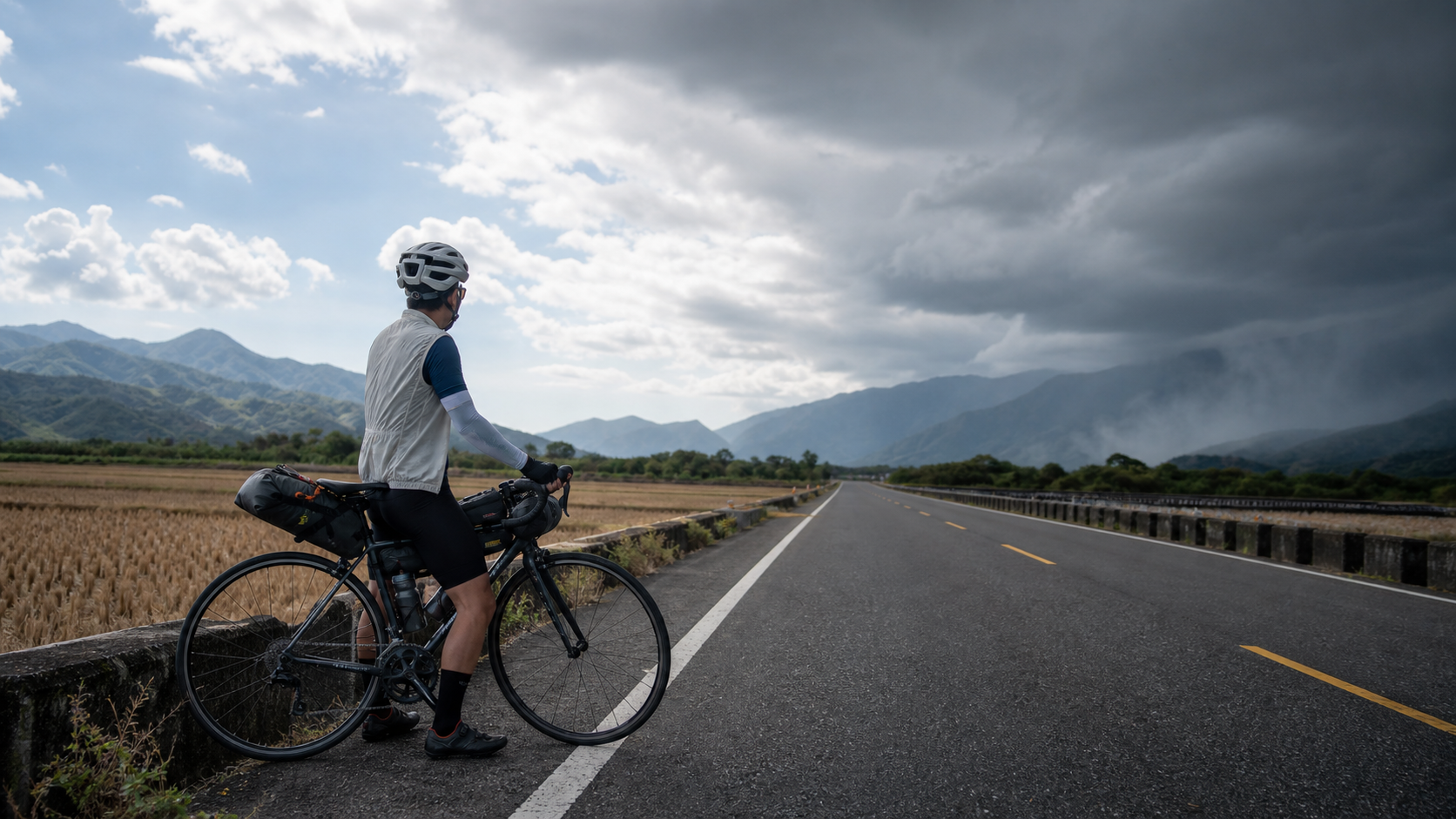
When planning a continuous long ride spanning 3 or more days, weather is the hardest variable to control yet the most critical one. Unlike single-day rides, multi-day weather planning requires simultaneously grasping the overall trend (weather patterns for the next 3–7 days) and daily details (hourly rain probability, wind speed). In Taiwan, this challenge is especially pronounced—the western plains and eastern coast can experience sun and rain at the same time, while mountainous areas face localized severe weather shifts.
The Three Levels of Multi-Day Weather Planning
Multi-day ride weather planning should be approached at three levels:
| Planning Level | Time Span | Tools | Decision Type |
|---|---|---|---|
| Macro Planning | 7–14 days before departure | Long-range weather forecasts | Decide whether to execute the plan, which weekend to depart |
| Mid-term Planning | 3–5 days before departure | Weather forecast apps | Adjust daily mileage and route choices |
| Real-time Planning | During the ride | Radar maps, real-time weather | Decide whether to stop and wait, or reroute |
Reading Macro Weather Patterns
Taiwan’s weather patterns follow several common modes that significantly impact multi-day ride planning:
- Plum Rain Season (May–June): High probability of continuous rainfall, with rain periods lasting 3–5 days common. If the forecast calls for rain on 3+ consecutive days, it’s advisable to postpone the trip
- Summer Afternoon Convective Rain (July–September): Mornings are often clear, with concentrated rainfall between 2–5 PM. Multi-day plans should schedule early morning departures and waiting at resupply points in the afternoon
- Northeast Monsoon (October–December): The northeast (Yilan, Keelung) sees frequent rain while the west is relatively dry. Route planning can avoid windward areas
- Crisp Autumn Weather (September–October): Taiwan’s best season for long-distance riding, with consecutive clear days common
Refining Daily Weather Planning
Starting 3–5 days before departure, begin the daily weather refinement work:
Determining Rain Windows
Commonly used tools in Taiwan:
- CWA Hourly Forecast (Central Weather Administration): Rain probability in 3-hour intervals for each city/county—the most basic reference tool
- Windy.com Rain Radar: Visualized rain-band movement predictions showing when rain will reach your location
- QPESUMS (CWA Quantitative Precipitation Estimation and Segregation Using Multiple Sensors): An advanced tool for localized rainfall prediction in mountainous areas
Establishing a Daily “Weather Window”
Based on the forecast, identify the most suitable riding windows for each day:
- Mark expected rain periods (in red)
- Mark strong wind periods (in orange)
- The remaining periods are “riding windows” (in green)
For example, a day’s forecast: clear from 06–11 AM, cloudy turning overcast from 11 AM–2 PM, showers from 2–6 PM. The optimal riding window is 06–11 AM; plan to reach that day’s resupply point before 11 AM, then wait out the rain in the afternoon before continuing or calling it a day.
A Decision Framework for Dynamic Adjustments
During multi-day rides, weather forecasts can change at any time. Here is a simple dynamic adjustment decision framework:
- Weather better than expected: Consider adding mileage for the day to gain ground before anticipated bad weather later
- Weather worse than expected (light rain): Put on rain gear and continue, reduce speed, and increase resupply frequency
- Weather worse than expected (heavy rain + lightning): Seek shelter immediately—do not push through. Assess whether to reroute around the rain band or find lodging
- Several consecutive days of severe weather: Accept the need to adjust the plan; safety comes first, and riding goals can be pursued another time
Designing Backup Plans
Before a multi-day ride, design a “Plan B” for each day:
- If weather turns bad, which sections can be shortened?
- If forced to stop riding, which cities along the route have transportation back to the starting point?
- Which sections are most weather-sensitive and require confirming that day’s weather before deciding to proceed?
Practical Tips
- Divide the route from start to finish into several “weather segments,” as each segment may have different weather characteristics
- Prepare a “weather emergency contact sheet” before departure, including action plans for various weather scenarios
- Install multiple weather apps to cross-verify; a single source may have forecast biases
- Weather changes in Taiwan’s mountainous areas occur 2–3 times faster than on the plains, so mountain sections require more conservative weather assessment criteria
- If the itinerary includes significant climbing sections, ensure forecast confidence is above 70% before departing
Conclusion
Weather planning for multi-day rides is a skill that requires continuous practice. After each trip, record the differences between forecasts and actual conditions to gradually build an intuitive sense of weather patterns across Taiwan. Accept that weather is beyond your control, but through thorough planning, maximize safe riding time—that is the right mindset for enjoying multi-day long-distance cycling.
Related Reading
- Weather Response for Long Rides: Real-Time Adjustments for Sudden Rain, Strong Wind, and High Heat
- Cycling Weather Strategies: A Safe Riding Guide for Rain, Strong Wind, and High Heat
- Multi-Day Climbing Strategies: Fatigue Management for Three Consecutive Days of Climbing
- Weather Adaptation for Long-Distance Rides: Practical Strategies for Taiwan’s Summer Heat Waves and Southwesterly Flow
JJSC南台灣單車走春三日行 DAY 1 / 強度 x 美食 x 節慶體驗 / 公路車 CT Yeh
5 個月前
單車賞雪 裝備準備及注意事項分享 | 公路車
5 年前
一日北高前的西濱集訓 | 跟著11小時軍團 | 300W踩不動的大逆風 | 輪車破風差幾瓦?
6 年前
單車 一日北高 ( 雙城 ) 肥宅雙人瘋狂行 紀錄片 REACTO
10 年前
Insta360/DJI做不到的!如何製作「騎士頭頂瓦數特效」單車影片?CycleDash 完整教學 / 超強批次影片數據疊加軟體
11 天前
#公路車 #Fitting 靠人工智慧APP 幫你調整單車
6 年前
下雨天就是要改車 #ceramicspeed #bike
1 年前
一日北高/長距離團騎 常見問題補充篇 / 組團或跟團的眉角 / 壯車友容易被瘦車友慢性拉爆 / 原來屁股痛可能是這個原因...? / 風場配速法 / 公路車 / CT Yeh
2 年前