Introduction
“More training = more progress” is one of the most common myths in swimming (and in the entire sports world). In reality, training is a stress stimulus, and progress occurs during the “recovery” process, not during the training session itself. When training load exceeds the body’s ability to recover, you enter a state of overtraining—performance not only fails to improve but actually declines, and the risk of injury increases.
Heart Rate Variability (HRV) is currently one of the most widely used objective fatigue monitoring tools. By analyzing the patterns of variation in heartbeat intervals, it assesses the balance of the autonomic nervous system and indirectly reflects the body’s recovery status.
What is HRV?
HRV measures the subtle variations in the time intervals between consecutive heartbeats (R-R intervals). High HRV indicates that the parasympathetic (recovery) branch of the autonomic nervous system is dominant, meaning the body is in a good recovery state; low HRV indicates that the sympathetic (fight-or-flight) branch is active, meaning the body is under stress.
Factors affecting HRV:
- Training stress (the higher the training intensity the previous day, the lower HRV typically is)
- Sleep quality and quantity
- Diet (excessive alcohol consumption and high-carbohydrate diets both lower HRV)
- Psychological stress (work pressure, exams, relationships)
- Illness and infection
- Environmental temperature (Taiwan’s summer heat can also affect HRV)
How to Measure HRV
Standard measurement conditions:
- Measure upon waking in the morning, before getting out of bed (the body is closest to a resting state)
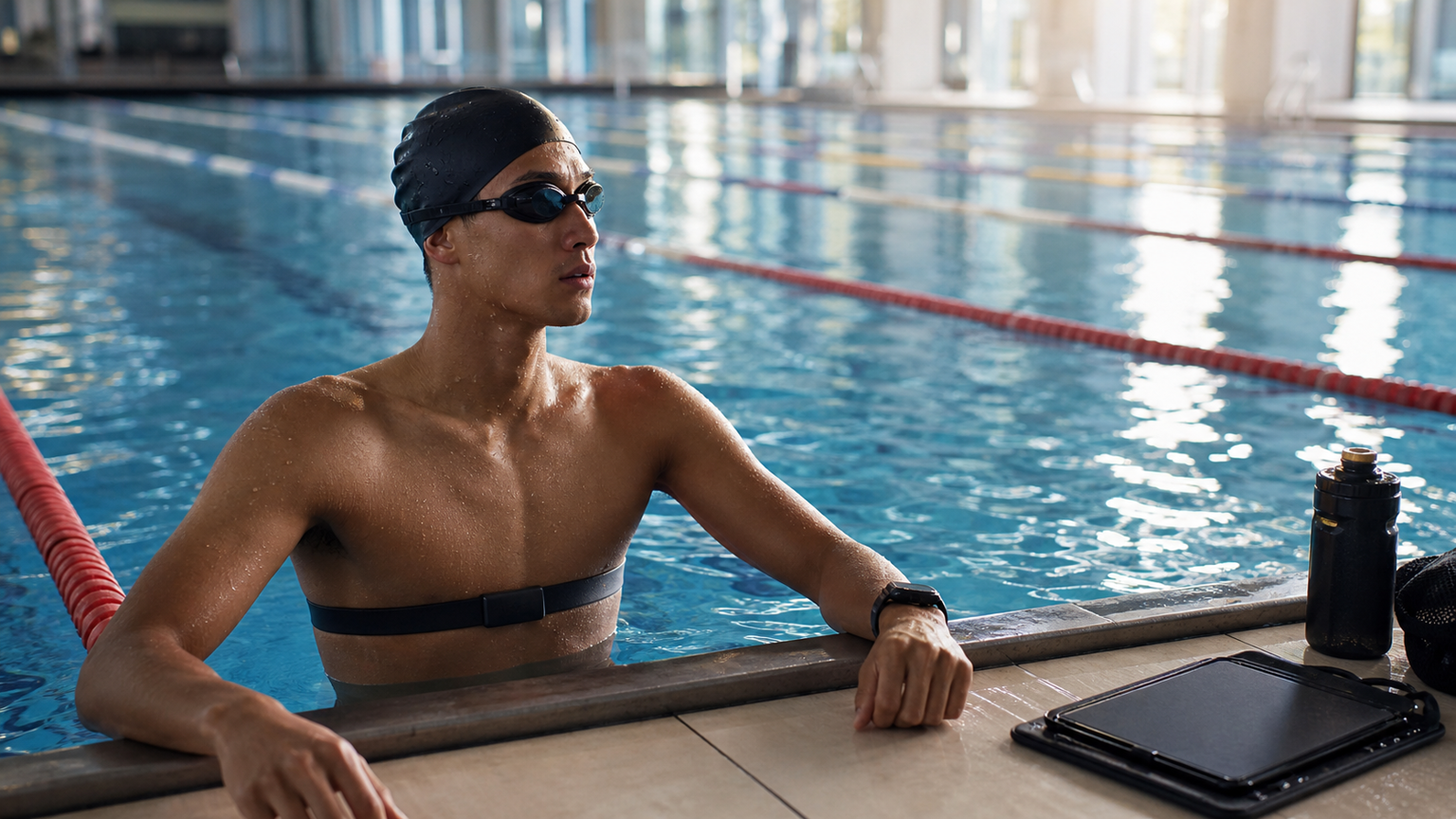
- Use a waterproof heart rate strap (such as the Polar H10) with an HRV application
- Measure for 3–5 minutes each time; the application automatically calculates rMSSD (the most commonly used HRV metric)
- Measure continuously for at least 7 days to establish a personal baseline
Common HRV metrics:
- rMSSD: Root mean square of successive R-R interval differences, reflecting parasympathetic activity; the most commonly used metric for training monitoring
- SDNN: Standard deviation of R-R intervals, reflecting overall autonomic variability
HRV and Training Decisions
After establishing a personal baseline, the daily deviation of HRV from that baseline can serve as a basis for adjusting training intensity:
| Daily HRV Status | Comparison to Baseline | Training Recommendation |
|---|---|---|
| High HRV (good recovery) | ≥ 5% above baseline | Proceed with planned high-intensity training |
| Normal HRV | Within ±5% of baseline | Follow the plan as scheduled, moderate intensity |
| Low HRV (fatigue) | 5–15% below baseline | Reduce intensity, switch to light aerobic swimming |
| Very low HRV (excessive fatigue) | > 15% below baseline | Complete rest or light activity |
Important: HRV is only a supporting tool and cannot fully replace subjective feeling. If HRV is normal but the body feels extremely fatigued, prioritize how the body feels.
Calculating Training Load
In addition to HRV, quantifying training load is also an important tool for fatigue management. Swimming training load can be simply calculated as:
Training Load (AU) = Training Distance (km) × RPE (1–10)
For example: 5km @ RPE 6 = 30 AU
Tracking long-term fatigue (ATL) and short-term adaptation (CTL):
- CTL (Chronic Training Load): The average training load over the past 42 days, representing long-term aerobic fitness level
- ATL (Acute Training Load): The average training load over the past 7 days, representing short-term fatigue level
- TSB (Training Stress Balance) = CTL − ATL: A positive value indicates adequate rest (good race readiness), while a negative value indicates accumulated fatigue
Identifying and Preventing Overtraining
Symptoms of Overtraining Syndrome:
- Persistent fatigue that cannot be resolved with one night of sleep
- Training performance declining for more than 2 consecutive weeks
- Resting heart rate continuously elevated (more than 5–10 bpm above personal average)
- Mood swings, irritability, loss of training motivation
- Decreased immunity (frequent colds)
- Reduced appetite or digestive issues
Prevention strategies:
- Schedule a deload week every 3–4 weeks (reduce training volume by 30–40%)
- Allow at least 72 hours between high-intensity swimming sessions
- Sleep is the most important recovery tool; aim for 7–9 hours per night
- Increase protein intake during high-volume weeks (20–40g of quality protein within 30 minutes after swimming)
Practical Recommendations
- Recommended free HRV application: HRV4Training (iOS/Android) can measure using your phone’s camera without additional hardware
- Build a “training log” habit: record distance, intensity (RPE), HRV, and sleep hours for each session; after a few months, you will be able to see your personal “recovery profile”
- During Taiwan’s summer training (June–September), high heat and humidity increase physical fatigue; HRV during this period is typically lower than in winter, and training volume should be adjusted accordingly
- If HRV remains consistently low during the week before a competition, it means the taper was insufficient or stress was too high; increase rest days
Conclusion
Fatigue management is an advanced capability in swimming training science. Through HRV monitoring and training load calculation, swimmers can listen to their body’s signals more precisely and find the optimal balance between high-intensity stimulus and adequate recovery. For swimming enthusiasts in Taiwan pursuing long-term progress, learning “when to step on the gas and when to step on the brake” will bring more stable fitness gains than blindly increasing training volume.
Related Reading
- 【Research Review】Clinical Applications of Heart Rate Variability (HRV) in Autonomic Nervous System Monitoring and Overtraining Prevention: Latest Academic Literature Review and Training Practice (Article 1213)
- 【Research Review】Clinical Applications of Heart Rate Variability (HRV) in Autonomic Nervous System Monitoring and Overtraining Prevention: Latest Academic Literature Review and Training Practice (Article 253)
- 【Research Review】Clinical Applications of Heart Rate Variability (HRV) in Autonomic Nervous System Monitoring and Overtraining Prevention: Latest Academic Literature Review and Training Practice (Article 892)
- 【Research Review】Biomechanical Quantitative Experimental Report on the Clinical Applications of Heart Rate Variability (HRV) in Autonomic Nervous System Monitoring and Overtraining Prevention (Article 760)
西進武嶺 免費訓練分析服務 Intervals | 練不夠還是練過頭?你哪一種類型選手?AI模型告訴你! | 備戰神器 | 公路車 訓練 | CT Yeh
4 年前
#公路車 #Vo2Max #最大攝氧量 測驗 體驗 | 心肺測試
6 年前
[教學] Premiere 影片 手震 修正 教學 防抖 單眼 影像 GoPro 穩定 Video Stabilization
8 年前
白沙屯媽祖進香在家走!UREVO 坡度自調走步機 / 可連接訓練遊戲APP MyWhoosh / 邊看直播邊走起來 / CT Yeh
11 個月前
Rouvy 元宇宙運動世界! 用VR 騎遍全台灣單車路線 武嶺 中社路 風櫃嘴
5 年前
2026 車錶排行榜!誰是最多車友正在使用?練家子最愛哪款?🏆 (2萬名車友數據) / 公路車 / CT Yeh
5 個月前
單車AI教練!全新 ChatGPT4o 幫你分析訓練成果!排武嶺課表,分析騎車姿勢! 太神了! / 公路車 / CT Yeh / feat. 緯緯
2 年前
2021 Apple TV 4K 讓你在家騎單車 | Zwift 和 Rouvy 測試 | 影音畫質屌打其他設備 | 公路車 | 訓練台必備
5 年前