Introduction
A common phenomenon: after starting systematic swim training, body weight doesn’t drop—and sometimes even rises slightly. This confuses many people who use swimming as a weight-loss tool. In fact, swimming as a high-volume sport has a far more complex relationship with weight management than most imagine—water temperature, changes in appetite hormones, and the timing of energy replenishment all profoundly influence the final “swimming → body weight” outcome.
This article analyzes the dietary compensation problem for high-volume swimmers from a scientific perspective and provides practical dietary management strategies.
The Energy Expenditure Characteristics of Swimming
Swimming is a high-energy aerobic exercise, but its calorie expenditure is often overestimated or underestimated:
General reference values (varying by intensity and body weight):
- Easy swimming (slow freestyle): approximately 400–500 kcal/hour
- Moderate intensity (near threshold): approximately 550–700 kcal/hour
- High-intensity intervals: approximately 700–900 kcal/hour
Note: Based on a 70kg adult; actual values vary significantly between individuals
Comparison with land-based exercise: Over the same duration, swimming typically burns fewer calories than running (running is approximately 600–800 kcal/hour), mainly because water buoyancy reduces the load of body weight.
Causes of the Dietary Compensation Problem
Research shows that swimmers experience a significantly greater increase in appetite after training compared to equivalent land-based aerobic exercise (running, cycling). There are three main reasons:
1. Water Temperature Effect (Thermic Effect)
Swimming in cool water (< 27°C) requires the body to expend additional energy to generate heat and maintain core temperature. This process stimulates the appetite center, causing the brain to send strong hunger signals after swimming to compensate for the calories lost. Public pools in Taiwan are typically maintained at 27–30°C, so this effect is milder than in temperate countries, but it still exists.
2. Temporary Increase in Insulin Resistance
The transient insulin resistance following high-intensity swimming directs carbohydrates preferentially toward muscle recovery while simultaneously increasing appetite.
3. Psychological Compensation
“I just swam 2000m, so I can eat a bit more”—this kind of psychological compensation is extremely common among swimmers, but it often leads to excessive caloric intake that far exceeds the energy expended during training.
The Relationship Between Training Volume, Appetite, and Body Weight
| Weekly Training Volume | Weekly Caloric Expenditure (estimated) | Common Overcompensation Patterns |
|---|---|---|
| 10,000m (low volume) | Approximately 1,500–2,000 kcal | Mild; one large meal can offset it |
| 20,000m (moderate volume) | Approximately 3,000–4,000 kcal | Moderate; strong hunger often occurs after training |
| 40,000m (high volume) | Approximately 6,000–8,000 kcal | High; food intake increases significantly after training |
Dietary Management Strategies
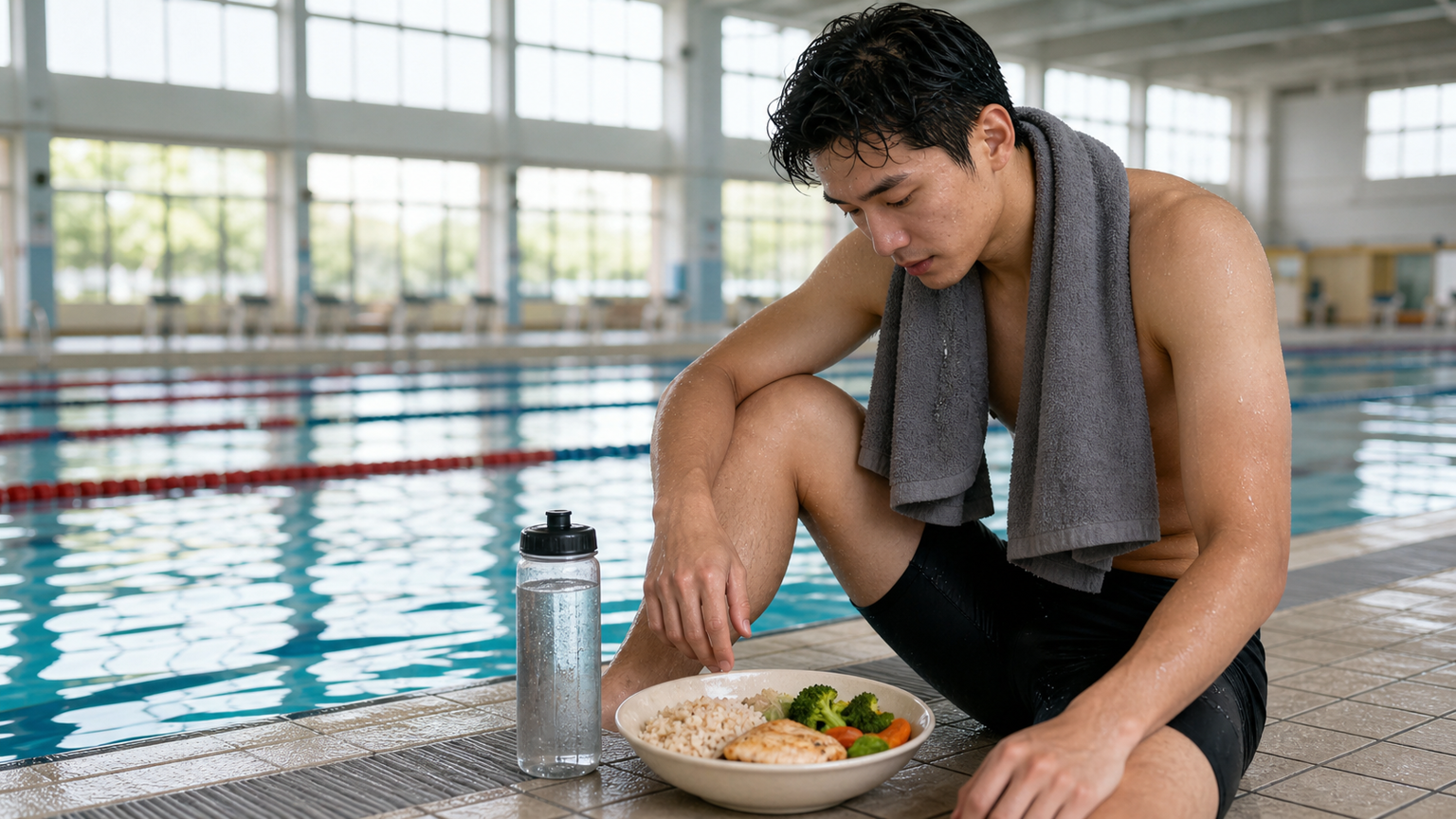
Proper Post-Training Replenishment
The 30–45 minutes after training is the “golden replenishment window,” when muscle glucose uptake efficiency is at its highest:
- Protein: 20–40g of high-quality protein (soy milk, chicken breast, eggs, low-fat yogurt)
- Carbohydrates: Moderate amounts of medium-GI carbs (bananas, rice balls, sweet potatoes) to replenish muscle glycogen
- Avoid: High-fat foods (slow absorption), high-fiber foods (may cause gastrointestinal discomfort)
Strategies for Controlling Hunger
- Pre-Training Satiety Management: Eat a meal containing protein and fiber 1.5–2 hours before training (rather than high-carb snacks) to prolong satiety
- Immediately Replenish a Small Portion of Protein After Swimming: Before the appetite surge kicks in, consume 15–20g of protein (a glass of soy milk or one egg) to significantly reduce subsequent overeating tendencies
- Stay Well Hydrated: After swimming, hydration is often neglected due to heat dissipation in the water; thirst can sometimes be mistaken for hunger. Drink 500ml of water immediately after leaving the pool
Long-Term Weight Management Principles
- Don’t use “calories burned from swimming” as an excuse for indulgent eating: Track a food diary for 1–2 weeks to identify whether systematic overcompensation is occurring
- Prioritize body composition over body weight: High-volume swimming increases muscle mass; body weight may stay the same while body fat percentage drops—this is the ideal change
- Avoid excessive dieting: Strict dieting during high-volume training periods will lead to declining training quality and reduced immunity—not worth the trade-off
Practical Recommendations
- Use a body fat scale to regularly track body fat percentage (rather than only looking at body weight) for a more objective assessment of training effects
- Prepare a “standard replenishment pack” for after training (such as soy milk + banana) to avoid impulsive food choices when hungry
- When swimming in Taiwan’s hot summer environment, electrolyte loss is greater; moderately replenish with low-sugar sports drinks or coconut water instead of high-calorie foods
- If weight management is the primary goal, the combination of “swimming + dietary control” is far more effective than “increasing swimming training volume alone”
Conclusion
The relationship between swimming and body weight is not as simple as “the more you swim, the more weight you lose.” The dietary compensation problem is the greatest challenge in weight management for high-volume swimmers, and it must be overcome through proper post-training replenishment strategies and hunger management. Understanding the energy expenditure characteristics of swimming and establishing scientific dietary habits are essential for training results to truly reflect in an ideal body composition.
Related Reading
- The Truth About Weight Management in Swimming: A Complete Analysis of Calorie Expenditure Calculation and Appetite Compensation Effects
- Swimming and Weight Management: The Truth About Calorie Expenditure in Water-Based Exercise
- Swimming Weight Management Training Plan: Calorie Expenditure and Dietary Pairing for Swimming 4 Times a Week
- Daily Caloric Needs for Swimmers: Differences Between High-Volume and General Training
靠單車減肥35公斤 心得分享與整理
7 年前
16/02/16 - 夜訪中社路 緩慢進步中
10 年前
CT暗黑廚房) 車友必備 宇宙無敵鮮蚵湯 幫助訓練恢復 天然食補 好市多 超肥鮮蚵 破PR
7 年前
一日北高常見問題大集合 | 攻略 | 路線 | 訓練 | 補給 | 自行車 單車 | 一日雙城 | 雙塔 | TWB北高360 | 屁股痛
6 年前
2016/4/20 - 中社路 夜騎 半年甩肉14KG 後測
10 年前
一日北高/長距離團騎 常見問題補充篇 / 組團或跟團的眉角 / 壯車友容易被瘦車友慢性拉爆 / 原來屁股痛可能是這個原因...? / 風場配速法 / 公路車 / CT Yeh
2 年前
西進武嶺 免費訓練分析服務 Intervals | 練不夠還是練過頭?你哪一種類型選手?AI模型告訴你! | 備戰神器 | 公路車 訓練 | CT Yeh
4 年前
#公路車 #Vo2Max #最大攝氧量 測驗 體驗 | 心肺測試
6 年前