Introduction
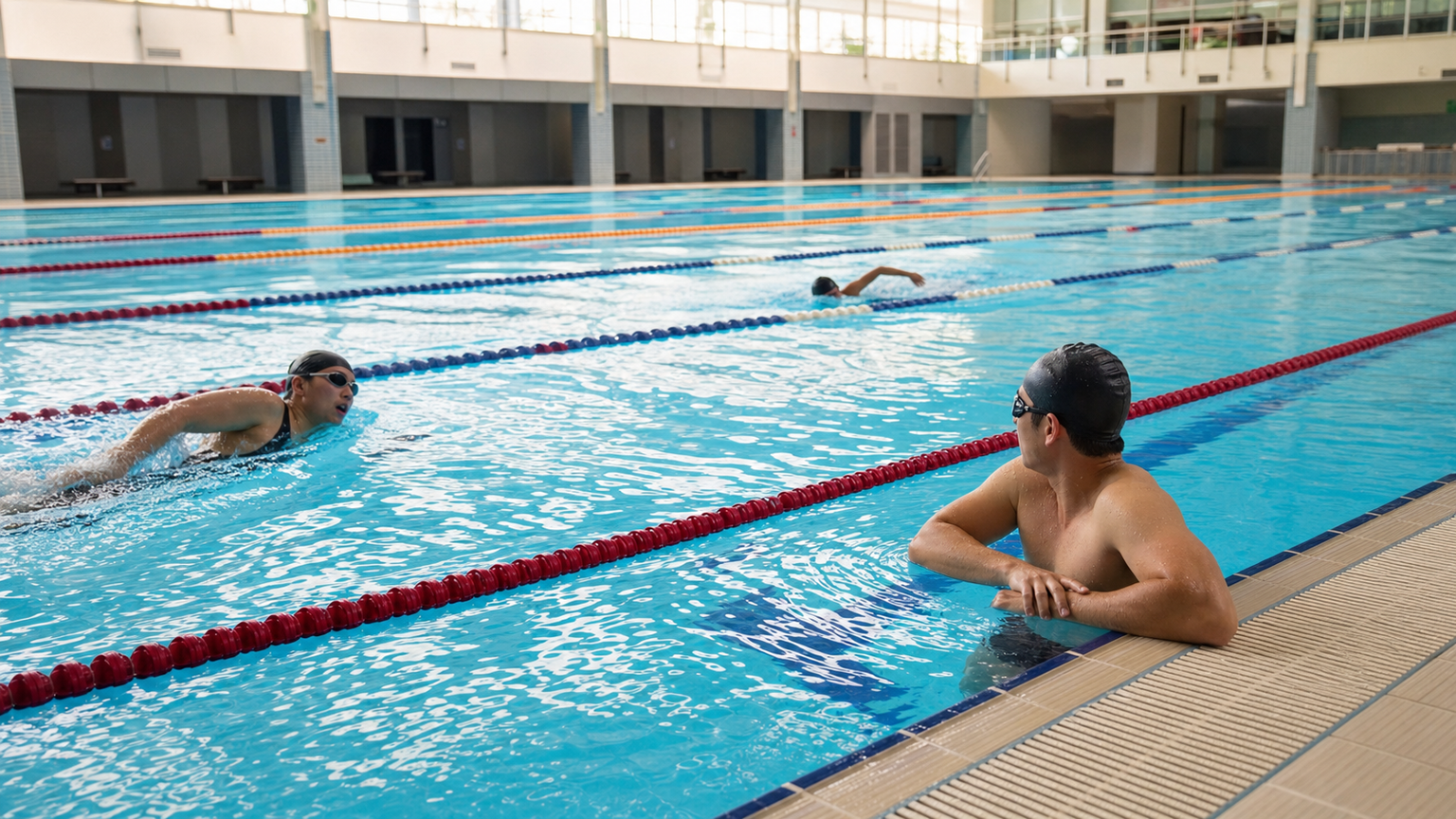
Public swimming pools in cities and counties across Taiwan are shared sports facilities open to everyone. A standard 25-meter, six-lane pool can hold dozens of swimmers at once during peak hours. In this shared space, everyone’s behavior affects the experience and safety of others. Understanding pool etiquette isn’t just about being a considerate user — it can also greatly improve your own swimming experience, because a harmonious lane means everyone swims more happily.
Lane Selection: The Rule Most People Get Wrong
Taiwanese public pools typically divide lanes into fast, medium, and slow speeds, or separate them by stroke (freestyle lane, mixed lane). Choosing the wrong lane is the most common source of pool conflicts.
| Lane Type | Suitable For | Common Misuse |
|---|---|---|
| Slow Lane | Beginners, those practicing specific strokes, kickboard users | Capable swimmers using it just because it’s “less crowded” |
| Medium Lane | General recreational swimming, steady-pace swimmers | The default choice for most swimmers, sometimes overcrowded |
| Fast Lane | Swimmers training continuously beyond 1,500 meters, competitive swimmers | Occasionally occupied by swimmers whose speed doesn’t match |
| Teaching Area | Students currently taking lessons | Do not enter during lesson hours, even if the lane looks empty |
Practical principle: Choose a lane that’s slightly slower than your own pace, not one that matches or exceeds it. That way you won’t become an obstacle for others, and occasionally passing another swimmer won’t create pressure. If you’re faster than everyone in your lane, proactively move to a faster one.
Basic Rules Within a Lane
When multiple people share the same lane, following these rules is the foundation of smooth co-swimming:
- One-way circular swimming: When multiple swimmers share a lane, swim out on the right side and return on the right side (i.e., clockwise circulation). Confirm the current lane’s direction of travel before you start.
- Etiquette for passing: If you’re faster than the swimmer ahead, tap their foot lightly once you reach the wall, and wait for them to yield or move aside before passing — don’t force a pass in the middle of the lane.
- Look before you push off: When turning and pushing off the wall, check that no one is about to arrive, to avoid a head-on collision.
- Where to rest: If you need to rest at the wall, move to the edge (corner) of the lane rather than occupying the spot where swimmers push off, so continuous swimmers can touch the wall and turn smoothly.
Etiquette Before Entering the Water
Many pool-related hygiene and etiquette issues actually happen before you even get in the water:
- Shower before entering: This is an explicit rule at most pools in Taiwan, though compliance is often low. Rinsing off removes sweat, sunscreen, and cosmetics from your body, significantly reducing organic contaminants in the pool (and in turn reducing chloramine formation).
- No photography or filming poolside: Photographing other swimmers without their consent is a violation of privacy, and most pools have explicit rules against it.
- Watches and jewelry: Hard jewelry can scratch other swimmers sharing your lane — it’s best to remove it before swimming.
- Wear your swim cap properly: If a swim cap doesn’t fully cover long hair, loose hair can clog the pool’s drainage system. This is a safety issue, not just an etiquette one.
Common Misbehavior Seen at Taiwanese Pools
The following behaviors are quite common at pools in Taiwan but have a real negative impact on others:
- Standing and chatting in the middle of a lane: If you want to rest and chat, move to the non-swimming area at the pool’s edge.
- Bringing food or drinks into the pool area: Most pools prohibit eating and drinking poolside, both for hygiene and to prevent slipping.
- Playing loud music: Waterproof Bluetooth speakers used poolside disturb other swimmers’ concentration — use headphones or keep the volume off instead.
- Taking up excessive space in the locker room: Locker room space is limited during peak hours, so pack up your belongings promptly once you’re done.
Interacting With Lifeguards and Pool Staff
- When a lifeguard blows a whistle or calls a stop, stop swimming immediately and wait for instructions — don’t keep swimming or argue.
- Treat staff reminders (such as “please shower first” or “this is the slow lane”) with respect — their job is to keep the facility safe for everyone.
- Report issues with pool facilities (water quality, equipment malfunctions) through official channels rather than arguing with other swimmers on the spot.
Practical Tips
- Before using a new pool for the first time, observe from the deck for five minutes to understand each lane’s speed and direction of travel.
- In Taiwan, many public pools get crowded during peak hours (usually 6–8pm). If you don’t have a pressing reason to swim then, switching to an off-peak time noticeably improves the experience.
- Pool timers (mounted poolside) should be shared, not monopolized — return them to their original spot after use.
- If you’re unsure about a pool’s rules, ask the staff directly — they’re usually happy to explain.
Conclusion
Good pool etiquette is the foundation that keeps a shared space running smoothly. Following the rules isn’t about limiting you — it’s about letting everyone, including yourself, enjoy swimming in a safer, more comfortable environment. Enter the water with respect, and you’ll find that the pool is one of the friendliest sports spaces in Taiwan.
Related Reading
一日北高常見問題大集合 | 攻略 | 路線 | 訓練 | 補給 | 自行車 單車 | 一日雙城 | 雙塔 | TWB北高360 | 屁股痛
6 年前
2023桃園團體繞圈賽 / 海鷗繞圈賽 | 全程空拍數據版 | 公路車 | CT Yeh
2 年前
一日北高/長距離團騎 常見問題補充篇 / 組團或跟團的眉角 / 壯車友容易被瘦車友慢性拉爆 / 原來屁股痛可能是這個原因...? / 風場配速法 / 公路車 / CT Yeh
2 年前
備戰 戀戀197 賽前關門點分析 西濱團練 #公路車 4K高畫質
6 年前
日本島波海道 EP1 / 五大絕景路線之一! / 私房溫泉 x 豪華單車客棧 / 今治 to 大三島 / 公路車 / CT Yeh
2 年前
Live) 備戰2019彰化經典百K 賽前攻略 (已完賽請看新影片
7 年前
虎豹潭!日本老師來台一日約騎 台灣車友熱情招待私房路線 / CT Yeh
20 天前
2025 海鷗團體繞圈賽 網路直播 超激烈裁判長視角 / EIPC 李廷威、Waypoint 等眾多高手競爭 / feat. 卡密兒主持 / 海鷗繞圈賽
9 個月前