Introduction
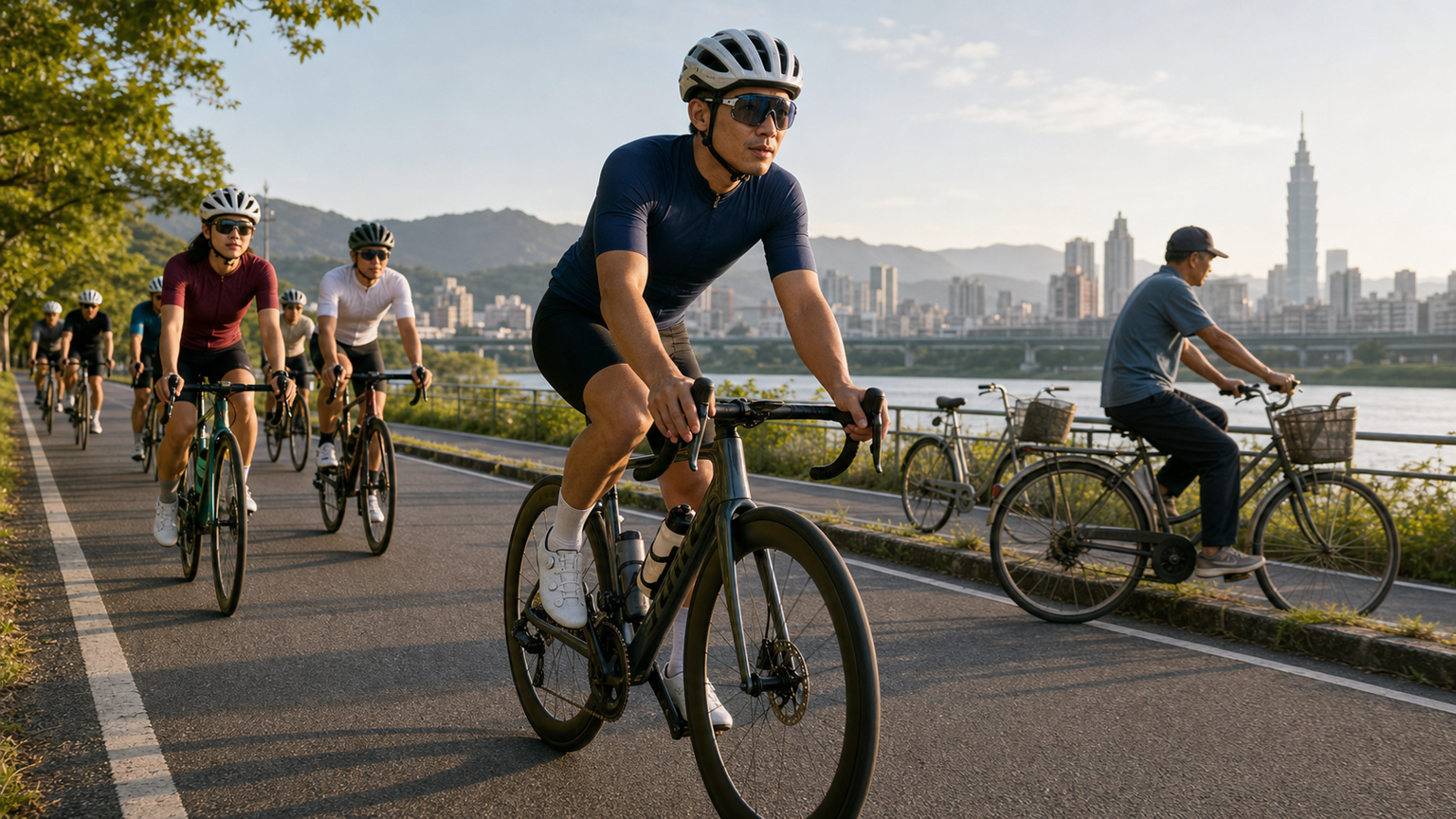
Thirty years ago, bicycles were a common sight on Taiwan’s streets, serving as everyday tools for farmers heading to the fields and workers commuting to their jobs. Back then, cycling was a means of making a living, with little room for style. Yet times have changed—as Giant and Merida propelled Taiwan’s bicycle industry to the top of the world, as the Tour de Taiwan attracted international teams to compete, and as riverside parks fill up every weekend with cyclists in brightly colored jerseys, Taiwan’s cycling culture has already undergone a quiet revolution.
An Industrial Foundation Cultivates the Cultural Soil
Taiwan’s rise as a global cycling powerhouse hinges on its solid manufacturing base. In the 1970s, factories around Dajia in Taichung began mass-producing bicycle parts, gradually forming a complete supply chain cluster. The Taichung-Changhua region remains a vital global hub for bicycle components to this day—from frames and gears to brakes, virtually every top-tier brand can trace parts back to Taiwan.
Giant was founded in Taichung in 1972, evolving from OEM manufacturing to building its own brand, and after forty years of effort, it claimed the throne as the world’s largest bicycle brand. Merida also started in Dajia and now sponsors professional teams racing in the Tour de France. These two companies are not just commercial success stories; they mark the starting point of Taiwanese identity with cycling culture.
Policy Initiatives Drive Changes in Riding Habits
After 2010, government policy became a key catalyst for cultural transformation. Municipalities successively built riverside bike paths—Taipei’s Tamsui River, Dahan River, and Xindian River trails were linked into a network, giving residents safe and comfortable riding spaces.
| Policy Milestone | Year | Impact |
|---|---|---|
| Taipei’s riverside bike path network fully connected | 2012 | Surge in holiday ridership |
| YouBike public bicycle system launched | 2012 | Commuter cycling became widespread |
| Bicycle-Friendly City Program | 2015 | Ten counties/cities improved parking facilities |
| Relaxation of bicycle-on-train policy | 2019 | Increased demand for long-distance cycling trips |
Government-hosted events such as the East Rift Valley Bicycle Festival and the Penghu Cross-Sea Cycling Event have also attracted large numbers of tourists, making cycling a key calling card for Taiwan’s tourism industry.
Social Media Accelerates Cultural Diffusion
The proliferation of Facebook, Instagram, and YouTube has rapidly spread Taiwan’s cycling culture from small circles to the general public. Cyclists share round-island trip journals, mountain ride records, and gear unboxings, forming a vast network of knowledge and emotional exchange.
Taiwan’s round-island cycling culture is especially unique. Countless individuals and groups complete the loop every year—this nine-to-ten-day journey has become a bucket-list item for many Taiwanese. It is not merely a physical challenge but a deep encounter with the land and its people.
- Taiwan’s total bike path length exceeds 4,000 kilometers
- Public bicycle stations across the island number over 10,000
- An estimated tens of thousands of people complete the round-island ride each year
- Taipei Cycle, the bicycle exhibition, attracts over a thousand exhibitors worldwide
A Qualitative Shift from Sport to Lifestyle
In recent years, Taiwan’s cycling culture has undergone finer differentiation. Road cyclists pursue speed and performance, mountain bikers explore hidden trails, urban fixed-gear riders value aesthetics and taste, and bikepackers use bicycles as a vehicle for lightweight travel.
Boutique bicycle shops have sprouted up like bamboo after rain in Taipei’s Daan and Zhongshan districts—not merely selling equipment but serving as cultural hubs. Weekend shop rides, café-style showrooms, and handcrafted custom frames all declare: cycling has become a lifestyle to be proud of.
Practical Advice
- Beginners: Start by renting or purchasing a commuter bike; after experiencing the joy of riding, decide whether to upgrade to a sport model
- Intermediate riders: Join a local cycling community or team and ride with experienced cyclists—that’s the fastest way to improve
- Gear shopping: Dali in Taichung and the Nanjing East Road area in Taipei are home to numerous professional bike shops; take advantage of anniversary sales for promotions
- Understanding the culture: Read Cycling Update magazine and follow Taiwanese professional cyclists on social media to deepen your knowledge of the local scene
Conclusion
The rise of Taiwan’s cycling culture is the combined result of industrial heritage, policy support, and grassroots civic initiative. From factory floors in Dajia to boutique bike shops in Taipei, from rural farm paths to rugged mountain trails, the bicycle is no longer just a mode of transportation—it is a way for Taiwanese people to express themselves and connect with the land. This story is still being written, and every person who picks up the pedals is a co-author of this history.
Related Reading
- The Past and Future of Taiwan’s Cycling Culture: From Early Racing to Modern Community Riding
- Taiwan’s Cycling Culture and Its Global Impact: Giant, Merida, and the World Stage
- Taiwan’s Position on the International Cycling Stage: How Giant and Merida Changed the Global Bicycle Industry
- The Development History of Taiwan’s Cycling Culture: A Half-Century Transformation from Utility to Riding Culture
高雄綠園道鐵路自行車道 / 外地人能輕鬆駕馭 還是整路崩潰? / 2025 全線開通 春節實地探索一次!(附GPS連結)/ 公路車 / CT Yeh
1 年前
2023自行車展!與環台賽選手一同表演賽 / 全自動AI Fitting?/ TIME新車發表/神秘充電桌等 精華分享 VLOG | CT Yeh | 公路車
3 年前
日本公路最高登山賽,台灣首位YT挑戰實錄,乘鞍登山賽40週年,賽前篇完整版,請到我的YT收看 #公路車 #cycling
10 個月前
2022台北國際自行車展 訓練台 試騎心得大全 差點腿軟走出! 元宇宙武嶺!| Garmin Tacx Oreka Xpedo Wahoo | 公路車 | CT Yeh
4 年前
台中大雪山 膏王領騎 震到都沒畫面了 公路車
5 年前
單車元宇宙新霸主?TrainingPeaks Virtual 實測 / Zwift 完美平替? 還是超越?/ 有台灣國旗!前身 indieVelo / 公路車 / CT Yeh
1 年前
#Canyon Aeroad 公路車 三年騎乘 #心得 | 出保方式 | 購買價格計算 | 同場加映累積三年大保養慘況
6 年前
2026 車錶排行榜!誰是最多車友正在使用?練家子最愛哪款?🏆 (2萬名車友數據) / 公路車 / CT Yeh
5 個月前