Introduction
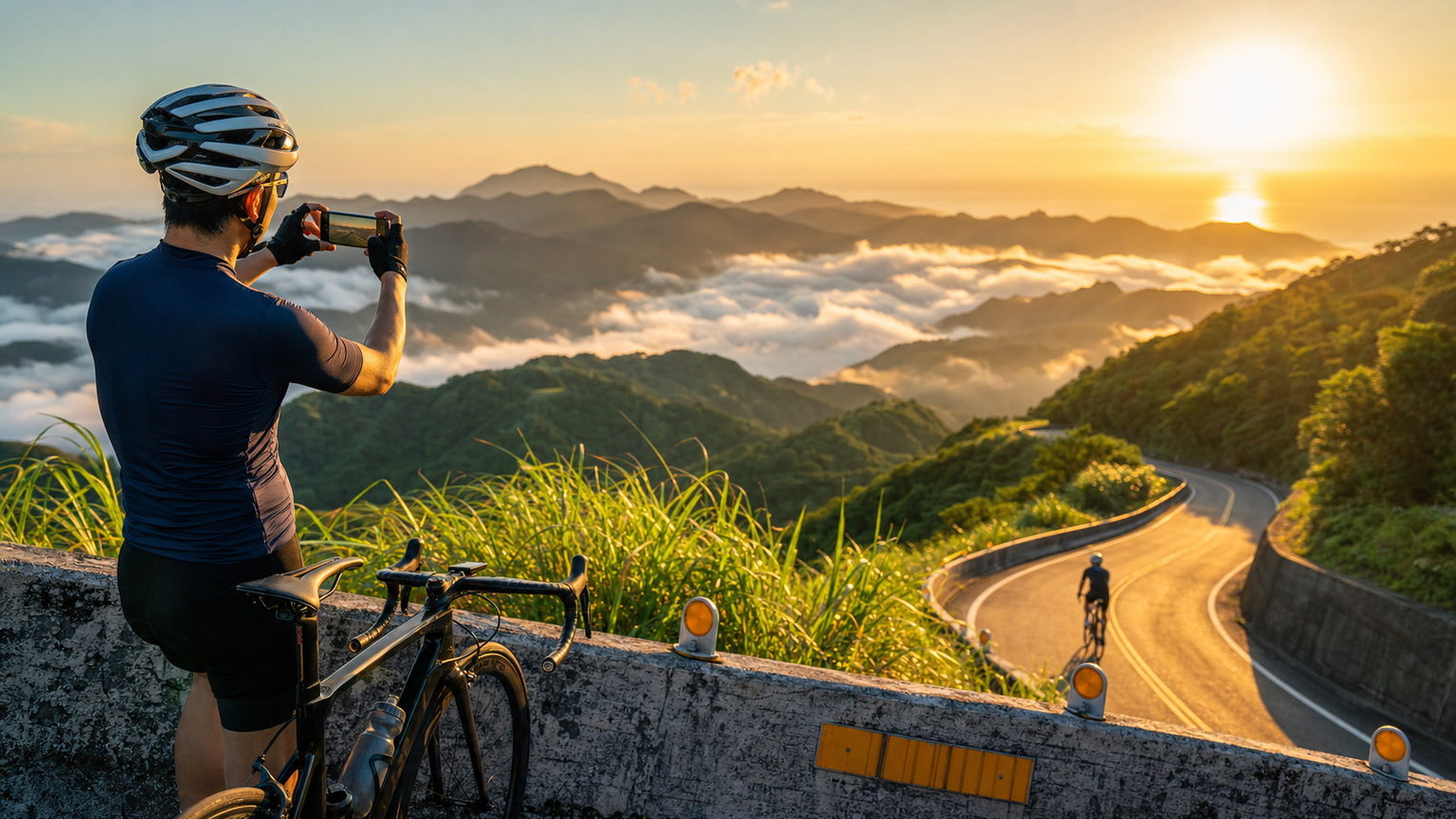
On Instagram, cycling photography has developed its own unique visual language. Behind every well-composed close-up of a beloved bike, a backlit silhouette on a mountaintop, or a group ride cutting through morning fog, there is a keen awareness of light, composition, and timing. Riding is an art of motion, and photography is the way to leave a trace of that motion. This article shares how to capture outstanding images while riding, from gear selection to composition techniques, so your cycling photos become more than just records—they become works of art.
Gear Selection: Phone or Camera?
Modern smartphones are already quite capable when it comes to photography, making them the most practical choice for most riders. They are easy to carry, simple to share, and with the help of editing apps, a phone can absolutely produce stunning photos for social media.
But if you want to pursue higher image quality—especially in complex lighting conditions or for compositions requiring telephoto compression—a dedicated camera still has its irreplaceable advantages.
| Gear Type | Advantages | Disadvantages | Best Suited For |
|---|---|---|---|
| Smartphone | Lightweight, quick sharing, AI enhancement | Narrower dynamic range, weaker night shots | Everyday documentation, social sharing |
| Action Camera (GoPro, etc.) | Waterproof, shockproof, wide-angle motion | Limited image quality, time-consuming post-processing | Dynamic riding, first-person perspective |
| Lightweight Mirrorless | Excellent image quality, interchangeable lenses | Added weight, needs extra protection | Feature shoots, landscape documentation |
| Film Camera | Unique texture, forces slow thinking | Development costs, no instant sharing | Artistic creation, specific styles |
Key accessories for phone photography:
- Handlebar mount: Securely attaches your phone to the bike for shooting riding dynamics
- Phone clip on backpack strap: Quick access while riding without stopping
- Waterproof phone pouch: A must-have to protect your phone given Taiwan’s unpredictable weather
Light Is the Most Important Element in Photography
Taiwan’s natural light follows its own rhythms, and mastering these rhythms can dramatically improve your photo quality.
Golden Hour: The hour after sunrise and the hour before sunset, when the sun sits low, color temperature shifts warm, and light turns soft—almost any composition looks good. This is also one reason many riders choose to set off early in the morning.
Blue Hour: The brief window between sunset and full darkness, when the sky takes on a deep blue tone. Paired with city lights or riverside lamps, it can produce dreamy, atmospheric shots.
Taiwan’s unique lighting conditions:
- The sunrise light along the eastern Pacific coast is the most dramatic light scene in all of Taiwan
- Morning fog in the northern mountains creates mysterious, diffused light effects
- The low-angle sunset in Tainan and Kaohsiung paints rice paddies and coastlines in gold
Composition Techniques: Giving Photos a Story
Rule of thirds: Divide the frame into nine equal sections and place your subject (person, bike, landmark) on the intersection points, avoiding always centering the subject to create more tension in the frame.
Using foreground elements: Find natural foreground frames in road textures, fallen leaves, or grass to add a sense of depth to the image.
Leading lines: Roads, fences, and riverbanks are natural leading lines that guide the viewer’s eye into the depths of the frame, creating a sense of perspective.
Tips for close-ups of your bike:
-
Low-angle upward shot: Makes the bicycle appear taller, with only the sky as background—clean and powerful
-
Detail close-ups: Close-ups of gears, disc rotors, and bike logos showcase the aesthetics of the equipment
-
Environmental context: Park the bike in scenes with a story: a mountaintop, a café entrance, beside a rice paddy
-
Think of 2–3 scenes you want to shoot before heading out to make every stop worthwhile
-
When shooting dynamic riding, increase shutter speed (use “sports mode” on your phone) to freeze motion
-
When shooting into the light, tap the screen to focus on the subject and adjust exposure
-
Stay restrained in post-processing; natural tones often age better than heavy filters
Safety Rules for Shooting While Riding
Safety always comes before photos.
- Stop before shooting: Unless it’s an emergency, pull over before taking out your phone to shoot. Don’t operate your phone while riding
- Let your companions know: If you need to shoot your fellow riders in motion, communicate in advance so they know you’ll be stopping
- Use a mounted setup: For recording riding footage, use a mount or action camera—never handheld
Practical Advice
- Develop your own style: Follow cycling photography accounts you admire, find a visual style that resonates with you, then put it into practice in your own shooting
- Editing tools: Lightroom Mobile (the free version is sufficient), VSCO, or Snapseed—pick one and get familiar with it
- Tag locations: When sharing on Instagram, tag the correct location so more riders can discover that scene
- Review regularly: Organize your photos once a season, delete duplicates, keep the best, and build your own visual cycling diary
Conclusion
Photography while riding is a tribute to those fleeting beautiful moments. That morning light atop the Beiyi mountain pass, that golden rice paddy along the eastern coast, that moment a riding companion turns back and smiles at you—all deserve to be properly captured. Pick up your phone or camera, see the world through a photographer’s eyes, and let every ride leave behind a visual story worth remembering.
Related Reading
DJI Osmo Action 6 / 單車運動拍攝實用技巧 公路車 CT Yeh
7 個月前
#公路車 #Fitting 靠人工智慧APP 幫你調整單車
6 年前
CT 喇低賽) 單車 比賽總是沒照片? 攝影師的觀點大公開 姿勢就是力量! 請加速1.25倍收看
7 年前
Insta360 Ace Pro 2 適合單車拍攝嗎?/ 萊卡色彩直出有夠狂 / GoPro 13 & DJI OM 5 夜間對比 / 公路車 / CT Yeh
1 年前
多機位拍片神器 DJI Action 2 拍出速度張力感 | 類空拍機視角 4陣列麥克風超強降風噪 實測! | 公路車 | CT Yeh
3 年前
Insta360 X3 單車YT界的拍攝神器! 首發實測 | 超強AI後製! 超強夜拍實測! 帥氣騎車錄影自己來! | 公路車 |CT Yeh
3 年前
SONY FDR-X3000 兩年 單車 錄影 使用心得 AS300
7 年前
下次拍照前要查清楚啦🤣 #cycling
7 個月前