Introduction
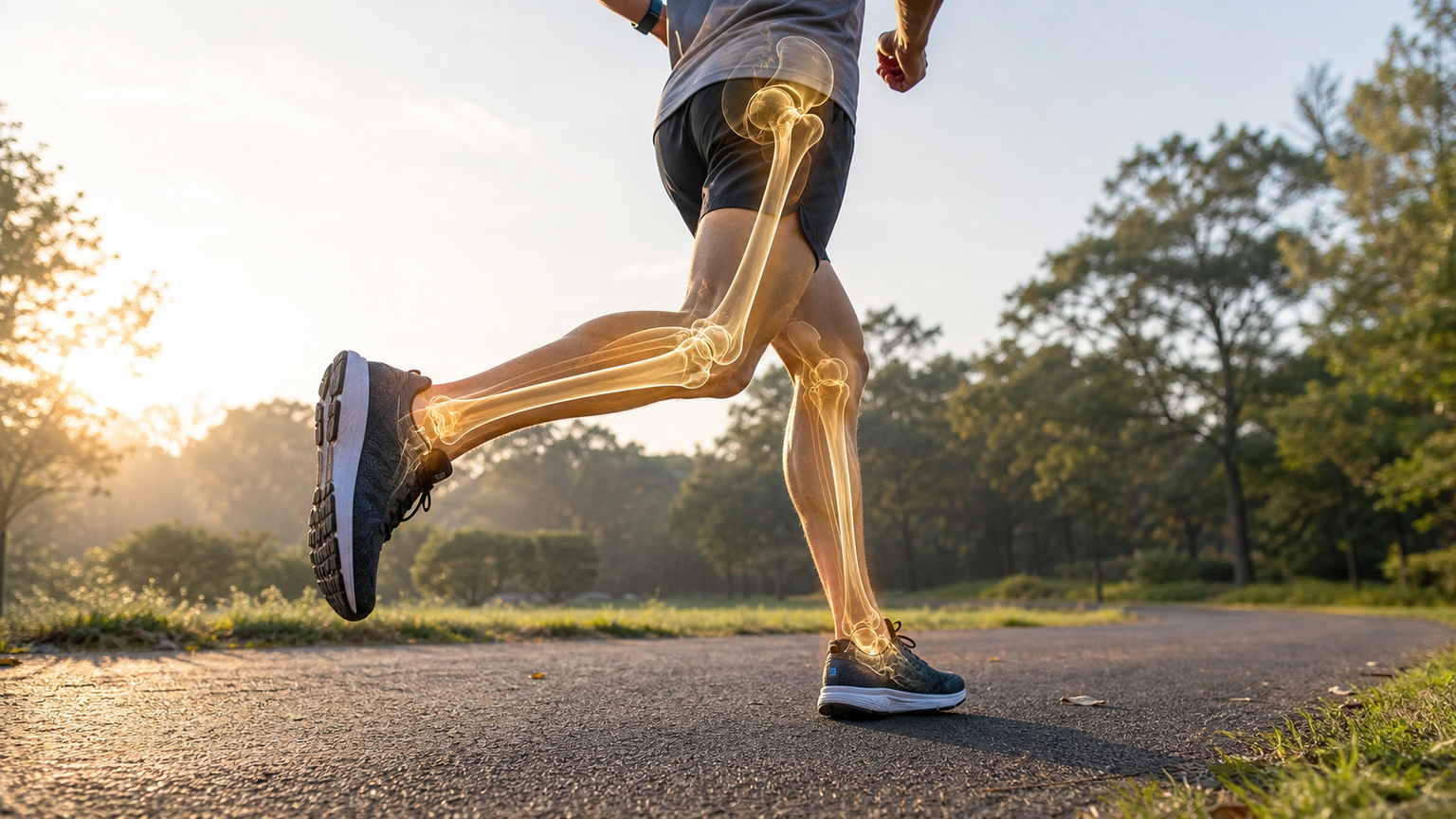
Many people worry that long-term running will “hurt the knees” or “damage the bones,” but the conclusions from sports science research are quite the opposite: moderate running training can significantly improve bone density and reduce the risk of osteoporosis. The key lies in “moderation” and “progression”—bones need time to adapt to impact loads. If the increase is too rapid, stress fractures (fatigue fractures) are more likely to occur.
The Piezoelectric Effect of Bone and the Bone Remodeling Mechanism
Bones are not static structures but living tissues that continuously undergo dynamic remodeling (Bone Remodeling). When the impact forces generated by running are transmitted to the bones, the bone tissue undergoes slight deformation, triggering two key mechanisms:
Piezoelectric Effect: When bone deforms under load, it generates weak electrical signals. These signals stimulate increased activity in osteoblasts, promoting the deposition of new bone tissue.
Mechanotransduction Pathway: Osteocytes sense mechanical stress and release signaling molecules (such as the inhibition of Sclerostin), activating osteoblasts and suppressing osteoclasts.
| Bone Cell | Function | Impact of Running Training |
|---|---|---|
| Osteoblasts | Form new bone | Increased activity, accelerated bone deposition |
| Osteoclasts | Break down old bone | Initially increased (adaptive signal), trending toward balance long-term |
| Osteocytes | Sense mechanical force, regulate remodeling | Continuously sense impact signals, driving the remodeling cycle |
Which Areas Show the Most Significant Bone Density Improvements
The bone benefits of running are site-specific, with the most heavily loaded areas benefiting the most:
- Femoral Neck: A high-risk area for stress fractures and the region showing the most significant adaptive benefits from running
- Tibia: Studies show that runners have higher tibial cortical bone density than non-exercisers of the same age
- Calcaneus: Every foot strike delivers repeated impact loads
- Lumbar Spine: Vertical impact also helps maintain spinal bone density, outperforming non-weight-bearing exercises such as swimming
Conversely, while swimming and cycling are excellent cardiovascular workouts, they lack bone impact loading. People who exclusively engage in these activities long-term may have lower bone density than runners of the same age.
Preventing Stress Fractures—Bone Adaptation Takes Time
The complete bone remodeling cycle takes approximately 4-6 months, which means the rate at which training volume increases must allow bone remodeling to keep pace. If the increase is too rapid (exceeding the 10%/week rule), microdamage accumulates faster than the repair rate, leading to stress fractures.
High-Risk Groups:
- Female runners (especially those with irregular menstrual cycles, involving the Female Athlete Triad)
- Those with insufficient calcium and vitamin D intake in their diet
- New runners during the first 6 months of training
- Those returning to training quickly after recovering from injury
Prevention Strategies:
- Follow the 10% mileage increase rule
- Ensure adequate daily calcium intake (1000-1200 mg) and sufficient vitamin D (serum target 30-50 ng/mL)
- Wear running shoes suited to your foot type to reduce unnecessary localized excessive impact
- Add 1-2 strength training sessions per week to enhance support from the muscles surrounding the bones
Practical Recommendations
- Be cautious with volume increases in the first 3 months for beginners: Bone adaptation is slower than cardiovascular adaptation; don’t increase volume all at once even when it feels easy
- Incorporate training on varied surfaces: Occasionally run on grass or trails to change impact angles and avoid repeated accumulation of stress on the same area
- Be cautious with hill running: Ground reaction forces during downhill running can reach 3-5 times body weight, making it a significant trigger for stress fractures
- Bone density screening: For runners over 40, a bone density scan (DXA) every 2-3 years is recommended to monitor bone health
- Pay attention to pain signals: Deep localized bone tenderness (especially in the tibia and feet) is an early warning sign of stress fractures—reduce volume immediately and seek medical attention
Conclusion
For bones, moderate impact from running is “bone-strengthening” rather than destructive. Through gradual progression, adequate nutrition, and proper strength training support, running is one of the best investments you can make in maintaining bone health and resisting age-related osteoporosis. Bone adaptation may be slow and silent, but every foot strike is quietly strengthening your skeletal structure.
Related Reading
- Bone Density Benefits of Running: Impact Forces and Bone Strengthening
- Bone Adaptation in Running: Risk Factors for Stress Fractures and Bone Density Improvement
- Running and Bone Adaptation: Balancing Stress Fractures and Bone Density Building
- Bone Density in Older Runners: Benefits of Weight-Bearing Training for Osteoporosis
白沙屯媽祖進香在家走!UREVO 坡度自調走步機 / 可連接訓練遊戲APP MyWhoosh / 邊看直播邊走起來 / CT Yeh
11 個月前
西進武嶺 免費訓練分析服務 Intervals | 練不夠還是練過頭?你哪一種類型選手?AI模型告訴你! | 備戰神器 | 公路車 訓練 | CT Yeh
4 年前
摔車後補裝備: 好市多新款單車安全帽& Specialized Romin 北高整路屁股都不痛的坐墊 | 一千元居然有MIPS | CT Yeh | 公路車
4 年前
#公路車 #Fitting 靠人工智慧APP 幫你調整單車
6 年前
一個測試有沒有認真練車的方法😂 #公路車
10 個月前
大家都在開箱的...單車用藍芽對講耳機真的有幫助嗎? SENA BiKom 20 長距離旅遊 & 海鷗繞圈賽 實際體驗心得 / 公路車 / CT Yeh
9 個月前
公路車 BB培林大升級! / 備戰海鷗繞圈賽 Canyon Aerod & TIME 一起改 / MIT大廠 CEMA對鎖式陶瓷培林BB & 導輪 / 公路車 / CT Yeh
2 年前
Never Stop 西進武嶺 前後雙機 完整全程錄影 訓練台 實境
8 年前