Introduction
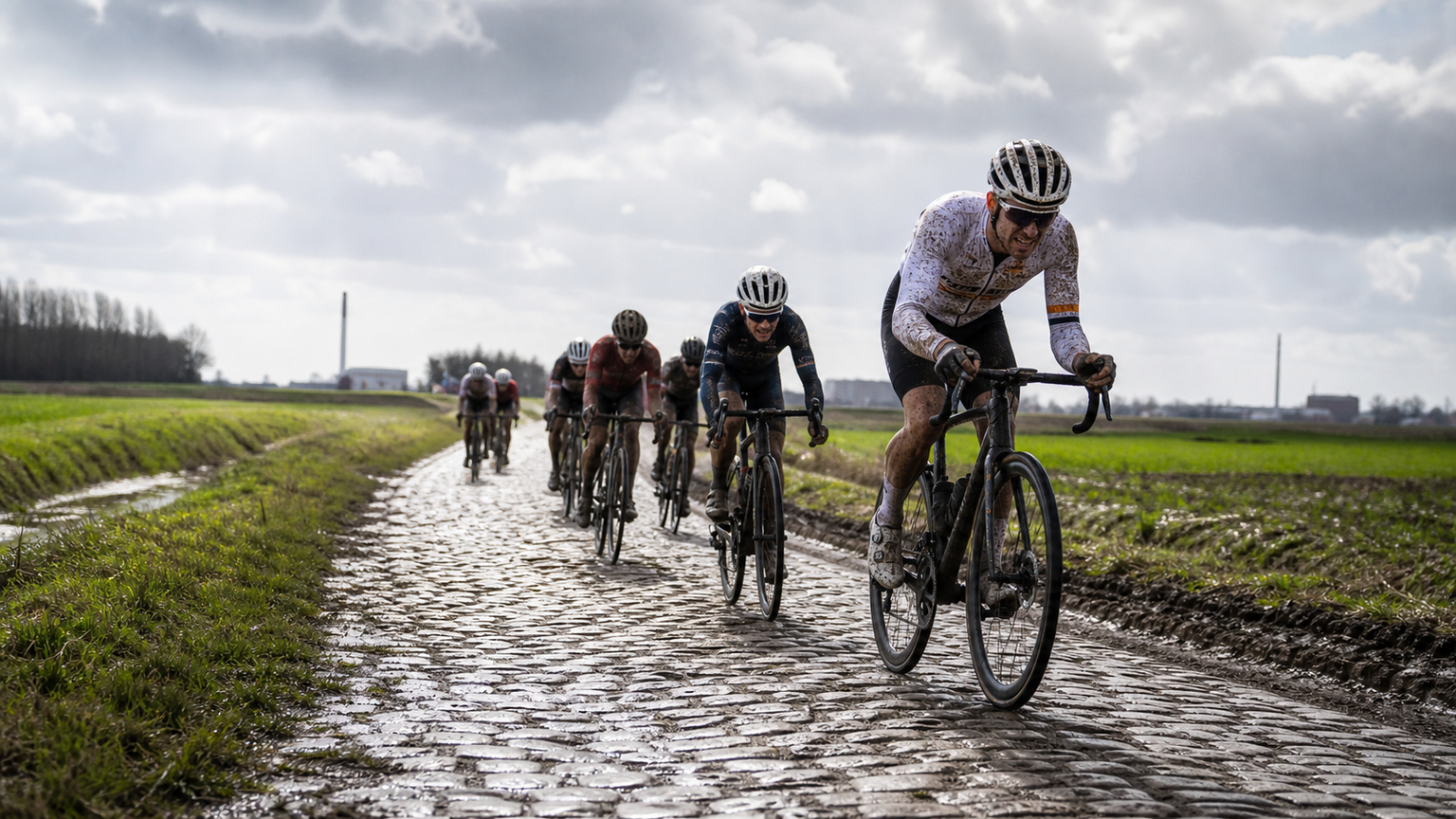
Every April, on a patch of land in northern France where industrial ruins meet farmland, a race known as the “Hell of the North (L’Enfer du Nord)” captivates and terrifies cycling fans worldwide. Paris-Roubaix is not a Grand Tour, yet it possesses a drama that the Grand Tours cannot match—its weapon is the century-old, pothole-riddled cobblestone sectors (Pavé).
The Origins and History of Paris-Roubaix
Paris-Roubaix was first held in 1896, initially conceived as a promotional race linking Paris to the newly built velodrome in Roubaix. However, the route crossing the mining region of northern France included extensive farm cobblestone paths, and this “flaw” unexpectedly became the soul of the race.
Both World Wars interrupted the event, and the wartime destruction of the farmland in northern France only made those cobblestone roads even rougher. The race’s post-war revival thus earned the nickname “Hell of the North”—a name derived from a famous 1919 photograph in which the photographer captured a course left in hellish devastation.
| Key Milestones of Paris-Roubaix | Year |
|---|---|
| First Paris-Roubaix | 1896 |
| “Hell of the North” nickname spreads | 1919 |
| Added to the UCI World Tour | 2005 |
| First women’s Paris-Roubaix | 2021 |
Cobblestone Sectors: Every Section Has a Code Name
The defining feature of Paris-Roubaix is the sections listed as “Secteur Pavé” (cobblestone sectors), each with its own name and star rating (1 to 5 stars); the more stars, the harder it is. The total distance is approximately 260 to 270 kilometers, of which the cobblestone sectors account for roughly 50 to 55 kilometers.
The most infamous sections include:
- Trouée d’Arenberg (Arenberg Forest): The highest five-star rating, approximately 2.4 kilometers long, with uneven cobblestones, a broken surface, and extremely dangerous when wet; it is regarded as the psychological watershed of the race.
- Mons-en-Pévèle: Five-star rating, slightly wider but equally rough.
- Carrefour de l’Arbre: Four-star rating, usually located about 18 kilometers from the finish, often serving as the stage for the final showdown.
Race Characteristics: Equipment, Technique, and Courage
Winning Paris-Roubaix requires more than just endurance; it demands specialized equipment and technique:
- Wider tires: Traditional road races use 25mm tires, while Paris-Roubaix riders typically use 28 to 30mm or even wider tires, lowering tire pressure to improve shock absorption on the cobblestones.
- Special frame designs: Some riders use specially made frames with better vibration damping, or add shock-absorbing components to the seatpost.
- Gloves and bar tape: Multiple layers of bar tape plus thicker gloves are essential gear to withstand hours of vibration.
- Cobblestone technique: Riding on the stones requires relaxing the wrists and arms, letting the bike find its own line; forcing control is more likely to lead to a crash.
Mechanical failures are commonplace at Paris-Roubaix, and the number of bike or wheel changes often decides a rider’s fate. Each team typically positions several support vehicles along the cobblestone sectors so riders can swap bikes immediately in the event of a breakdown.
Legendary Riders and Memorable Moments
Paris-Roubaix has produced many legendary stories:
- Eddy Merckx and Roger De Vlaeminck each won four times, earning the title “Monsieur Paris-Roubaix.”
- Frank Coppi’s story of persevering to the finish under impossible conditions has inspired countless riders.
- In recent years, the repeated duels between Mathieu van der Poel and Wout van Aert have brought this ancient race back into the spotlight for younger audiences.
Practical Advice
Key tips for enjoying Paris-Roubaix:
- Focus on the situation entering and leaving the Trouée d’Arenberg, as the race is often decided there.
- Watch for mechanical failures and crashes: at Paris-Roubaix, a single flat tire can shatter a champion’s dream or launch a dark horse.
- In wet weather, the race becomes even more unpredictable, and the element of “luck” rises dramatically.
- You can check the live cobblestone sector tracker on the official website; combined with commentator analysis, it enhances the race experience.
Conclusion
Paris-Roubaix is not the longest race, but it is the one that best tests human willpower. The shredded tires, the mud-caked riders, and the final sprint on the indoor wooden velodrome in Roubaix—these elements together form the most moving tragic beauty in cycling. The Hell of the North will forever call out to the bravest.
Related Reading
- Paris-Roubaix, the Road to Hell: History and Challenges of the Cobblestone Classic
- In-Depth Analysis of the Paris-Roubaix One-Day Race: The Cobblestone Legend of the Northern Hell
- Legends of the Classics: The Cobblestone Challenge of Paris-Roubaix
- Paris-Roubaix: Tactics and History of the Cobblestone Hell
#PUSHBIKE 原來這麼好玩! 小朋友 滑步車 初體驗 超可愛
6 年前
微雨戰! 2022桃園市長盃錦標賽 無敵交管 沒來玩太可惜了! 羅馬公路太可怕 差點成佛! 公路車 | CT Yeh
4 年前
2024 如來神掌 百人約騎挑戰!feat. 秘境單車社團 / 神人們太可怕 / 全程錄影 x 完整坡度解析 / 公路車 / CT Yeh
2 年前
司馬庫斯 | 單車員工旅遊 | 比武嶺還接近上帝的路 | 2021 全面實況 路況解析 | 空拍 櫻花炸開超濃密 | 財伯觀光果園 | CT Yeh
5 年前
一日北高常見問題大集合 | 攻略 | 路線 | 訓練 | 補給 | 自行車 單車 | 一日雙城 | 雙塔 | TWB北高360 | 屁股痛
6 年前
2024 春季KOM 賽事精華版 / 太魯閣 / 貓捉老鼠精彩追擊 / 錄影剪輯版 / 東進武嶺 / 公路車 (請開啟字幕)
2 年前
經典 陽金P字道 | 路線解析 | 魔王親臨指導 | 武嶺備戰訓練營 | NeverStop | 公路車 | 單車
6 年前
[海外單車] 日本 茨城 霞之浦單車 銀杏 慢遊體驗
7 年前