Tour de France's Unsung Heroes: The Sacrificial Philosophy and Strategic Art of the Domestique System
Introduction
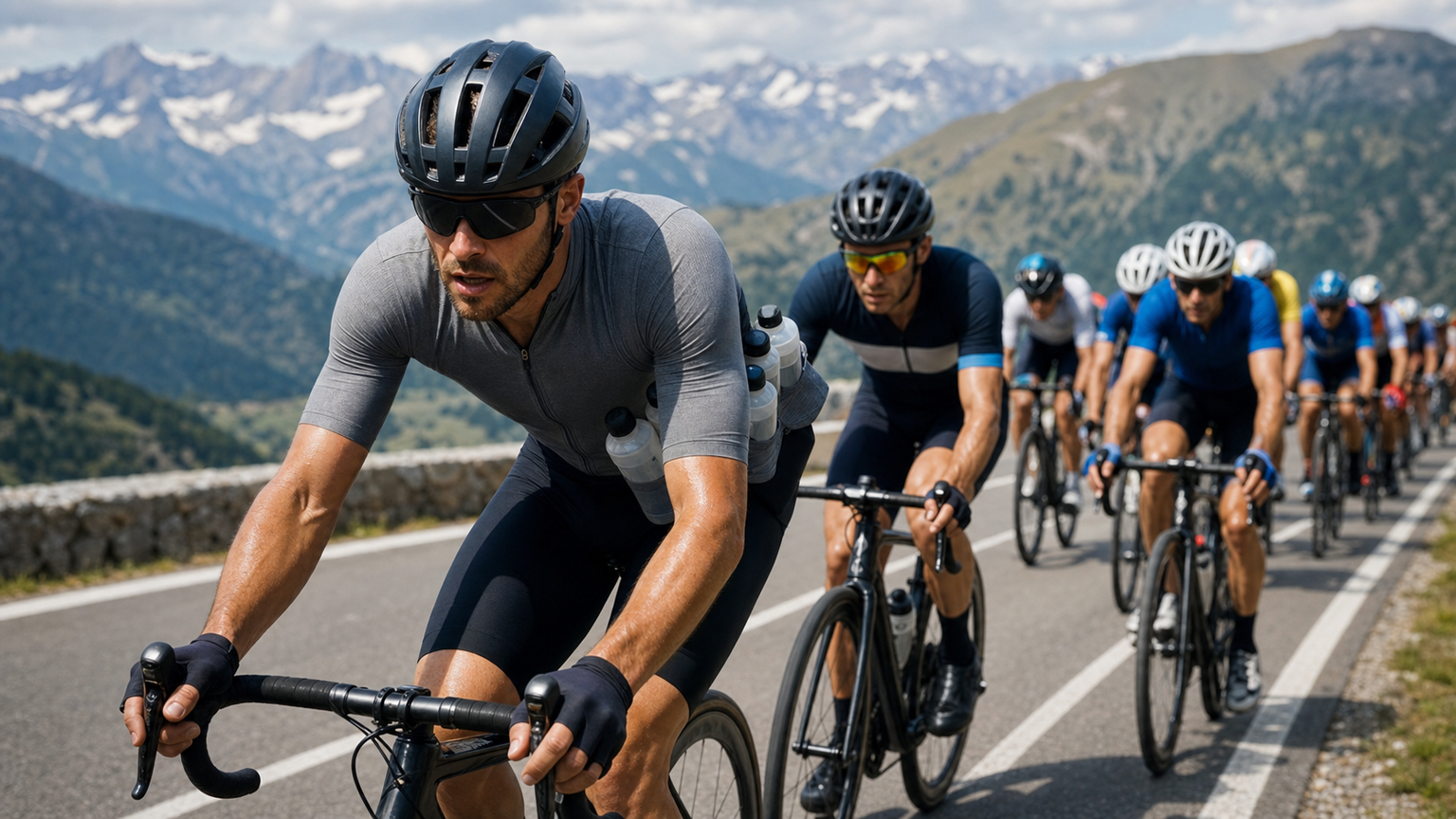
Each team in the Tour de France is made up of 8 to 9 riders, but only one or two are the heroes in front of the cameras. The majority who toil behind the scenes have a special title: Domestique (from French, meaning “servant” or “helper”). They are the most unique role in professional cycling—immensely talented, yet dedicated to sacrificing themselves for the success of others. Only by understanding the Domestique can you truly grasp the tactical depth of professional cycling.
The Origins of the Domestique: From “Personal Bodyguard” to Institutionalized Role
As early as the founding years of the Tour de France, top riders knew how to build support teams. But the concept of the Domestique took shape in the early 20th century. At that time, teams began to realize that a single gifted rider could not handle three weeks of mixed mountain, time trial, and flat stages alone—he needed companions who could protect him at critical moments.
As the scale of races grew and team sponsorship systems matured, the Domestique gradually became a core component of professional teams. In today’s UCI WorldTour teams, within each eight-rider squad, there are usually only one or two team leaders (GC Leaders) fighting for the overall win, with the rest serving as support riders playing different Domestique roles.
| Domestique Role Classification | Primary Task | Active Stage Types |
|---|---|---|
| Bodyguard | Protect the team leader safely through dense pelotons | Flat stages, technical sections |
| Water Carrier | Retrieve water bottles and food from the team car | Entire race |
| Lead-Out Man | Open the path for the sprinter until the final few hundred meters | Flat sprint stages |
| Climbing Domestique | Stay with the team leader in the mountains to maintain pace | Mountain stages |
| Scout | Ride ahead to survey road conditions and wind | Bad weather or technical sections |
The Daily Sacrifices of a Domestique
The Domestique’s sacrifice is not just physical—it is a psychological self-effacement:
- Giving up personal results: Many Domestiques are strong enough to win smaller races on their own, but in major events they must suppress their attacking instincts and focus entirely on serving the team leader.
- Superhuman physical output: On flat stages, Domestiques spend long periods at the front of the peloton driving the pace at high intensity, expending 20 to 30 percent more energy than riders sitting further back.
- Constant trips for supplies: Feed zones are set at intervals, and Domestiques must sprint back to the team car to collect provisions, then weave through the peloton to distribute them—an additional drain on energy.
- Taking on mechanical risks: When the team leader suffers a puncture or mechanical failure, a Domestique may sometimes have to give up his own bike and wait for the support car, sacrificing his own result.
Famous Domestique Cases
In history, the loyalty of some Domestiques has become legendary:
- Greg LeMond served for years as an assistant to Bernard Hinault before becoming a three-time champion himself; their complicated relationship remains one of the most intricate personal stories in Tour de France history.
- Chris Froome early in his career served Bradley Wiggins at Team Sky before later transitioning into a team leader role.
- José Luis Rubiera, at the US Postal team during the Armstrong era, is widely regarded as one of the finest climbing Domestiques ever.
The Tactical Evolution of the Modern Domestique
The Domestique system in contemporary professional cycling has become increasingly refined with data-driven management:
- Power meter application: Every Domestique wears a power meter, and coaches monitor the data in real time from the follow car, ensuring each rider’s energy expenditure stays within a calculable range.
- Integrated communication earpieces: Constant radio communication allows Domestiques to receive instructions at any moment, drastically shortening reaction times.
- Role rotation: Top modern teams adjust the primary and secondary tasks of their Domestiques based on each stage’s characteristics, maximizing overall efficiency.
Practical Advice
Learning to appreciate the Domestique will greatly elevate your viewing experience:
- On flat stages, watch that neat line of riders at the front of the peloton—the “train”: this is the result of a team’s Domestiques taking turns driving the pace.
- Pay attention to the first 30 kilometers of mountain stages: which Domestiques begin to “burn themselves up” setting the tempo for the team leader, and when they “drop off” is the moment their job is done.
- Search for videos like “Team Sky Train” or “UAE Emirates Lead-Out” to see textbook-level Domestique tactics.
Conclusion
The Domestique is the most moving role in professional cycling. They use their elite bodies to perform the most selfless work. Every time a yellow jersey rider crosses the line with arms raised, there are several exhausted Domestiques behind him, quietly finishing their own race. This is the deepest beauty of team sport: because someone is willing to disappear, someone else is able to shine.
Related Reading
- Team Leader Tactics Analysis: The Offensive and Defensive Strategies of Domestiques and GC Riders
- Tour de France Tactics Analysis: Team Strategy from Pace-Setting to Final Sprint
- Grand Tour Team Role Division: The Hidden Contributions of Domestiques, Climbing Lieutenants, and “Sacrificial Lambs”
- Behind the Scenes of Professional Teams: The Complete Support System from Team Doctors to Mechanics
新屋團體繞圈賽 | 眾多菁英好手賽道奔馳 | 千瓦女子軍團 | 無敵交管狂獲好評 明年你一定不能錯過 | #公路車
5 年前
公路車 | DanCup 繞圈賽 | 馮俊凱 151 林彥君 等大咖同場交流 | 卡丁車場也可以繞!| 4K超高畫質
5 年前
2025 海鷗團體繞圈賽 / 前八強賽事精華!/ 環台賽等級拍攝 / 國手菁英隊伍較勁 / CT Yeh #公路車
8 個月前
「悲情男車友」創作單曲 爆笑MV / 公路車 / CT Yeh / 4K劇情版
7 個月前
2025 海鷗團體繞圈賽 網路直播 超激烈裁判長視角 / EIPC 李廷威、Waypoint 等眾多高手競爭 / feat. 卡密兒主持 / 海鷗繞圈賽
9 個月前
2026 客家圓樓繞圈賽 網路直播!台灣一哥馮俊凱等好手菁英頂尖對決 / feats. TCU & 苗栗縣體育會自由車委員會 / 公路車
1 個月前
三鉄共購百人風中劍/ feat. 單車小D、Doris 、城希、Ruby、Ada/ 公路車 / CT Yeh
2 年前
2024桃園團體自由車邀請賽!4K環台賽等級拍攝 全賽事精華!/ 集團大摔車 / 60隊菁英好手衝線 / 公路車 CT Yeh
1 年前