Introduction
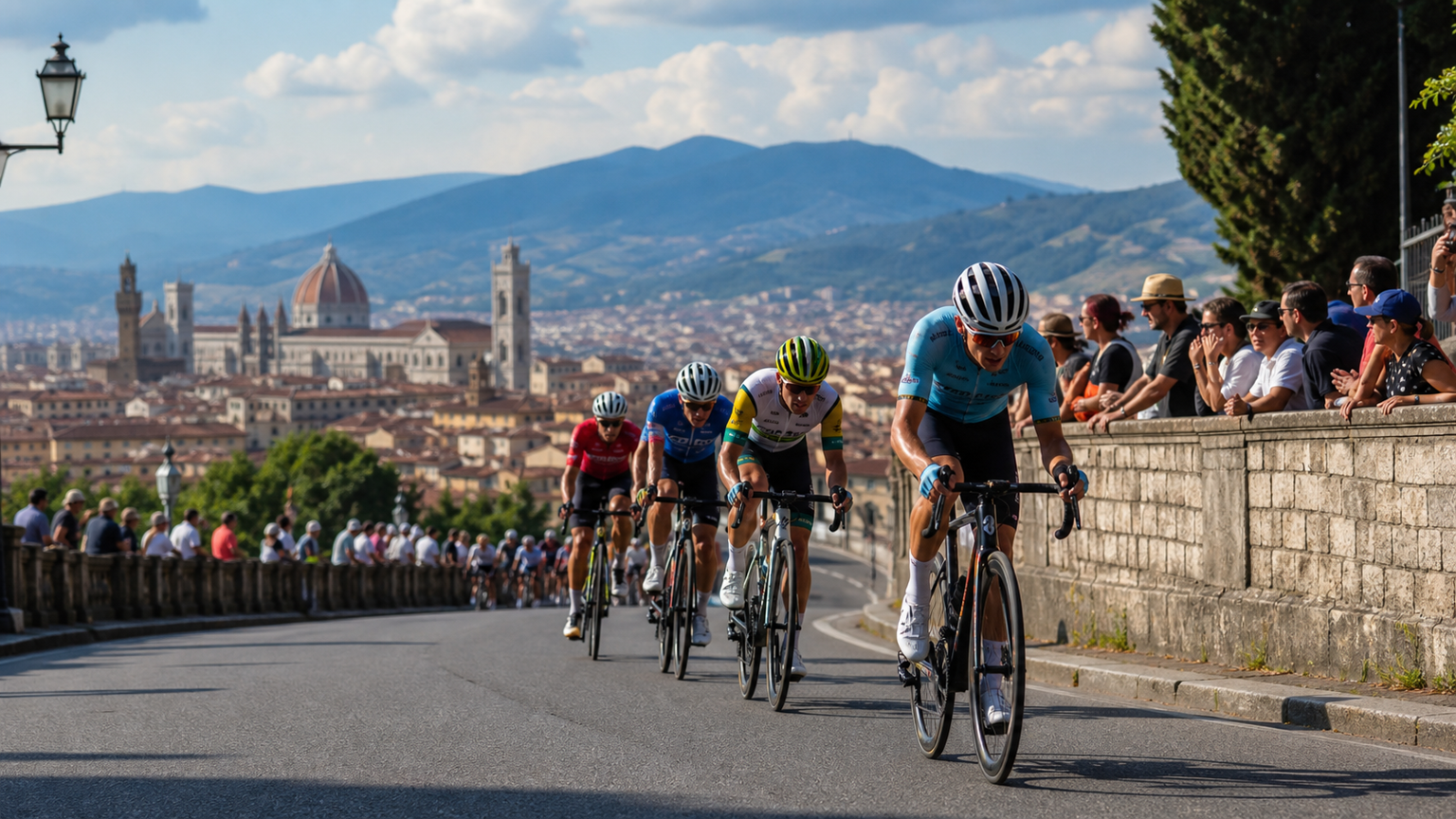
Under the Olympic flag, road cycling is one of the most spectacular outdoor events. Over hundreds of kilometers of open roads, crowds line the route cheering for their nations, while commentators’ voices reach the world in dozens of languages. However, the logic of the Olympic road race differs vastly from the UCI annual calendar—there is no battle of commercial team sponsorships here, only the pure pursuit of national glory.
The Unique Nature of the Olympic Road Race
The Olympic road race differs fundamentally from regular professional events in several ways:
- National team format: Riders represent their countries rather than professional teams. Top riders from the same nation who are usually rivals must now cooperate.
- Quota system: Each country’s starting slots are allocated based on UCI ranking points. Strong nations may field 5 male riders, while weaker nations get only 1.
- One-day race format: The Olympic road race is a single-day final, unlike the three Grand Tours which build over three weeks—one mishap can rewrite the entire outcome.
- Host city route design: The route for each Olympics is determined by the host city, showcasing local landscapes, but this also means every edition is a brand-new battlefield.
| Olympic Edition | Host City | Route Characteristics | Winning Rider Type |
|---|---|---|---|
| 2012 | London | Surrey Hills climb finish | Climber advantage |
| 2016 | Rio de Janeiro | Vista Chinesa steep climbs | High-difficulty climbing |
| 2020 (held in 2021) | Tokyo | Mount Fuji climbs | Extremely demanding mountain stages |
| 2024 | Paris | Multiple cobblestone sections added | All-rounder |
The Politics and Art of Route Design
The Olympic road race route is not just a competitive venue—it is a window through which the host nation showcases itself to the world:
- Landmark sections: The route must pass by Olympic city landmarks, such as the Tokyo race passing through the Mount Fuji area and the Paris race going by the Palace of Versailles.
- Political considerations in difficulty design: Host nations often design routes that favor their own riders’ characteristics; Italy hosts mountainous routes, while the Netherlands hosts flat ones.
- Safety considerations: Olympic courses require stricter safety controls than regular professional races, so sections that can be completely closed off are chosen.
- Television broadcast perspectives: Mountain summits, coastlines, and historic architecture are priority visual elements in route design.
Climate Factors: The Uncontrollable Variable of the Olympics
The Olympics are held in July and August, and different host cities bring vastly different climate challenges:
- Tokyo 2020’s extreme heat: In the summer of 2021, Tokyo saw temperatures of 35 to 38 degrees Celsius. Many riders faced heatstroke risks during the race, making hydration strategy critical.
- London’s rainy weather: Britain’s unstable summer climate left roads wet, increasing danger on technical sections.
- Paris’s changeable climate: In the summer of 2024, showers during the event affected safety on the cobblestone sections.
Facing climate uncertainty, Olympic riders’ preparation includes:
- Arriving early in the host city for climate acclimatization training
- Undergoing heat acclimatization training for high-temperature environments
- Preparing multiple kit options and adjusting on-site based on the day’s weather
Taiwan’s Current Status in the Olympic Road Race
Taiwan has had limited opportunities to compete in the Olympic road race in recent years, mainly constrained by UCI ranking points. However, with Taiwanese riders gradually rising in Asian competitions, and with technical support from brands such as Giant and Merida, the future development potential is worth anticipating.
Asian riders’ performances in the Olympic road race have also been improving in recent years. Japanese riders have shown tenacious competitiveness across multiple Olympic editions, injecting confidence into Asian cycling as a whole.
Practical Advice
Key points for watching the Olympic road race:
- Before the race starts, check the day’s weather forecast—temperature, wind direction, and rainfall can all dramatically affect the race.
- Look at the difficulty of the final climb on the route map—this usually determines the type of rider who wins.
- Pay attention to each nation’s roster composition: which country brought multiple climbers, which country only has sprinters—you can predict strategy from the lineup.
Conclusion
The Olympic road cycling race is a moment of glory that comes once every four years. It carries none of the commercial logic of the season—only the purest athletic competition. Route, weather, timing, and courage intertwine over those few hours into an epic that cannot be rehearsed. Every Olympic edition rewrites the history of this sport.
Related Reading
- Olympic Road Race Format and Strategy: A Complete Analysis
- Olympic Road Race History and Taiwanese Riders’ Participation Journey
- UCI Road World Championships Strategy: The One-Day Tactical Battle for the Rainbow Jersey
- UCI World Championships: Performance Analysis of Taiwanese Riders Across Editions
2025 乘鞍 KOM 登山賽挑戰實錄 / 日本公路最高 ! 賽前探路篇 / 比富士山厲害,無敵絕景!/ 40週年 / 中文YT首發 / 公路車 / CT Yeh #乘鞍ヒルクライム
10 個月前
超激烈!2025 南庄仙山KOM 賽事精華 / 男菁英A x 女菁英A / 公路車 / CT Yeh
9 個月前
日本公路最高登山賽,台灣首位YT挑戰實錄,乘鞍登山賽40週年,賽前篇完整版,請到我的YT收看 #公路車 #cycling
10 個月前
「悲情男車友」創作單曲 爆笑MV / 公路車 / CT Yeh / 4K劇情版
7 個月前
2024 春季KOM 賽事精華版 / 太魯閣 / 貓捉老鼠精彩追擊 / 錄影剪輯版 / 東進武嶺 / 公路車 (請開啟字幕)
2 年前
單車賞雪 裝備準備及注意事項分享 | 公路車
5 年前
一輪盃環湖挑戰賽 | TIME新車首航 | 一輪帶我飛 | 百萬流量都在場 | 4K畫質 | 公路車 | CT Yeh
3 年前
大家都在開箱的...單車用藍芽對講耳機真的有幫助嗎? SENA BiKom 20 長距離旅遊 & 海鷗繞圈賽 實際體驗心得 / 公路車 / CT Yeh
9 個月前