Deep Dive into Japan's Cycling Culture: Urban Bike Aesthetics and Riding Routes in Shimane and Hiroshima
Introduction
For Taiwanese cyclists, Japan is often the first choice when heading abroad to ride. The language barrier is relatively small, transportation is convenient, and food is a non-issue. Add to that Japan’s deep-rooted cycling culture—from everyday commuter bikes in the city, to the “Touge (峠) challenge” culture of mountain climbs, to meticulously crafted long-distance cycling routes—Japan offers an incredibly diverse riding experience.
Japanese Urban Bike Aesthetics: Tokyo and Kyoto
Tokyo is one of the cities with the highest density of bicycle commuting in the world, but its cycling culture carries a uniquely Japanese refinement:
- Mamachari Culture: Japanese homemakers (and increasingly, office workers) ride city bicycles with shopping baskets on both front and rear, representing how deeply cycling is woven into daily life.
- Exploring the Alleys of Asakusa: Starting from Kaminarimon in Asakusa and riding along the Sumida River embankment, passing Tokyo Skytree and Kiyosumi-Shirakawa, this is an excellent route for experiencing Tokyo’s cultural atmosphere.
- Arakawa Cycling Road: Stretching approximately 64 kilometers from Tokyo Bay northward along the Arakawa River, this is the top choice for long-distance leisure rides among Tokyo residents.
The cycling experience in Kyoto offers a different atmosphere:
- Riding along the Kamo River: From Demachiyanagi in the north to Fushimi in the south, passing various shrines and traditional architecture, this is ideal for a morning ride.
- Arashiyama to Hozugawa Trail: Enter Arashiyama through the bamboo grove path, then ride toward the Hozugawa River gorge, where mountains, waters, and ancient temples converge into a microcosm of Japanese aesthetics.
- Biwaichi (Lake Biwa Circuit): Drive from Kyoto to Otsu, then ride a full loop around Lake Biwa—approximately 200 kilometers—making it Japan’s most famous lake cycling route.
| Route | Distance | Difficulty | Recommended Season |
|---|---|---|---|
| Tokyo Arakawa Cycling Road | Approx. 64 km | Low | Year-round (avoid midday in summer) |
| Kamo River Riverside Ride | Approx. 20 km | Low | Spring (cherry blossoms), Autumn (fall foliage) |
| Biwaichi (Lake Biwa Circuit) | Approx. 200 km | Medium | Spring, Autumn |
| Shimane to Hiroshima (Shimanami Kaido) | Approx. 70 km | Medium-low | Spring, Autumn |
Shimanami Kaido: The Legendary Cycling Route of the Seto Inland Sea
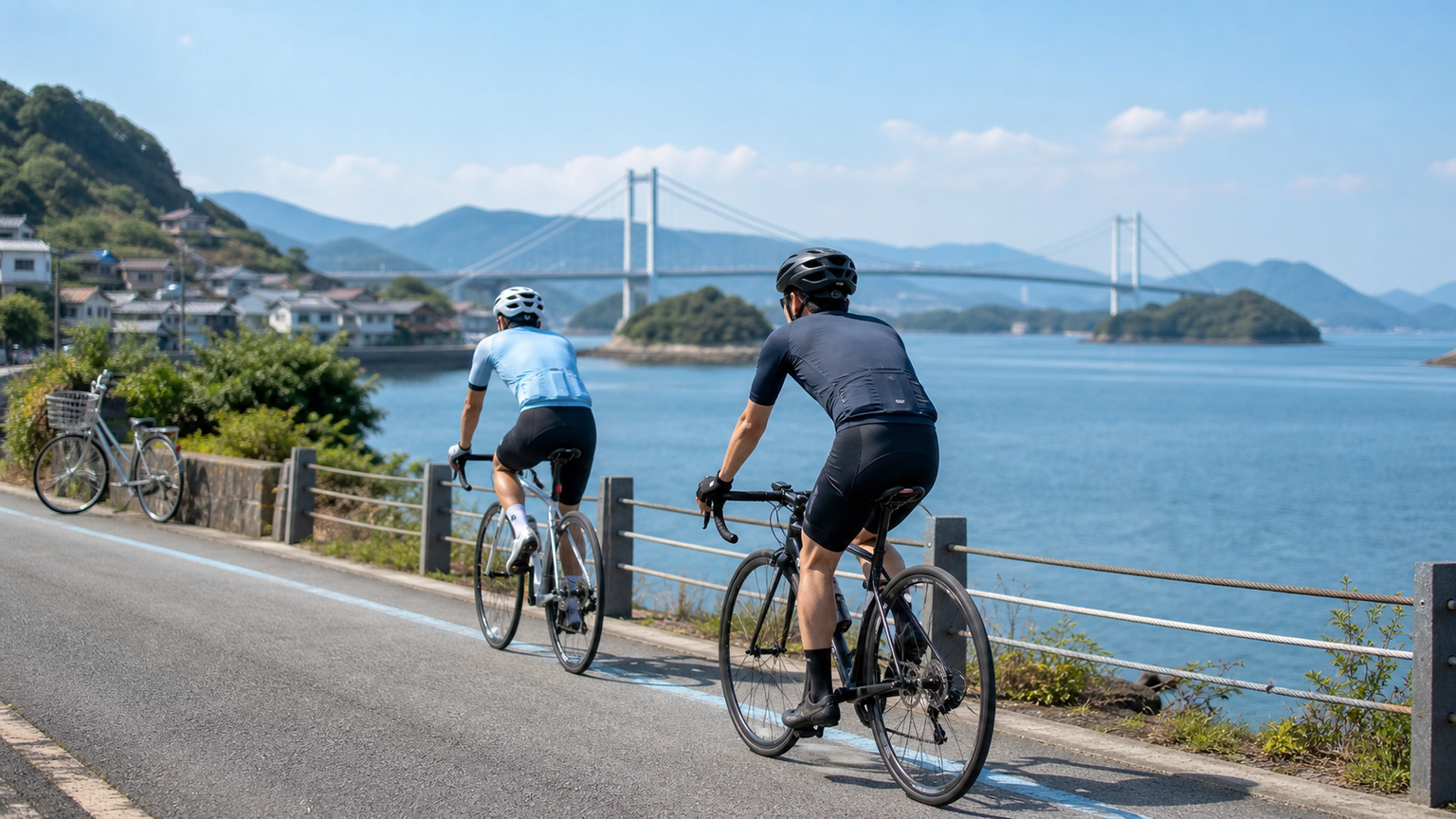
If there is one route in Japan that deserves the title “Mecca for cyclists,” it is undoubtedly the Shimanami Kaido. This cycling path, approximately 70 kilometers long, connects Onomichi City in Hiroshima Prefecture with Imabari City in Ehime Prefecture, crossing six bridges over the Seto Inland Sea and passing through six small islands.
The route’s highlights include:
- Complete cycling infrastructure: A blue guide line runs along the entire route, and bicycle rental stations are available on the islands (with one-way drop-off options), making it suitable for riders attempting their first long-distance ride.
- Picturesque Seto Inland Sea views: Riding across the bridges, you’re flanked by azure seascapes dotted with fishing boats and small islands; each bridge’s height and angle offers a different surprise.
- Island specialties and refueling: Omishima is a citrus-producing area, where freshly squeezed orange juice is the perfect ride refuel; the salt ice cream on Innoshima is also a must-try.
- Cultural depth: Ōyamazumi Shrine is one of Japan’s oldest shrines, housing important National Treasure weapons, making it an unmissable cultural stop on the ride.
“Okuizumo” Mountain Cycling in Shimane Prefecture
Shimane Prefecture, which fewer Taiwanese cyclists have explored, offers a distinctly different riding experience. The Okuizumo region is known for its ancient iron-making culture (tatara steelmaking) and rural landscapes, with undulating mountain roads that suit riders who enjoy climbing challenges:
- With few people on the road, the tranquil mountain villages and cedar forest paths make you feel as if you’ve traveled back in time.
- Izumo Taisha is one of Japan’s most important shrines; visiting by bicycle as your mode of transport adds a unique sense of reverence and ritual.
- The coastline along Shimane Prefecture also offers worthwhile riding sections, and combined with the Iwami Ginzan World Heritage Site, it enriches the cultural depth of the journey.
Practical Tips for Cycling in Japan
For Taiwanese friends planning to cycle in Japan, the following points are very practical:
- Bicycle transport: Japan’s Shinkansen allows bicycles to be carried using “rinko” (輪行) bags, but you should familiarize yourself with the rinko regulations for each route in advance.
- Riding etiquette: Japanese cyclists generally follow traffic rules; Taiwanese riders should also follow local customs, such as dismounting and walking your bike on pedestrian walkways.
- Refueling culture: Japanese convenience stores (7-Eleven, Lawson, Family Mart) are the best refueling stops, offering hot food, energy bars, and electrolyte drinks in abundance.
Conclusion
Japan’s cycling culture is one that blends a way of life into the rhythm of the pedal stroke. Whether it’s the morning along the Arakawa River in Tokyo or the dawn light on the bridges of the Seto Inland Sea, Japan makes cycling more meaningful in a quiet and refined way. For your next trip, make it Japan.
Related Reading
- Complete Guide to Cycling in Hokkaido, Japan: Lavender Fields and Plains Riding
- The World’s Most Beautiful Cycling Routes: Top Riding Destinations in New Zealand, Iceland, Norway, and Japan
- Kaohsiung Shoushan and Cijin Bikeways: Leisurely Urban Route Planning
- The Complete Japan Cycling Guide: A Taiwanese Cyclist’s Handbook from Traffic Rules to the Most Beautiful Routes
帶「咩」一起騎玩日本熊本 上天草市 / 單車旅行、賞海豚、釣魚、高空滑索通通有!/ 公路車 / CT Yeh /
1 年前
日本🇯🇵岡山&島波海道 單車之旅 (上集) / 機場停車省錢秘笈?/ 旅館有單車組裝室 / 差點上不了機場捷運 / 公路車 / CT Yeh
2 年前
[海外單車] 日本 茨城 霞之浦單車 銀杏 慢遊體驗
7 年前
日本自助單車旅,茨城絕景路線/ 新手也可以體驗 / 4K空拍絕景 / 機票省錢大法 / 單車友善旅館 / 國家級霞之浦180K自行車道 / feat. 緯緯 / CT Yeh
1 年前
北海道 增毛町 單車文化體驗 Hokaido Cycling サイクリング
8 年前
虎豹潭!日本老師來台一日約騎 台灣車友熱情招待私房路線 / CT Yeh
19 天前
日本島波海道 EP1 / 五大絕景路線之一! / 私房溫泉 x 豪華單車客棧 / 今治 to 大三島 / 公路車 / CT Yeh
2 年前
和Q老師去福井單車遊 | 絕美三方五湖 全新密境 | feat. Q老師 & 運動生活 | CT Yeh
8 個月前