Trail Running Hydration Pack Buying Guide: Capacity Planning and Carrying-System Comparison for Ultramarathon Essentials
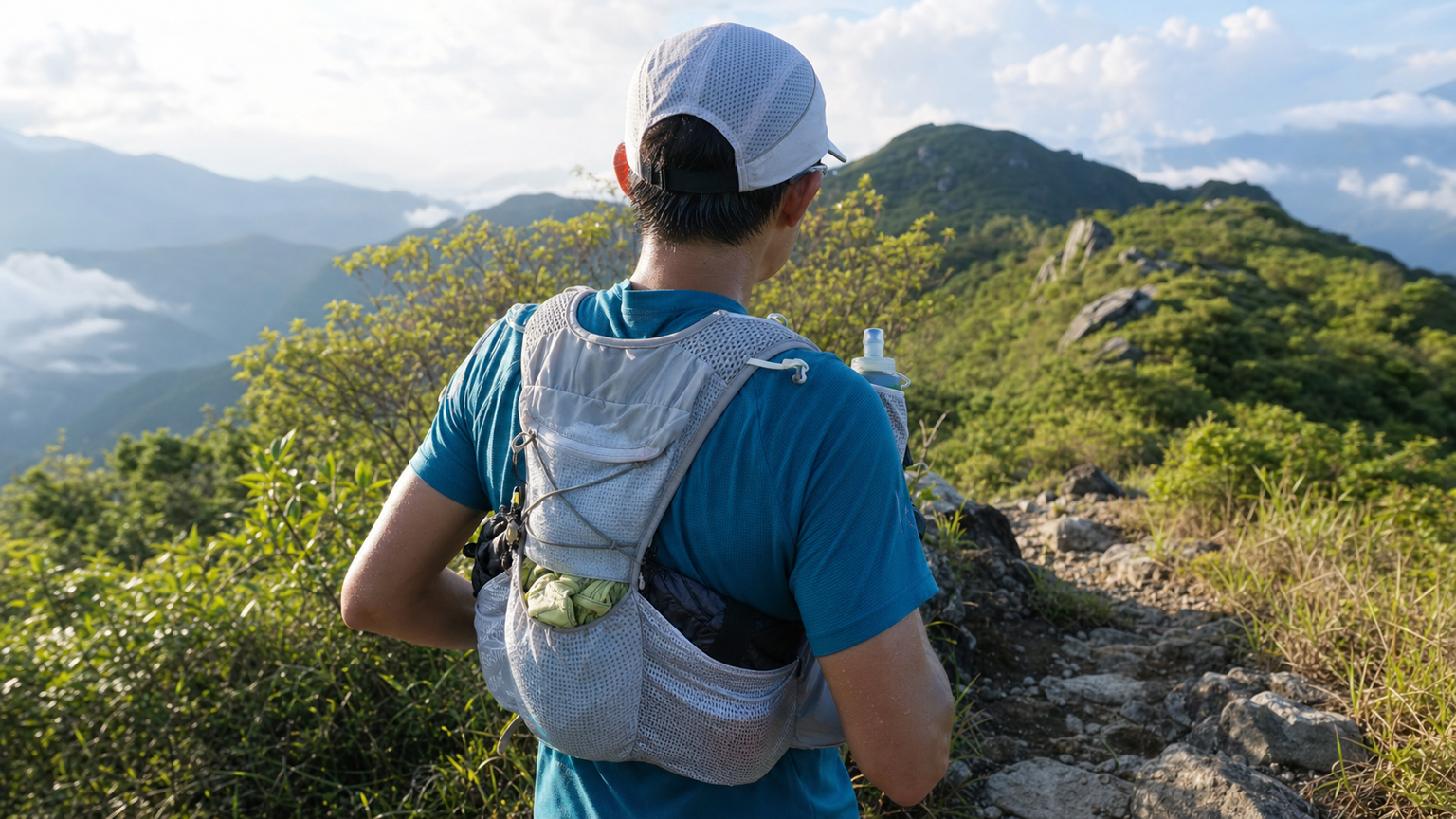
Introduction
Taiwan’s trail running environment is uniquely blessed — from Yangmingshan and the Shiding Ridgeline in the north, to Jiaming Lake and the Yushan mountain range in the south, all are considered legendary routes among runners. However, long-distance trail running requires carrying your own hydration and supplies, and a well-designed hydration pack isn’t just gear — it’s essential to finishing the race.
There are really only three core questions when choosing a hydration pack: How much do you need to carry? How long will you carry it? And what special demands does Taiwan’s mountain terrain place on your gear?
Choosing Hydration Pack Capacity
Trail pack capacity is measured in liters (L), and is generally divided by use case:
| Capacity | Suitable Scenario | Typical Supply Load |
|---|---|---|
| 2–5L (vest style) | Urban road running, 10–21K with aid stations | 1.5L bladder + small amount of energy food |
| 6–12L | 25–50K trail races, one-day mountain runs | 2L bladder + rain jacket + supplies |
| 12–20L | 50–100K ultramarathons, traverse-style trail runs | Full mandatory gear + emergency supplies |
| 20L+ | Multi-day races, self-sufficient mountain trips | Sleeping bag, cookware, large food supply |
Most trail races in Taiwan (such as TNFF and the UTMB Taiwan series) mandate carrying safety gear like an emergency blanket and a headlamp, so it’s recommended to choose at least an 8–12L pack.
Key Design Elements of the Carrying System
Pack comfort hinges on the design of its carrying system:
- Front elastic mesh pockets: Make it easy to access soft flasks without having to stop to drink
- Adjustable chest strap and hip belt: Bouncing is the biggest annoyance while running — the chest strap needs to sit snugly against the chest, and the hip belt needs to lock the pack’s center of gravity in place
- Gender-specific fit: Women’s models typically have a shorter torso length and a cut that better fits the chest; female runners are advised to prioritize these
- Breathable back panel design: Taiwan’s summers are hot and humid, so a back panel with airflow design (such as mesh paneling) can significantly reduce sweat buildup on the back
Comparison of Popular Models in Taiwan
Salomon Active Skin 8 (approx. NT$3,500)
- 8L capacity, weighs about 170g
- “Running vest” design with almost no bounce
- Comes with 2 front soft-flask pockets; cannot directly hold a traditional bladder (soft flasks must be purchased separately)
- Best for: 25–50K trail races, Taiwan’s Baiyue (Hundred Peaks) mountain running
Ultimate Direction Ultra Vesta 6.0 (approx. NT$4,500)
- 6.3L capacity, weighs about 140g
- Women’s-specific design with a high degree of chest fit
- Comes with a bladder hook, compatible with both traditional bladders and soft flasks
- Best for: female trail runners, routes of 50K or less
Osprey Duro 6 (approx. NT$3,200)
- 6L capacity, includes a 1.5L bladder
- Stable carry, back panel offers excellent breathability
- Weighs about 230g (including bladder), slightly heavier
- Best for: beginners doing one-day mountain runs in Taiwan, runners who prefer a traditional bladder
Decathlon Evadict 12L (approx. NT$1,200)
- 12L capacity, includes a 1.5L bladder
- Best value for money, suitable for beginner trail runners testing their needs
- Simpler carrying system, slightly less stable than flagship models over long runs
Bladder vs. Soft Flask: Making the Choice
- Traditional bladder (reservoir type): Large capacity (1.5–3L), uninterrupted hydration, but troublesome to clean — improper cleaning can breed bacteria
- Soft flask: Easy to clean, easy to refill, and collapsible for storage; increasingly popular in Taiwan’s trail races
- Recommendation: When the route exceeds 4 hours or aid stations are more than 10km apart, a bladder is the safer choice; for a typical mountain run, two 500mL soft flasks are usually enough
Cleaning and Maintenance Notes
- Rinse the bladder with clean water after every use, and hang it up to air dry before storing (avoid sealing it, as this can cause mold)
- Soak and sanitize monthly with a baking soda solution (1 teaspoon per 500mL)
- The bladder’s bite valve is a consumable part — replace it every 6–12 months depending on usage frequency
Practical Recommendations
- First-time hydration pack buyers: Start with a Decathlon entry-level model, confirm your trail running needs, then upgrade
- Summer mountain running in Taiwan: Prioritize a breathable back panel — it’s better to carry an extra 500mL of water than to risk heatstroke to save weight
- Winter running in northern Taiwan’s mountains: Make sure there’s extra space to fit a thin rain jacket or windbreaker layer; an 8L or larger pack is recommended
Conclusion
A hydration pack is a trail runner’s lifeline gear. In Taiwan’s ever-changing mountain terrain, a well-designed pack does more than just hold your supplies — it keeps your body at its most comfortable during long hours of running. Finding a pack with a snug carry, the right capacity, and easy cleaning is an investment worth the effort for every trail runner in Taiwan.
Related Reading
- Running Backpack Buying Guide: Evaluating Capacity and Stability of Trail Running Hydration Packs
- Running Vests and Hydration Packs: Gear Selection Strategy for Ultramarathon and Long-Distance Running
- Running Hydration Pack Buying Guide: Capacity, Bladder Compatibility, and Front Pocket Suitability for Trail Running
- Trail Running Backpacks and Hydration Bladders: 6 Principles for Choosing the Right Gear
單車 一日北高 ( 雙城 ) 肥宅雙人瘋狂行 紀錄片 REACTO
10 年前
一日北高前的高裝檢 | 北高 360 | 挑戰11小時的裝備 | 一日雙塔 | 補給
6 年前
半日 小台灣 極限單車路線挑戰實錄
7 年前
梅山36彎 奮起湖 單車挑戰 下集 #公路車
6 年前
太平山單車員工旅遊 | 這樣玩CP值最高!| 公路車
5 年前
梅山36彎 奮起湖 #公路車 之旅 2400m
6 年前
Vision Metron RS 37碳幅條輪組 (非SL)官網沒有的 低調開箱 / 這重量太銷魂了 / 公路車 / CT Yeh
6 個月前
CT暗黑廚房) 車友必備 宇宙無敵鮮蚵湯 幫助訓練恢復 天然食補 好市多 超肥鮮蚵 破PR
7 年前