Introduction
Every summer, Kenting becomes Taiwan’s most popular seaside resort destination. This land at the southern tip of Pingtung is renowned for its clear tropical waters, rich coral reef ecosystems, and diverse water activities. For swimming enthusiasts, Nanwan and Houbihu are the two most worthwhile bodies of water to explore—the former is the ideal entry point for getting acquainted with the ocean, while the latter is Taiwan’s premier snorkeling and open-water swimming base. However, coral reef areas have their own particularities; improper behavior not only harms the ecosystem but can also put yourself in danger.
Nanwan: The Ideal Spot for Beginner Swimming
Nanwan is located at the southern end of Kenting Street, a crescent-shaped sandy beach about 700 meters long, naturally sheltered by headlands on both sides, resulting in relatively calm wave conditions. During the summer months from May to October, Nanwan has lifeguards on duty and designated swimming zones marked by buoys, making it a place where the whole family can safely enjoy the water.
The water depth at Nanwan gradually increases from the shore, making it suitable for freestyle swimming, and there are plenty of rental shops offering snorkeling gear. However, the coral reefs at Nanwan are mainly distributed outside the buoy line and in the waters on both sides of the headlands, so extra caution is needed when venturing beyond the designated swimming area.
Nanwan Swimming Safety Guidelines:
- Swim only within the buoy-marked swimming zone; outside the buoys, jet skis, banana boats, and other water activities operate frequently
- Pay attention to flag warnings: green flag means safe, yellow flag means caution is required, red flag means entry into the water is prohibited
- Avoid stepping on reef areas outside the sandy entry/exit points; broken coral takes years to recover
- Summer crowds are heavy; it is recommended to swim before 7 a.m. or after 5 p.m., when it is both quieter and more comfortable
Houbihu: An Advanced Coral Reef Swimming Experience
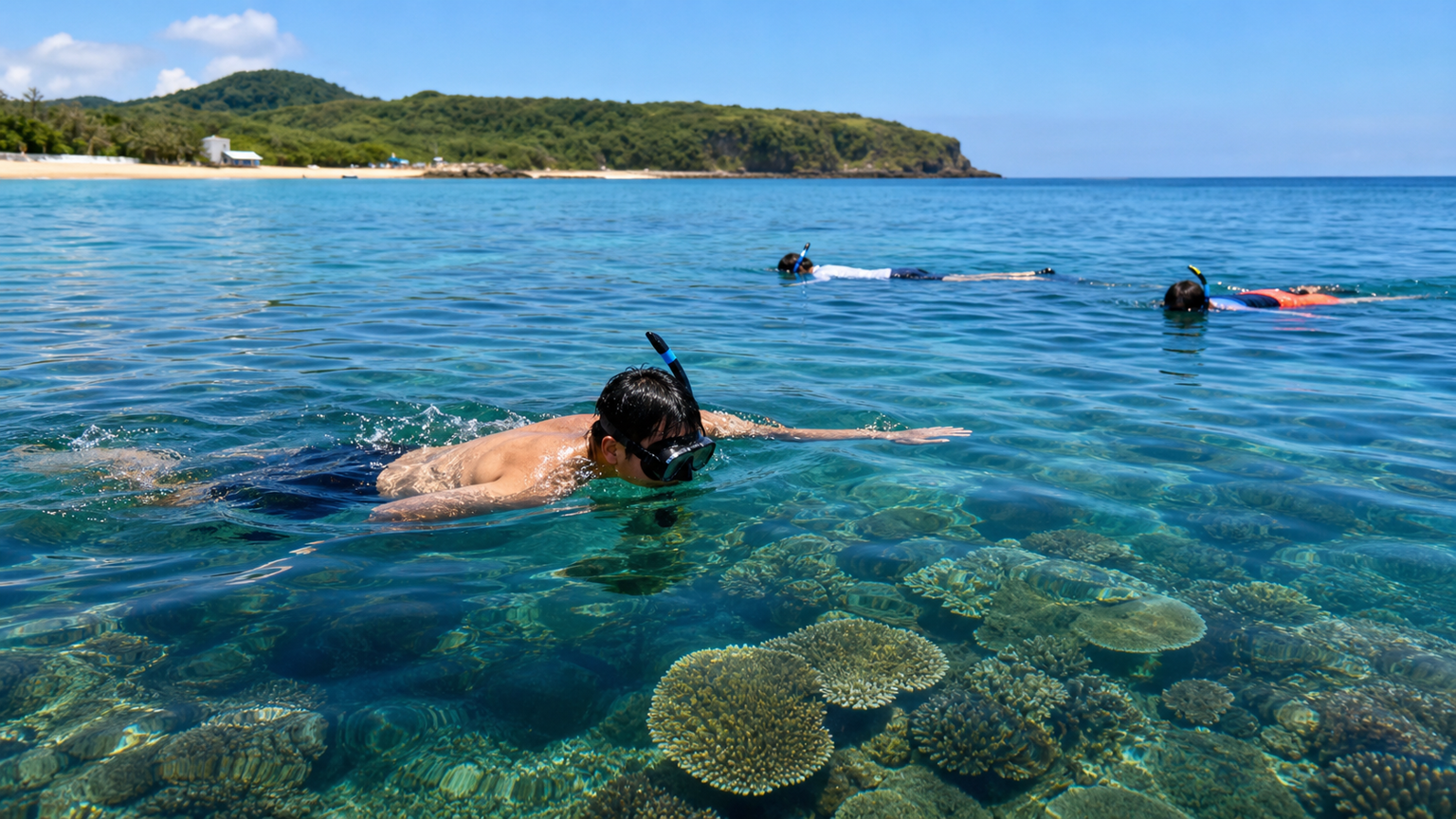
Houbihu is located at the northern end of Kenting, on the western side of the Hengchun Peninsula. It is a natural sheltered harbor and a famous snorkeling destination in Taiwan. It features a complete coral reef ecosystem, with hundreds of species of tropical fish visible underwater, occasional sea turtle sightings, and a dazzling array of hard and soft corals.
| Water Area | Distance from Shore | Depth | Main Features | Suitable For |
|---|---|---|---|---|
| Nanwan | 0-200 m | 0-4 m | Sandy bottom, gentle slope | Beginners, families |
| Houbihu Inner Bay | 0-150 m | 1-6 m | Coral reefs, tropical fish | Intermediate snorkelers |
| Houbihu Outer Reef | Beyond 200 m | 5-15 m | Rich ecosystem, stronger currents | Advanced swimmers |
Houbihu’s snorkeling areas are currently managed by several dive shops, and some areas require a fee to enter and the wearing of a life jacket. If you go swimming on your own, be sure to stay within areas where lifeguards or dive shop staff are present, and confirm the day’s water conditions and tides with the locals.
Coral Reef Swimming Etiquette
The coral reefs of southern Taiwan face the triple pressures of climate change, industrial pollution, and tourism impact. As visitors, everyone has a responsibility to coexist with this ecosystem in a friendly manner.
Action Guidelines for Protecting Coral Reefs:
- Do not use sunscreens containing oxybenzone or octinoxate; opt for mineral-based sunscreens (zinc oxide, titanium dioxide) or wear sun-protective clothing instead
- Maintain a horizontal body position while swimming; do not kick your feet down or touch the reef with your hands—even a light touch can damage coral tissue
- Do not chase or feed marine life, including sea turtles and fish; sea turtles are protected under the Wildlife Conservation Act, and harassment is punishable by law
- Do not take any items from the sea, including seemingly lifeless rocks and shells—they may be homes for other organisms
- If you encounter underwater debris (fishing line, plastic bags), pick it up and bring it out to help maintain the marine environment
Practical Tips
- Summer in Kenting (June to August) brings calm northeast monsoon winds, making it the best season for swimming; in winter, the strong downslope winds create poor water conditions, and open-water swimming is not recommended
- Tides at Houbihu have a significant impact on swimming; at high tide, water depth is sufficient and currents are gentle; at low tide, reefs are exposed and walking is hazardous, so extra care is needed
- If carrying an underwater camera to document the ecosystem, make sure the equipment is secured to avoid hitting the coral reefs
- After swimming, rinse your body thoroughly with fresh water to remove salt and prevent skin irritation
Conclusion
The Nanwan and Houbihu areas of Kenting are the waters closest to a tropical paradise in Taiwan. Swimming here, every stroke lets you feel the embrace of the clear water, and the vibrant underwater world is simply breathtaking. However, this beauty is not to be taken for granted—only when every visitor does their part to protect it can the coral reefs of southern Taiwan continue to shine brilliantly for generations to come.
Related Reading
- Taiwan Beach Culture and Swimming Safety: Understanding Wave Conditions and Rip Currents
- Yilan Nan’ao: Swimming Experience and Ecological Protection at a Secluded Beach
- Whale Bay Swimming Challenge: A First Open-Water Swimming Experience in Yilan’s Clear Waters
- Adapting to Waves and Currents in Sea Swimming: Technical Essentials for Swimming Along Taiwan’s Coasts
大武山後門26%歡樂陡坡!JJSC南台灣單車行Day2 / 被颱風追著跑 / 公路車 / CT Yeh
2 年前
山道猴出沒!? JJSC屏東單車行 Day1 一直催 / 皮卡丘來了!/ 墾丁 旭海 恆春 社頂 / 公路車 / CT Yeh
2 年前
4K單車實境) 嘉義 梅山36灣 訓練台 爬坡 輕鬆騎
6 年前
大武山20%魔王陡坡【JJSC南台灣遊騎Day2】!屁股真的要裂開了...凡士林抹滿也沒用?神秘金教堂還有超便宜夜市
3 個月前
密境!雙灣自行車道 / 環法日月潭 x YAKIMA 百人大約騎 / 公路車 / CT Yeh
11 個月前
#墾丁 #單車 微蜜月旅行 | 社頂公園絕景 | 恆春 鵝鑾鼻公園
6 年前
微東進 太魯閣 蘇花 單車兩日遊 ! 颱風過後路況超刺激 行程大亂 | 最狂的鹹酥雞訂單 | CT Yeh | 4K 高畫質空拍絕景!
4 年前
嘉義大埔、阿婆灣挑戰賽,美到以為在日本!ft. 環騎5 Cool 西拉雅188 / 公路車 / CT Yeh
7 個月前