Introduction
For people in Greater Taipei, the name Bitan carries deep emotional memories. Located in Xindian District, New Taipei City, Bitan is a natural deep pool formed by the Xindian River, and its jade-green water, hanging green hills, and the Bitan Suspension Bridge crossing above it together create a picturesque scene rarely seen on Taiwan’s plains. In the past, Bitan was a popular summer swimming spot; but as times have changed and water management has tightened, water activities at Bitan today are mainly boating-based, and swimming is strictly regulated. This article will walk you through Bitan’s water characteristics, the legal water activities available, and why river swimming carries more risk than you might imagine.
Bitan’s Water Environment
Bitan’s water takes on a distinctive blue-green color because the Feitsui Reservoir upstream on the Xindian River supplies relatively clear water, combined with the way the deep pool’s topography scatters light beneath the surface. However, a clear appearance does not mean swimming is safe.
| Water Characteristics | Description |
|---|---|
| Depth | Exceeds 10 meters at its deepest point, with complex underwater terrain |
| Current | Normally gentle, but flow speed increases sharply after the rainy season |
| Water Temperature | 15-26°C year-round, noticeably cooler than air temperature even in summer |
| Bottom Conditions | A mix of silt and rocky outcrops, with low visibility |
| Potential Hazards | Whirlpools, undercurrents, sudden drop-offs |
South of the Bitan Suspension Bridge, the deep pool area’s water depth increases sharply, and combined with uneven underwater terrain, even strong swimmers can find themselves in danger due to sudden temperature drops (cold shock) or unexpected undercurrents. The New Taipei City Government has posted warning signs in multiple locations prohibiting swimming outside designated areas.
Legal Water Activities: Boating and SUP
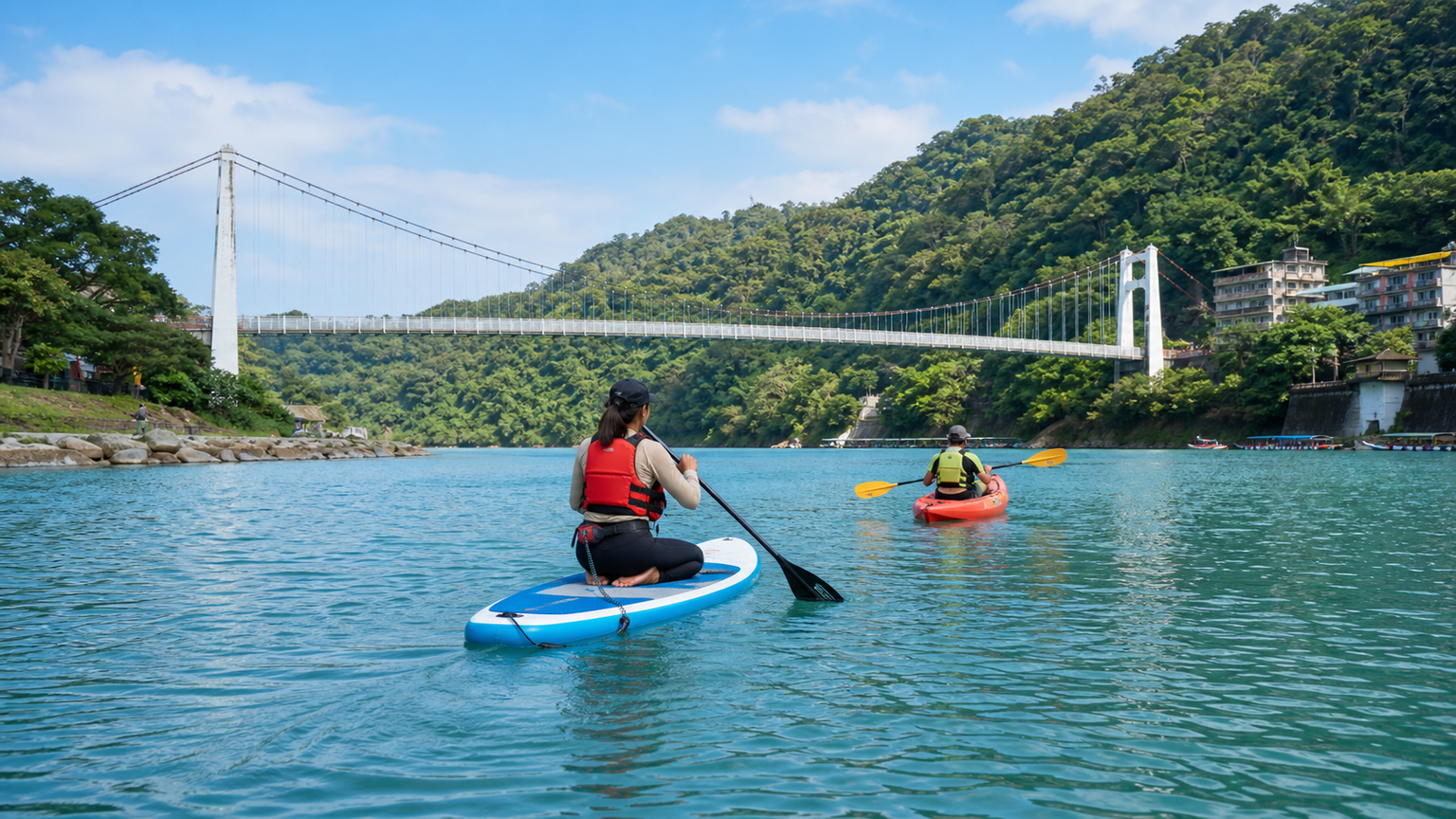
The water activities currently permitted at Bitan are mainly pedal boats (swan boats), rowboats, and stand-up paddleboarding (SUP). These activities follow the basic principle of staying on the water rather than entering it, and combined with life jacket requirements, they provide a safe way to experience Bitan’s waters.
Boating Information:
- Rental Locations: Several licensed boat vendors near the Bitan Suspension Bridge offer swan boats, small wooden boats, and other rentals
- Operating Hours: Typically 9:00 AM to 6:00 PM (varies slightly by vendor, extended into the evening on holidays)
- Safety Rules: Riders must wear life jackets; after rain, when currents are swift and water levels rise, vendors decide at their own discretion whether to rent out boats
- SUP Paddleboarding: A recent addition, offered with instructor-led sessions, giving visitors a new way to enjoy Bitan’s waters — life jackets are also required
Alternative Options for Water Play:
If you’d like to swim near Bitan, here are legal and relatively safe alternatives:
- Xindian Citizens’ Swimming Pool (near Bitan): An indoor heated pool with complete facilities
- Wulai Tazun Stream (about a 20-minute drive south): Has a legal water play area, with swimming permitted in some sections, though you should confirm the latest regulations
- Pinglin Beishi River: A bit farther away, with clear water and a traditional wild-stream swimming culture, though safety conditions should likewise be confirmed
Understanding the Risks of River Swimming
Every summer, Taiwan sees numerous river drowning incidents, many of them occurring in pools that appear calm on the surface. Bitan’s record of water incidents reminds us that the dangers of river swimming are often not immediately visible.
Main Risk Factors of River Swimming:
- Undercurrents and Whirlpools: Deep pools may harbor irregular currents at the bottom that are hard to detect from the surface — once caught in one, even strong swimmers may struggle to break free
- Cold Shock: On hot summer days, sudden immersion in cold water can cause a rapid drop in core body temperature, potentially triggering muscle cramps or irregular heartbeat, which is especially dangerous in deeper pool areas
- Sudden Changes in Water Conditions After Rain: After typhoons or heavy rain, river water levels rise and flow speeds double — beneath a surface that may look calm, the water is actually turbulent
- Underwater Obstacles: Fallen trees, abandoned fishing nets, and rocky outcrops can all entangle limbs and cause difficulty
Practical Advice
- When visiting Bitan for water recreation, stick to activities like boating that keep you on the surface, rather than attempting to swim
- If bringing children, have them wear a properly fitted life jacket at all times, even near the shore
- Within 48 hours after rain, Bitan’s currents and water conditions are unstable and unsuitable for any water activities
- If you’re planning advanced open-water swim training, a beach or legal reservoir with lifeguards and clearly marked swimming zones is a far better choice
Conclusion
Bitan is a classic representative of Taiwan’s river ecology and cultural scenery, and its beauty lies on the water’s surface, by the suspension bridge, and among the mountains and forests. Respecting water management regulations and approaching Bitan safely is the true way to appreciate this body of water. Leave swimming to more suitable venues, and let Bitan’s most beautiful role remain as scenery — that is enough.
Related Reading
- Open Water Training Venues: Lakes, Reservoirs, and Coastal Waters Suitable for Practice in Taiwan
- Taiwan’s Open Water Swimming Havens: A Full Overview of Chengching Lake, Sun Moon Lake, and Coastal Waters
- Safety Guidelines for Open Water Swimming: An Overview of Legal Swimming Waters in Taiwan
- Swim Travel: Taiwan’s Famous Swimming Spots and Open Waters
鯉魚潭水庫 歡笑單車騎旅,季節限定大景 | 大湖/鯉魚潭水庫/龍騰斷橋/薑麻園 | 公路車 | CT Yeh
3 年前
虎豹潭!日本老師來台一日約騎 台灣車友熱情招待私房路線 / CT Yeh
20 天前
密境!雙灣自行車道 / 環法日月潭 x YAKIMA 百人大約騎 / 公路車 / CT Yeh
11 個月前
山港 環東台北160K 自行車約騎活動
9 年前
4K單車實境) 嘉義 梅山36灣 訓練台 爬坡 輕鬆騎
6 年前
半日 小台灣 極限單車路線挑戰實錄
7 年前
嘉義大埔、阿婆灣挑戰賽,美到以為在日本!ft. 環騎5 Cool 西拉雅188 / 公路車 / CT Yeh
7 個月前
一日北高 2022 廢物伙伴年度大戲 | 我們跨越濁水溪了 | 尖叫雞變滴雞精 | 公路車 | CT Yeh
3 年前