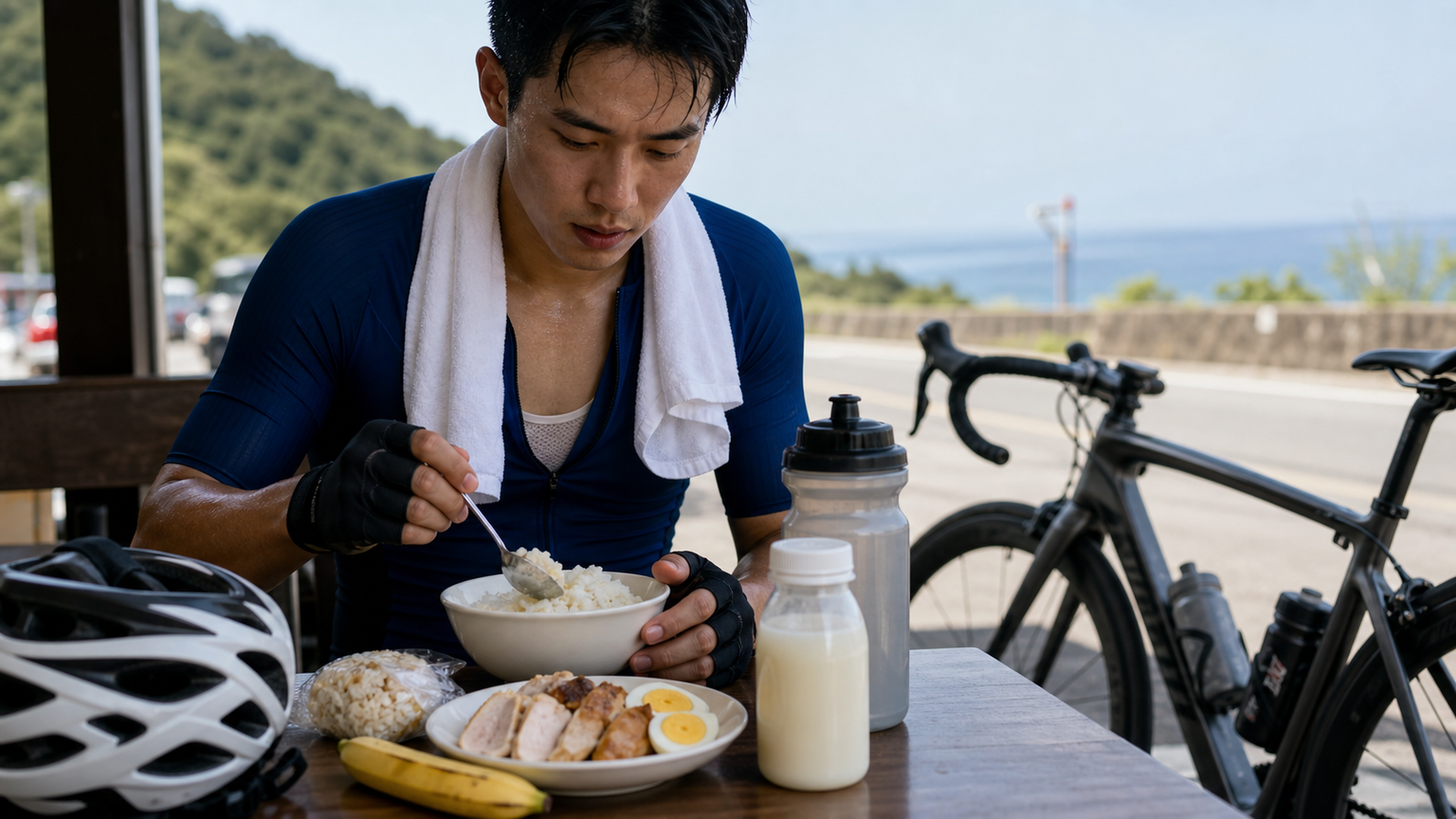
Introduction
High-intensity interval training places stress on the body, and progress actually occurs during the recovery period after training. Post-training dietary choices directly determine the rate of glycogen resynthesis, the efficiency of muscle protein synthesis, and how quickly you prepare for the next session. Many Taiwanese cyclists invest considerable thought into their workout plans, yet grab convenience store food after training, or even deliberately eat less out of fear of gaining weight—a common mistake that severely undermines training adaptations.
The Post-Training Metabolic Window: Why Timing Matters
After interval training, the body enters a unique metabolic state:
- Peak glycogen synthase activity: Glycogen synthase in muscle and liver is activated immediately after exercise, and carbohydrate intake at this time yields the fastest glycogen resynthesis rate
- Enhanced insulin sensitivity: Glucose transporter type 4 (GLUT4) on muscle cell membranes translocates to the cell surface in large numbers after exercise, allowing glucose to enter muscle efficiently even when insulin levels are not high
- Activated muscle protein synthesis signaling: The mTOR signaling pathway (the primary regulator of muscle protein synthesis) is highly active within 30–60 minutes post-exercise, making amino acid intake (especially leucine) most beneficial during this period
This “golden window” is most effective within approximately 30–45 minutes after training ends, then gradually diminishes. If you wait more than 2 hours to refuel, the glycogen resynthesis rate may be 30–50% lower than with immediate intake.
Carbohydrates: The Fuel for Glycogen Resynthesis
Optimal intake:
- Body weight × 1.0–1.2 g of carbohydrate (g/kg)
- Example: 65 kg cyclist → 65–78 g of carbohydrate (roughly equivalent to 1.5 bowls of white rice)
Best carbohydrate sources:
- High glycemic index (GI) foods: white rice, bread, bananas, sports drinks—these rapidly raise blood glucose and accelerate glycogen resynthesis
- Low GI foods (such as sweet potatoes or oats) may be “healthier,” but when consumed for immediate post-training replenishment, their slower absorption actually reduces the benefits of the golden window
Protein: The Building Material for Muscle Repair and Synthesis
Optimal intake:
- 20–40 g of high-quality protein per meal
- Below 20 g fails to achieve maximal muscle protein synthesis; above 40 g provides no additional benefit (excess amino acids are oxidized for energy)
The key to protein quality: Leucine content
Leucine is the most critical branched-chain amino acid (BCAA) for activating the mTOR muscle protein synthesis signal. Each meal should ensure at least 2–3 g of leucine:
| Food | Protein per 100g | Leucine per 100g of food |
|---|---|---|
| Whey protein powder | ~80g | ~10g |
| Chicken breast | ~31g | ~2.5g |
| Eggs (2) | ~12g | ~1.0g |
| Firm tofu (200g) | ~16g | ~1.2g |
| Low-fat milk (300 mL) | ~10g | ~1.0g |
Carb-to-Protein Ratio: The Golden 3:1 or 4:1 Ratio
The optimal post-training carbohydrate-to-protein ratio varies by training intensity:
- After high-intensity interval training (high glycogen depletion): carb:protein = 3:1 to 4:1
- After pure strength training (primarily muscle damage): carb:protein = 2:1
Example meal combinations common in Taiwan (for a 70 kg cyclist):
-
Convenience store version: 2 onigiri rice balls (~60g carbs) + 2 tea eggs (~12g protein) + 1 bottle of lactic acid bacteria drink (15g carbs)
-
Home-cooked version: 1.5 bowls of white rice (~75g carbs) + 150g chicken breast (~46g protein) + blanched vegetables
-
Sports nutrition version: Recovery drink (40g carbs + 12g protein) + 1 banana (~25g carbs)
-
Vegetarian version: 1.5 bowls of white rice + 2 steamed egg tofu cups (200g each, ~30g protein total) + adjust carbs with brown rice
Fluid and Electrolyte Replenishment
Sweat loss during interval training can reach 1–1.5 liters per hour in Taiwan’s summer outdoor sessions. Dehydration of even 2% of body weight impairs cognitive function and muscle contractile capacity.
Hydration principles:
- Weigh yourself before training; for every 1 kg of body weight lost after training, replenish 1.5 liters of fluid
- Consume sodium-containing beverages (sodium ≥ 400 mg/L) to help retain fluid within cells
- Sodium chloride loss in sweat is high during Taiwan’s summers; adding a small pinch of table salt to your recovery drink is appropriate
Practical Recommendations
- Carry a homemade recovery drink (low-fat milk + honey) in your training bag—it’s the lowest-cost, most effective golden window refueling option
- If training ends right before a main meal (e.g., morning training followed directly by breakfast), no additional recovery supplement is needed, but breakfast should be consumed within 30 minutes
- Don’t deliberately “eat less” after training—inadequate recovery hurts performance more than a few extra hundred calories
- If a second session follows the next day, add another carb-containing main meal within 2 hours after training to ensure glycogen is fully replenished within 24 hours
Conclusion
Post-training nutrition is not a “weight management issue” but a “training benefit maximization issue.” The 30–45 minute golden window, the 3:1 carb-to-protein ratio, and adequate fluid and electrolyte replenishment—get these three elements right, and the benefits of each interval session will be fully converted into the foundation for your next workout. For Taiwanese cyclists, these strategies can be implemented entirely with everyday foods; no expensive supplements are needed—just a more scientific perspective on “that one meal” after training.
Related Reading
- Post-Run Nutrition: The Golden Ratio of Protein and Carbs
- The Nutritional Recovery Window After Running: The Golden Ratio of Carbohydrates and Protein
- Post-Training Carbohydrate Intake and Glycogen Resynthesis Rate: Research on the Fastest Recovery Window
- The Dietary Recovery Window After High-Intensity Sessions: The Scientific Basis for Refueling Within 30 Minutes
CT暗黑廚房) 車友必備 宇宙無敵鮮蚵湯 幫助訓練恢復 天然食補 好市多 超肥鮮蚵 破PR
7 年前
西進武嶺 免費訓練分析服務 Intervals | 練不夠還是練過頭?你哪一種類型選手?AI模型告訴你! | 備戰神器 | 公路車 訓練 | CT Yeh
4 年前
一日北高/長距離團騎 常見問題補充篇 / 組團或跟團的眉角 / 壯車友容易被瘦車友慢性拉爆 / 原來屁股痛可能是這個原因...? / 風場配速法 / 公路車 / CT Yeh
2 年前
FTL 與 SYB 車隊專訪 西進武嶺 實用攻略分享! 2小時 如何練?!你不知道的眉角!新手準備武嶺必看 EP1 | 實力派女車友 | 精華版 | 公路車 | CTYeh
4 年前
一日北高前的高裝檢 | 北高 360 | 挑戰11小時的裝備 | 一日雙塔 | 補給
6 年前
西進武嶺 自製新版AI配速表產生器 x 賽前攻略 抱佛腳! 沒有功率計也可以產生配速表嗎?有什麼其他眉角賽前要注意的呢? | 西進武嶺 / 東進武嶺 KOM 攻略 | 公路車 | CT Yeh
4 年前
#公路車 #Vo2Max #最大攝氧量 測驗 體驗 | 心肺測試
6 年前
JJSC一槍北港 百K團實錄!跟團技巧分享 ft. Roden / 中部練車新選擇 / 開箱全台最便宜早餐店!/ 公路車 / CT Yeh
1 年前