River Swimming in Taiwan: The Wild River Swimming Culture of the Xiuguluan River and Da'an River
Introduction
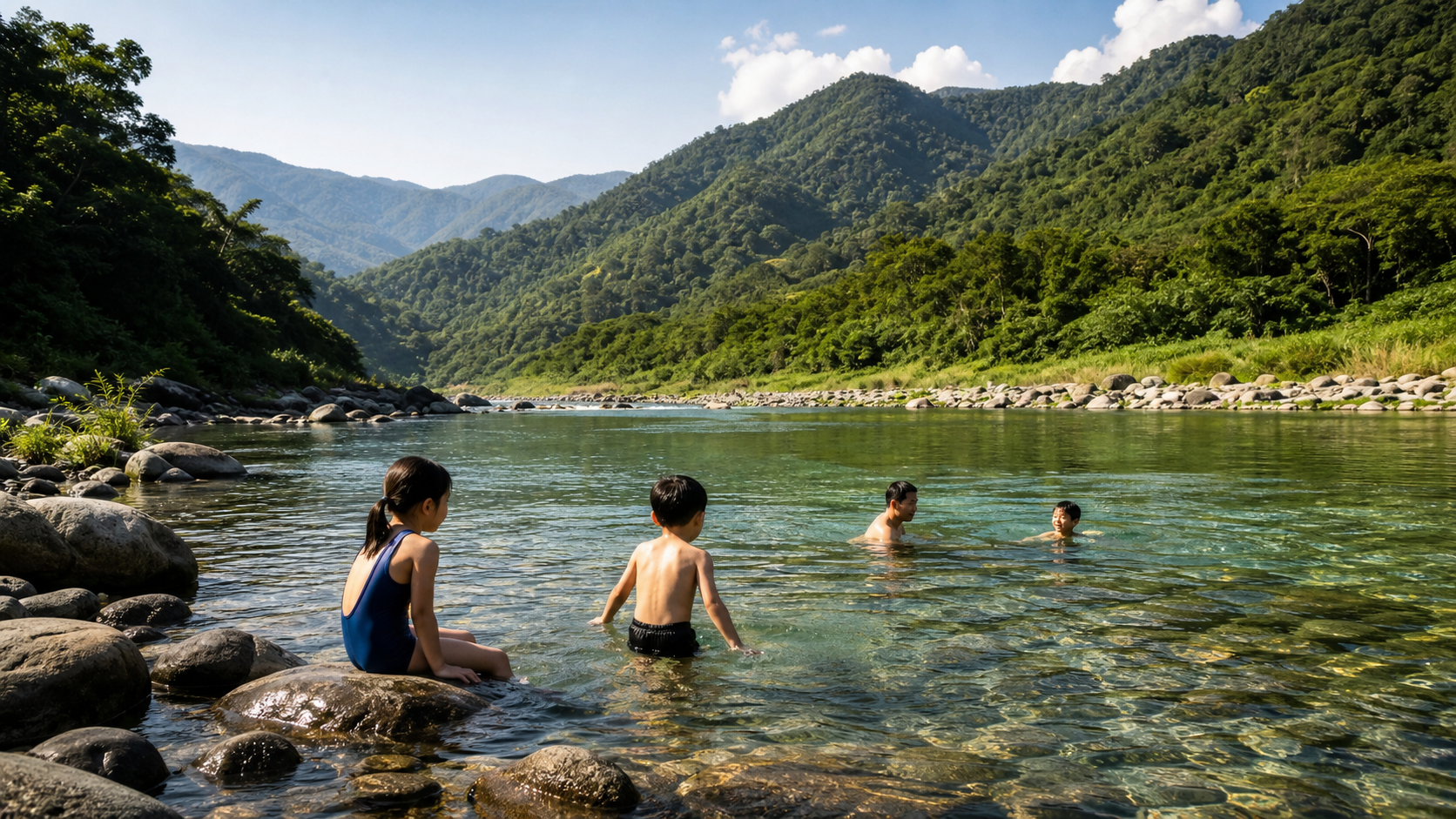
In Taiwan, “going swimming in the creek” is one of the most profound childhood summer memories for many people. Under the guidance of adults, groups of children would step across cobblestones, jump into the cool stream water to splash and practice swimming, and then head home in the evening with sunburned skin. This wild river swimming culture is rooted in Taiwan’s mountainous geography with its many streams, and also reflects the deep connection between Taiwanese people and the natural forests and mountains. However, as times change and awareness of stream safety grows, how to preserve this cultural memory while approaching river swimming with a more mature safety mindset has become a crucial topic for modern outdoor enthusiasts to consider.
The Xiuguluan River: Eastern Taiwan’s Rafting Mecca and Swimming Waters
The Xiuguluan River is Taiwan’s longest independent river system, stretching 171 kilometers. It originates in the Central Mountain Range, forms the famous Xiuguluan River Gorge near Guangfu Township in Hualien County, and eventually empties into the Pacific Ocean near the Cepo tribe. This river is best known for rafting, attracting large numbers of visitors each year to challenge the rapids; however, in the calm sections downstream of the gorge and the slower-flowing areas near the river mouth, wild river swimming also has a long-standing local tradition.
| Section | Water Conditions | Swimming Suitability | Activity Type |
|---|---|---|---|
| Ruisui to Yuli (rafting section) | Fast current, rapids | Not suitable (rafting zone) | Rafting, life jacket required |
| Dagan to Cepo (lower reaches) | Gentle, stable water volume | Moderate (requires understanding of water conditions) | Wild river swimming, fishing |
| Near the Cepo river mouth | Tidal section, affected by ocean waves | Caution | Requires understanding of tides |
In the Cepo and Dagan area along the lower Xiuguluan River, the Amis tribes have a rich tradition of riverside activities, and summer is the season when local residents and visitors alike share the coolness of the stream. If you wish to experience this, it is recommended to contact the local tribal tourism association and go with an indigenous guide—this ensures both safety and a deeper understanding of the local culture.
The Da’an River: A Representative Wild River Swimming Destination in Central Taiwan
The Da’an River originates in the Xueshan Mountain Range, flows through Miaoli County, and spans approximately 96 kilometers, making it one of the most important rivers in the central region. The mid-to-upper sections of the Da’an River (especially around Chuhuangkeng and Wenshui in Tai’an Township) feature clear water and gravel beaches, making them popular summer destinations for wild river swimming among both Miaoli locals and visitors from elsewhere.
Characteristics of wild river swimming in the Da’an River:
- Clear water quality, with summer water temperatures around 18-24°C—cool but not overly cold
- Primarily gravel riverbed, relatively even bottom, good visibility
- Some sections feature naturally formed deep pools, which are traditional spots for diving and swimming
- Surrounding natural canyon terrain offers beautiful scenery, making it an excellent place to combine river tracing and swimming
Safety Principles for Wild River Swimming
The biggest difference between wild river swimming and swimming in pools or ocean beaches is the lack of artificial safety facilities. Taiwan sees river drowning accidents every year, many of which could be prevented through proper safety awareness.
Wild river swimming safety rules:
- Check the weather: Check rainfall forecasts for upstream areas before departure. Even if it is sunny locally, if it is raining upstream, the river level can rise dramatically in a short time—this is the most common cause of flash floods in Taiwan
- Identify safe entry points: Choose sections with gentle currents, clear water, and banks where you can easily stand. Avoid swimming under bridges, at sharp bends with fast currents, or in areas with unusual surface turbulence
- Never go alone: Swim with at least three people so you can look out for one another; if one person gets into trouble, another can immediately assist and call for help
- Be conservative about water depth: Clear stream water often causes people to underestimate depth. Probe the bottom before entering, and never recklessly dive into unknown deep pools
- Wear appropriate gear: Those who are not confident swimmers should wear a life jacket; at minimum, wear river shoes to protect your feet and increase stability on gravel
Practical Advice
- After wild river swimming, pay special attention to pathogens that may have come into contact with your clothing or body (Leptospira bacteria). If you develop symptoms such as fever or muscle pain afterward, seek medical attention immediately and inform the doctor of your riverside activity history
- Carry a phone in a waterproof pouch to maintain communication, and inform friends of your itinerary in advance
- Along both the Da’an River and the Xiuguluan River, river tracing operators offer guide services; first-timers are strongly advised to book a professional guide
Conclusion
Taiwan’s wild rivers are the most primal gift of this land. The Xiuguluan River and the Da’an River carry not just water, but also generations of emotional memories of summer, mountains, and home. Approaching them with a responsible attitude, so that this culture can continue under the premise of safety, is the heartfelt duty of every Taiwanese person who loves wild rivers.
Related Reading
- Swimming Culture Among Seniors: The Vital Aquatic Lives of Taiwan’s Elderly
- Swimming Communities and Aquatic Friendships: An Introduction to Taiwan’s Swimming Club Culture
- Safety Guidelines for Open Water Swimming: An Overview of Taiwan’s Legal Swimming Waters
- Swimming Tourism: Notable Pools and Heated Pools Worth Visiting in Taiwan
嘉義大埔、阿婆灣挑戰賽,美到以為在日本!ft. 環騎5 Cool 西拉雅188 / 公路車 / CT Yeh
7 個月前
大武山後門26%歡樂陡坡!JJSC南台灣單車行Day2 / 被颱風追著跑 / 公路車 / CT Yeh
2 年前
藤枝二集團 單車行 Day1 | 南部小武嶺 | 爬坡爬到罵罵叫 | JJSC | 公路車 | CT Yeh
3 年前
大武山20%魔王陡坡【JJSC南台灣遊騎Day2】!屁股真的要裂開了...凡士林抹滿也沒用?神秘金教堂還有超便宜夜市
3 個月前
一定要騎一次!阿里山最深處:里佳部落!單車旅行 | 2800m爬升 | 深度部落體驗:嗨翻晚會、螢火蟲、銀河 | feat. JJSC & 廢物伙伴 | 公路車 CT Yeh
10 個月前
里佳部落 阿里山單車深度旅遊! | 竹山/草嶺/來吉/奮起湖 | 無敵銀河絕景 全新路線探索! 驚險狀況百出! | 4K沉浸式畫質 | 公路車 | CT Yeh
3 年前
太平山單車員工旅遊 | 這樣玩CP值最高!| 公路車
5 年前
一日北高 2022 廢物伙伴年度大戲 | 我們跨越濁水溪了 | 尖叫雞變滴雞精 | 公路車 | CT Yeh
3 年前