Introduction
After every high-intensity session, do you just lie flat and rest, or do you schedule an easy “recovery ride” the next day? Many cyclists intuitively think that when fatigued, you should rest completely, but sports physiology research shows that appropriate active recovery is often more effective than passive rest, especially low-intensity Zone 1 riding.
This article will explain the physiological mechanisms behind active recovery and how to correctly execute a Zone 1 recovery ride to maximize the benefits of your training cycle.
Active Recovery vs. Passive Rest
| Recovery Method | Suitable Scenarios | Primary Mechanism | Risks |
|---|---|---|---|
| Passive Rest | Extreme fatigue, early injury phase, end of season | Reduces energy expenditure, allows full system repair | Long-term use leads to muscle stiffness and poor circulation |
| Active Recovery | The day after high-intensity training, during multi-day riding blocks | Promotes circulation, accelerates metabolic waste clearance | Intensity too high can increase fatigue instead |
The key to active recovery lies in “low intensity”—heart rate not exceeding 55–60% of maximum heart rate (Zone 1), with power roughly below 40–50% of FTP. This intensity is just enough to promote physiological recovery without adding new stress to the body.
Core Physiological Mechanisms of Zone 1 Easy Riding
1. Accelerated Lactate Clearance
After high-intensity training, lactate concentrations in the blood and muscles rise. Light aerobic exercise promotes lactate oxidation as an energy substrate by the myocardium and slow-twitch muscle fibers, rather than relying solely on time for natural clearance as with passive rest. Studies show that active recovery brings lactate back to baseline levels approximately 30–50% faster than resting.
2. Promoting Blood Circulation and Anti-Inflammation
Zone 1 riding maintains a gentle cardiac output, continuously delivering oxygen- and nutrient-rich blood to fatigued muscles while carrying away inflammatory mediators and metabolic waste. For cyclists riding in Taiwan’s hot weather, this mechanism is especially important, as heat generates higher oxidative stress.
3. Maintaining the Neuromuscular “On” State
Complete inactivity reduces the efficiency of neuromuscular connections, whereas easy riding keeps the neural circuits of movement patterns active, avoiding that “heavy legs” unfamiliarity when you return the next day.
4. Psychological Relaxation Effect
For Taiwanese cyclists accustomed to riding every day, an active recovery ride provides a sense of satisfaction of “having ridden without being tired,” reducing the psychological frustration of forced rest and helping maintain long-term training motivation.
How to Correctly Execute an Active Recovery Ride
Intensity Control
- Heart rate: Below 60% of maximum heart rate (HRmax), e.g., if HRmax is 180 bpm, target < 108 bpm
- Power: Below 50% of FTP, e.g., if FTP is 250W, target < 125W
- Perceived exertion: You should be able to easily speak in full sentences, feeling like “you rode but barely broke a sweat”
Time and Distance
- Time: 30–60 minutes is sufficient; exceeding 90 minutes may increase cumulative fatigue
- Distance: Depends on terrain; 15–30 km on flat roads, avoid climbs
Recommended Routes and Scenarios (for Taiwan)
- Urban commute segments: Use your bike commute to work as a recovery ride, combining time efficiency
- Riverside bike paths: Taipei’s Xindian River and Tamsui River banks are flat, making them perfect Zone 1 terrain
- Indoor trainer: Allows precise power control without interference from red lights or traffic
Common Mistakes to Avoid
- Keeping pace with fast riding companions: It’s easy to unknowingly push into Zone 2 or above
- Sprinting up every hill: Zone 1 is nearly impossible to maintain on climbs; detour in advance instead
- Treating recovery rides as “easy training”: Once intensity runs too high, recovery benefits drop significantly
Best Timing for Active Recovery
The following scenarios are particularly suitable for scheduling a Zone 1 recovery ride:
- The day after high-intensity interval training: Helps with lactate clearance and nervous system recovery
- As a “sandwich day” during multi-day riding blocks (e.g., days 3–4 of a Taiwan round-island tour): Maintains circulation and delays fatigue accumulation
- The day after a race: Reduces leg swelling faster than lying completely flat
- When you feel “legs are a bit stiff but not exactly tired”: In the gray zone between fatigue and recovery, an easy ride is usually the right choice
Practical Tips
- Set power or heart rate alerts: Set a Zone 1 upper-limit alert on your bike computer; when intensity exceeds it, remind yourself to slow down
- Don’t count TSS for recovery rides: Don’t be anxious about a low TSS number; this is meant to be a low-stress day
- Combine with stretching: After the recovery ride, while muscles are still warm, do 10–15 minutes of static stretching for doubled benefits
- Replenish electrolytes: Even on an easy ride, Taiwan’s humid and hot climate still requires attention to fluid and sodium intake
Conclusion
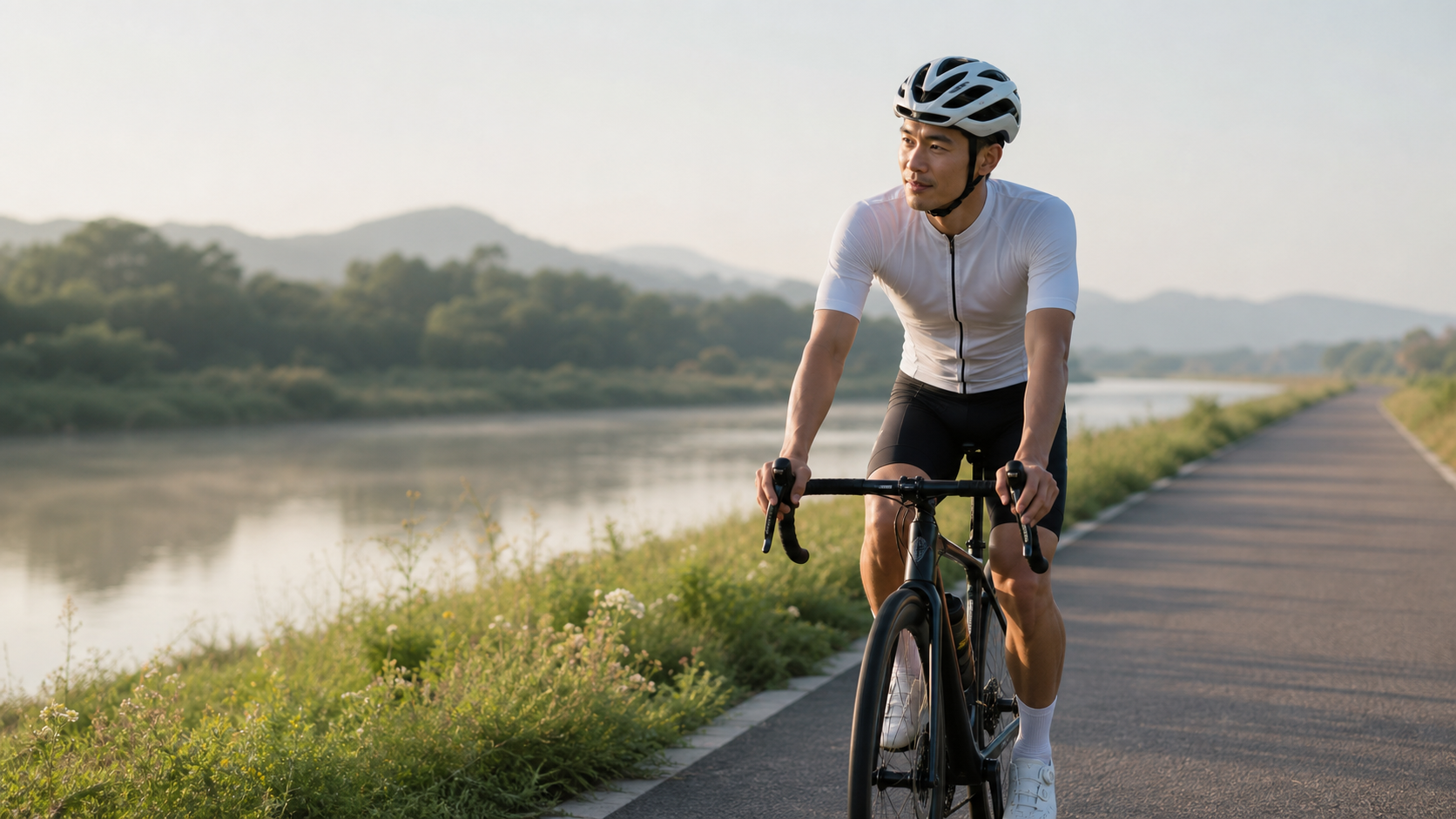
Zone 1 recovery rides are an indispensable part of a serious cyclist’s training plan. They may seem like “not training,” but they are paving the way for the next high-quality session. Next time after a hard workout, don’t rush to lie flat or go hammer—try a relaxed 40-minute riverside ride, and you’ll notice your legs feel noticeably better the next day. Train smart, and you’ll progress sustainably.
Related Reading
- Active Recovery Rides After Cycling: The Correct Intensity and Benefits of Easy Riding
- Recovery Rides: The Correct Intensity and Physiological Significance
- Active Recovery vs. Passive Recovery: What Science Says
- Active Recovery Rides After Cycling: The Correct Intensity and Benefits of Easy Riding (Advanced Edition)
戰略) Zwift Race 如何咬在第一集團 如何評估自己要開多少推力 (請開1.5倍速看)
7 年前
西進武嶺 免費訓練分析服務 Intervals | 練不夠還是練過頭?你哪一種類型選手?AI模型告訴你! | 備戰神器 | 公路車 訓練 | CT Yeh
4 年前
一日北高常見問題大集合 | 攻略 | 路線 | 訓練 | 補給 | 自行車 單車 | 一日雙城 | 雙塔 | TWB北高360 | 屁股痛
6 年前
大禹嶺 到 武嶺牌樓 全程前後實況錄影 | 北進武嶺 | 東進武嶺 | KOM | 訓練台 | 坡度分析 | Taiwan KOM Last 10 km HARD | 公路車
6 年前
Insta 360 One 超級防手震技術實測
7 年前
中秋團練!GoPro Hero 9 拍攝絲般順滑,ft. 新竹某校隊 公路車
5 年前
多機位拍片神器 DJI Action 2 拍出速度張力感 | 類空拍機視角 4陣列麥克風超強降風噪 實測! | 公路車 | CT Yeh
3 年前
一日北高/長距離團騎 常見問題補充篇 / 組團或跟團的眉角 / 壯車友容易被瘦車友慢性拉爆 / 原來屁股痛可能是這個原因...? / 風場配速法 / 公路車 / CT Yeh
2 年前