The Post-Intensity Workout Nutrition Recovery Window: The Scientific Basis for Refueling Within 30 Minutes
Introduction
“The 30-minute post-workout window is the golden period for refueling!” — This phrase has circulated in gyms and cycling team groups for years, becoming widely accepted “common knowledge.” But is this claim entirely correct? Is the refueling window really only 30 minutes? And what is most effective to consume?
This article compiles findings from recent sports nutrition science to give you an objective answer—neither exaggerated nor understated—along with practical refueling strategies that are easy for Taiwanese cyclists to implement.
The Scientific Basis of the “Anabolic Window”
After high-intensity riding, the body enters the following specific physiological states:
- Muscle glycogen is significantly depleted: After interval training or long-distance rides, muscle glycogen stores can drop by 50–80%
- Protein breakdown rate increases: Cortisol rises during training, promoting protein catabolism
- Insulin sensitivity increases: GLUT-4 transporter expression in muscles rises, making muscle cells particularly efficient at absorbing glucose
- mTOR pathway is activated: Protein synthesis signaling is already switched on, waiting for amino acid “raw materials” to be supplied
How Long Is the Window?
Early research (1990s) emphasized a “30–45 minute golden window” after training, primarily targeting muscle protein synthesis following resistance training. Later studies found this window to be longer than originally thought:
| Condition | Anabolic Window Length | Notes |
|---|---|---|
| After fasted training | Refueling within 30–60 minutes is more important | No protein/energy intake before training |
| Meal consumed 1–2 hours before training | Window extends to 2–3 hours | Protein is still being digested and absorbed |
| After long endurance (> 2 hours) | Immediate carbohydrate intake matters more; protein window is about 2 hours | Degree of glycogen depletion is more critical |
Conclusion: The window does exist, but for most cyclists who have eating habits, it is not limited to just 30 minutes. What is truly urgent is glycogen replenishment, not the precise timing of protein intake.
Optimal Refueling Ratio: Carbohydrates + Protein
Carbohydrate Replenishment
- Purpose: Rapidly replenish muscle and liver glycogen
- Recommended amount: 1–1.2 grams of carbohydrate per kilogram of body weight (immediately)
- Best sources: High-GI foods (white rice, bananas, sports drinks, bread), because high-GI foods quickly raise blood glucose and accelerate glycogen synthesis
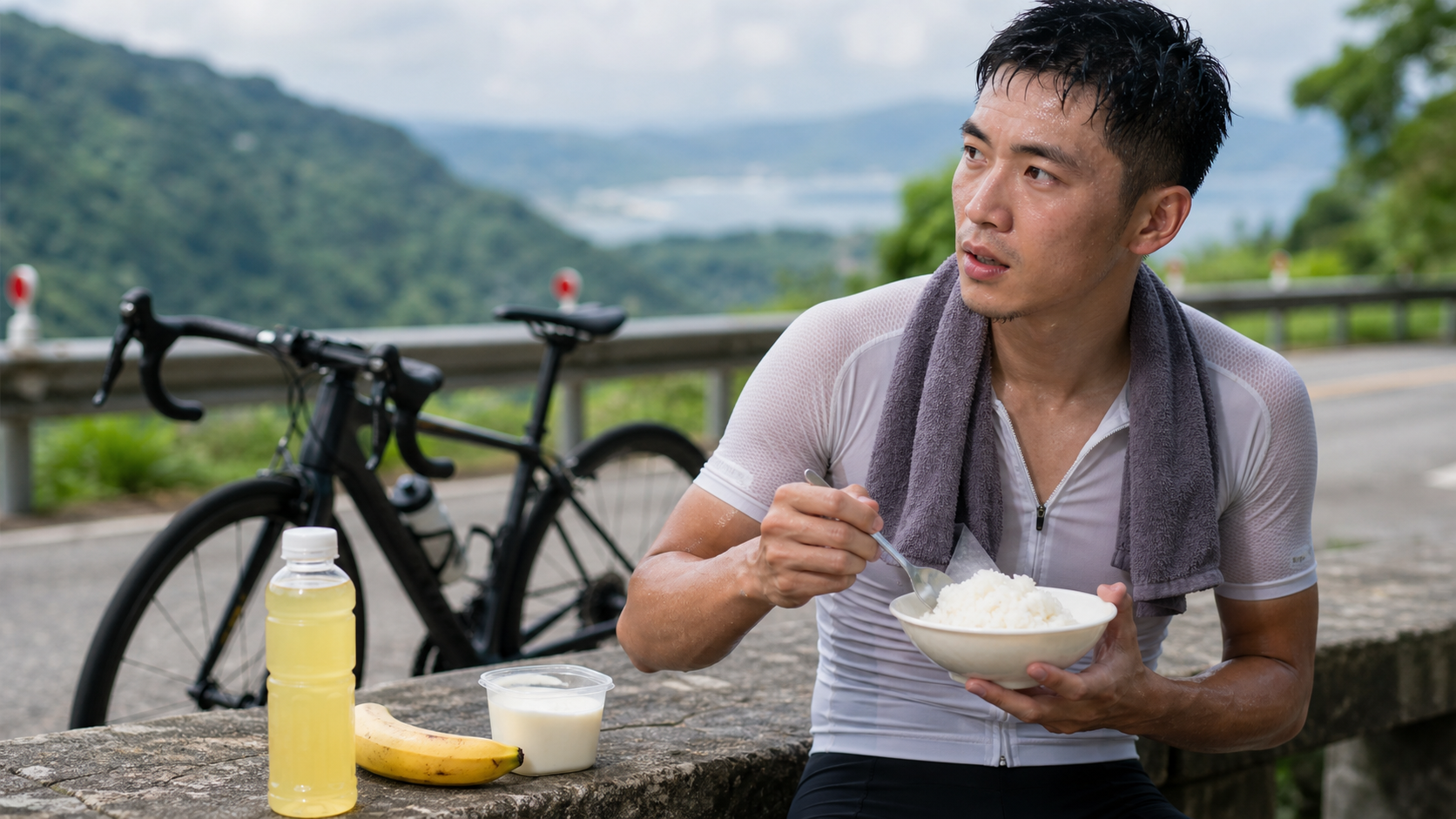
- Example: A 70 kg cyclist → 70–84 g of carbs ≈ one bowl of white rice (about 60 g carbs) + one banana (about 27 g carbs)
Protein Replenishment
- Purpose: Provide amino acid raw materials to promote muscle repair
- Recommended amount: 20–40 grams of protein (most studies show limited additional benefit beyond 40 g)
- Best sources: Whey protein (fastest digestion), chicken breast, eggs, low-fat milk
- Recommended carbohydrate-to-protein ratio: 3:1 to 4:1 (carbohydrate needs are greater after endurance exercise than after resistance training)
The Role of Fat
Immediately after training, deliberately minimize fat intake, because fat slows the absorption rate of carbohydrates, compromising glycogen replenishment efficiency. Fat intake can wait until regular mealtimes.
Practical Refueling Plans for Taiwanese Cyclists
Plan 1: Quick and Convenient (Cyclist Favorite)
- One banana + 250 ml whole milk: Provides about 27 g carbs + 8 g protein (sufficient after light sessions)
- A pack of 7-Eleven tea eggs (2 eggs) + rice ball: Readily available at Taiwanese convenience stores, ideal after outdoor rides
- Chocolate milk (unsweetened cocoa powder + milk): Carbohydrate-to-protein ratio close to 3:1, with benefits confirmed by multiple studies
Plan 2: After High-Intensity/Long-Distance Rides
- White rice + chicken leg bento (from vendors or convenience stores): Comprehensive replenishment of carbs + protein + sodium
- Whey protein (30 g) + a bowl of white rice or noodles: Precisely calculated, suitable for cyclists who track their intake
Plan 3: When Immediate Eating Isn’t Possible (Rushing After a Long Ride)
- Sports energy bar + sports drink: Maintain baseline refueling, then follow up with a full meal at home
Common Myth Clarifications
- “The more protein, the better”: Consuming more than 40 g of protein per serving does not further increase muscle protein synthesis rates; excess amino acids are oxidized or converted to urea and excreted
- “Wait until you feel hungry to eat after exercise”: Glycogen replenishment requires timely action; you should not wait until you feel hungry
- “You must drink whey protein”: Regular foods are equally effective; whey protein’s advantages are absorption speed and portability
Practical Recommendations
- Prepare recovery food before your ride: Prepare bananas, milk, or a bento before a long ride so you can consume them immediately upon return
- Immediate refueling matters more on consecutive riding days: The refueling window is relatively flexible after a single day with rest; on consecutive riding days, immediate post-ride refueling significantly affects next-day performance
- Don’t forget electrolytes: Beyond carbohydrates and protein, sodium (salt) replenishment is equally important for recovery, especially in Taiwan’s high heat and heavy sweating conditions
- Complete a full meal within 2 hours: Immediate refueling is just the opening act; a complete balanced meal (carbs + protein + healthy fats + vegetables) should follow within 2 hours
Conclusion
The post-training refueling window is a real physiological phenomenon, but it is more flexible than the widely circulated “only 30 minutes” claim. The real key is: after high-intensity or long-distance training, replenish sufficient carbohydrates (1–1.2 g/kg) and adequate protein (20–40 g) as soon as possible—rather than obsessively timing every second. Cultivating the habit of eating immediately after training and choosing natural foods readily available in Taiwan will yield far greater long-term benefits for recovery and progress than any expensive supplement.
Related Reading
- The Post-Training Golden Hour Recovery Window: What the Latest Science Says
- Post-Exercise Protein Timing: Scientific Research on the Anabolic Window and Muscle Repair
- Protein Intake Timing and Recovery: Does the Post-Workout Golden Window Really Exist?
- The 30-Minute Post-Ride Protein Window: The Science and Practice of the Muscle Synthesis Golden Period
西進武嶺 免費訓練分析服務 Intervals | 練不夠還是練過頭?你哪一種類型選手?AI模型告訴你! | 備戰神器 | 公路車 訓練 | CT Yeh
4 年前
CT暗黑廚房) 車友必備 宇宙無敵鮮蚵湯 幫助訓練恢復 天然食補 好市多 超肥鮮蚵 破PR
7 年前
一日北高/長距離團騎 常見問題補充篇 / 組團或跟團的眉角 / 壯車友容易被瘦車友慢性拉爆 / 原來屁股痛可能是這個原因...? / 風場配速法 / 公路車 / CT Yeh
2 年前
#公路車 #Fitting 靠人工智慧APP 幫你調整單車
6 年前
FTL 與 SYB 車隊專訪 西進武嶺 實用攻略分享! 2小時 如何練?!你不知道的眉角!新手準備武嶺必看 EP1 | 實力派女車友 | 精華版 | 公路車 | CTYeh
4 年前
實景訓練台) 彰化經典百K 高強度喵團 90分鐘 跟著一起練功 2019 Indoor workout Changhua Classic 100 Taiwan
7 年前
西進武嶺 自製新版AI配速表產生器 x 賽前攻略 抱佛腳! 沒有功率計也可以產生配速表嗎?有什麼其他眉角賽前要注意的呢? | 西進武嶺 / 東進武嶺 KOM 攻略 | 公路車 | CT Yeh
4 年前
#公路車 #Vo2Max #最大攝氧量 測驗 體驗 | 心肺測試
6 年前