Introduction
The competitive swimsuit is one of the key pieces of gear that affects performance in swim racing. Ever since the “shark skin” suits of the 2008 Beijing Olympics sparked a revolution, and World Aquatics legislated against full-body high-tech suits in 2010, today’s competitive swimsuits fall mainly into two categories: polyurethane (PU) fabric and traditional woven mesh. Each has its own characteristics in terms of water drag, body compression, and competition compliance. This article offers an in-depth comparison from the angles of material properties, real-world wearing experience, and suitability for different swimmers.
Comparing Material Properties
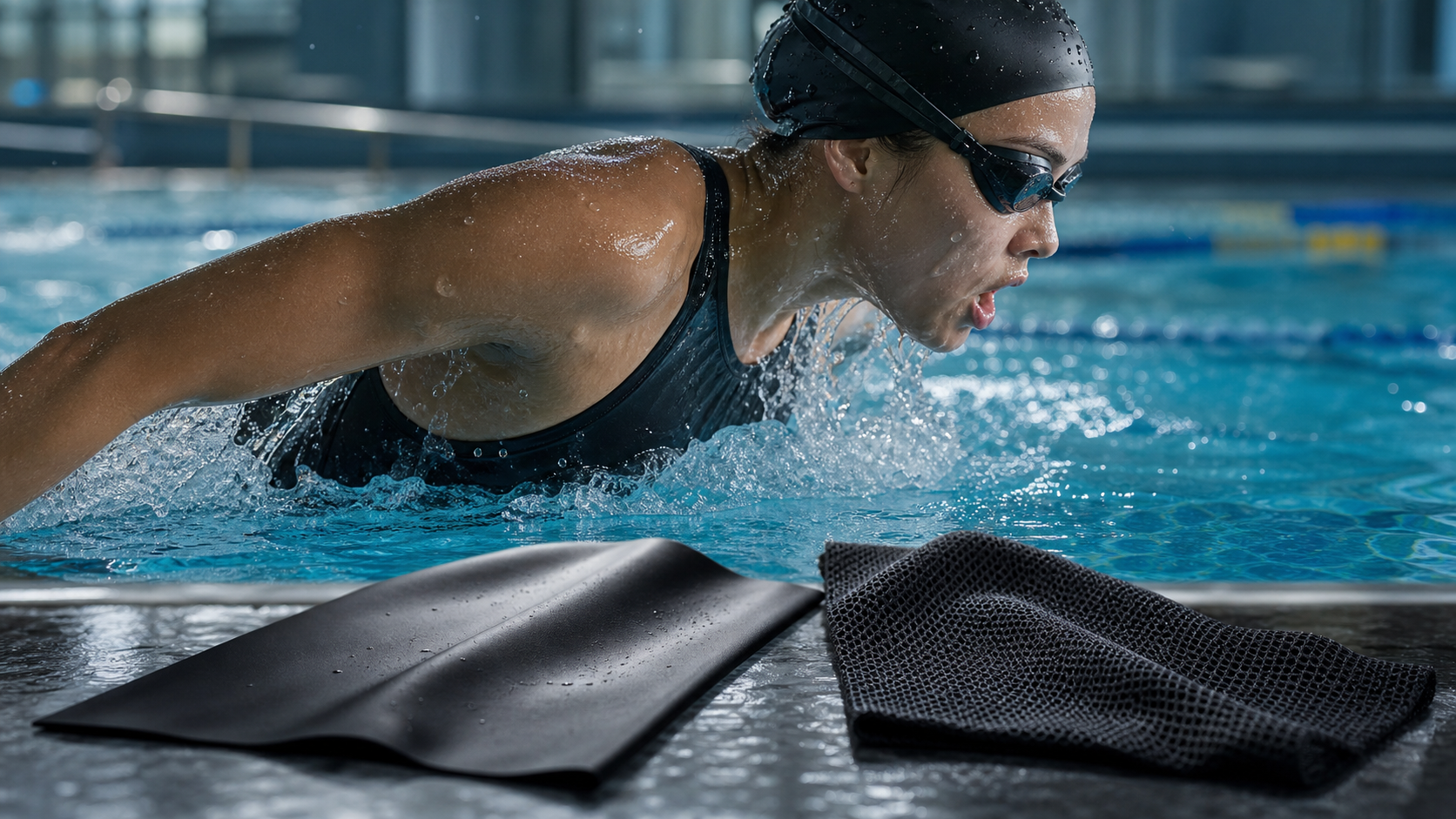
Polyurethane (PU) fabric is currently the mainstream choice for high-end competitive swimsuits. This material combines elastic fibers with coating or laminate techniques, and its main characteristics include:
- Low water absorption: PU fabric barely absorbs water, so it won’t gain weight from soaked fabric during wear
- High compression: Provides stronger compression on the body, helping to streamline body shape
- Stiffer feel: Takes some time to get used to when first worn, and is also harder to put on and take off
- Short lifespan: PU fabric is not chlorine-resistant and should typically be replaced after a single race
Traditional mesh swimsuits are made mainly from nylon or Lycra, with fibers woven into a mesh structure:
- Good breathability: The mesh structure makes wearing more comfortable
- Excellent elasticity: Fits a variety of body types and is easy to put on and take off
- Better chlorine resistance: Suitable for repeated use
- Higher water absorption: Slightly increases drag in the water
| Characteristic | Polyurethane Fabric | Traditional Mesh |
|---|---|---|
| Water absorption | Extremely low | Moderate |
| Compression level | High | Moderate |
| Chlorine resistance | Poor | Good |
| Number of uses | 1–5 times | Dozens of times |
| Price | High (NT$5,000–15,000) | Moderate (NT$2,000–5,000) |
| Best suited for | Official competitions | Time trials, important training |
The Science Behind Drag Differences
Water drag mainly comes from three sources: friction drag (the contact area between skin and water), pressure drag (the pressure difference created by body shape), and wave drag (the water waves generated while swimming).
The advantage of PU competitive swimsuits lies in effectively reducing the first two types of drag. Compared with woven fabric, the smooth PU surface reduces turbulence of water molecules along the skin surface, while strong compression brings the body closer to a spindle shape, reducing pressure drag during forward motion.
For Taiwanese swimmers, important considerations when choosing include:
- Competition level: National meets, county/city meets, and inter-school meets have different requirements for swimsuits
- Swimming event: Short, explosive events (50m, 100m) benefit more from competitive swimsuits than long-distance events
- Body proportions: PU swimsuit sizes typically run 1–2 sizes smaller than usual, so trying them on in person is essential
World Aquatics Compliance Rules
According to current World Aquatics regulations, competitive swimsuits must meet the following compliance requirements:
- Male swimmers: May only wear swimsuits extending from the waist to above the knee
- Female swimmers: May only wear swimsuits that do not extend past the shoulders or below the knee
- Prohibited: Built-in buoyancy materials, full-body coverage suits
- Permitted: Use of PU or mesh fabric within the specified limits
Before purchasing, always confirm that the swimsuit has passed FINA approval; the list of approved models can be checked on the official website.
Practical Recommendations
- Buying your first competitive swimsuit: It’s recommended to start with a mid-range mesh competitive swimsuit to get familiar with the tight fit of racing suits before considering a PU model
- Try it on before competition: Try on your competitive swimsuit at least one week before the race to confirm there’s no discomfort
- Caring for PU swimsuits: Rinse with clean water immediately after racing and air dry naturally — never machine wash or tumble dry
- Choosing sizes: For PU swimsuits, it’s recommended to go one size smaller than usual; mesh models should follow your regular size
- Budget allocation: If you compete more than 5 times a year, investing in a quality PU swimsuit is worthwhile
Conclusion
Choosing a competitive swimsuit isn’t about spending as much as possible — it’s about striking a balance based on competition level, personal goals, and budget. Polyurethane fabric offers the best hydrodynamic advantage, but its high cost and short lifespan make it better suited for important competitions, while a quality mesh competitive swimsuit can be used flexibly between training and racing. When shopping, Taiwanese swimmers are encouraged to visit a professional swim shop in person to try on different materials and feel the compression for themselves before making the choice that suits them best.
Related Reading
- Training Suits vs. Competitive Swimsuits: Comparing Chlorine Resistance and Elasticity
- How Swimwear Choice Affects Performance: The Seconds That Separate Racing Suits from Training Suits
- Competitive Swimsuit Buying Guide: Bonded Seams vs. Sewn Seams and Their Speed Differences
- Competitive Swimsuit Technology: A Guide to Compression Levels, Materials, and Fit
3D 列印車褲墊 / 舒適改善? / 無痕 x 分區壓縮 / ATK & Decider系列 / JE22黑科技 / #公路車 #CTYEH
11 個月前
鉅齒紋輪組!? ControlTech MEG-T50 EVO 碳纖維幅條輪組/ 功率對比實驗 / 公路車 / CT Yeh
2 年前
Unaas X50 全碳纖幅條輪 數據實測對比PK | Lun Hyper 的高階版 | 板輪爬坡也可以很厲害? ! 武嶺2小時大師一起親測! CP值超高 | 公路車 | CT Yeh
4 年前
2026 輪霸西濱200K 挑戰VLOG / 第一集團 / 首次參加..經驗不足、膀胱不足 /死守6H內 / AI戰鬥力顯示系統 / 公路車 / CT Yeh
4 個月前
洗單車神器 吹水機! 實際洗車用用看 暴力洗鍊條大法 | 公路車 | CT Yeh
4 年前
松運深水池拍攝 作品 防寒衣品牌
8 年前
#PUSHBIKE 原來這麼好玩! 小朋友 滑步車 初體驗 超可愛
6 年前
多到選擇障礙... 換個單車把帶想一個小時 / BTP / 編織&軟木特有材質超吸睛! / 公路車 / CT Yeh
1 年前