Training Swimsuits vs. Racing Swimsuits: A Material Comparison of Chlorine Resistance and Elasticity
Introduction
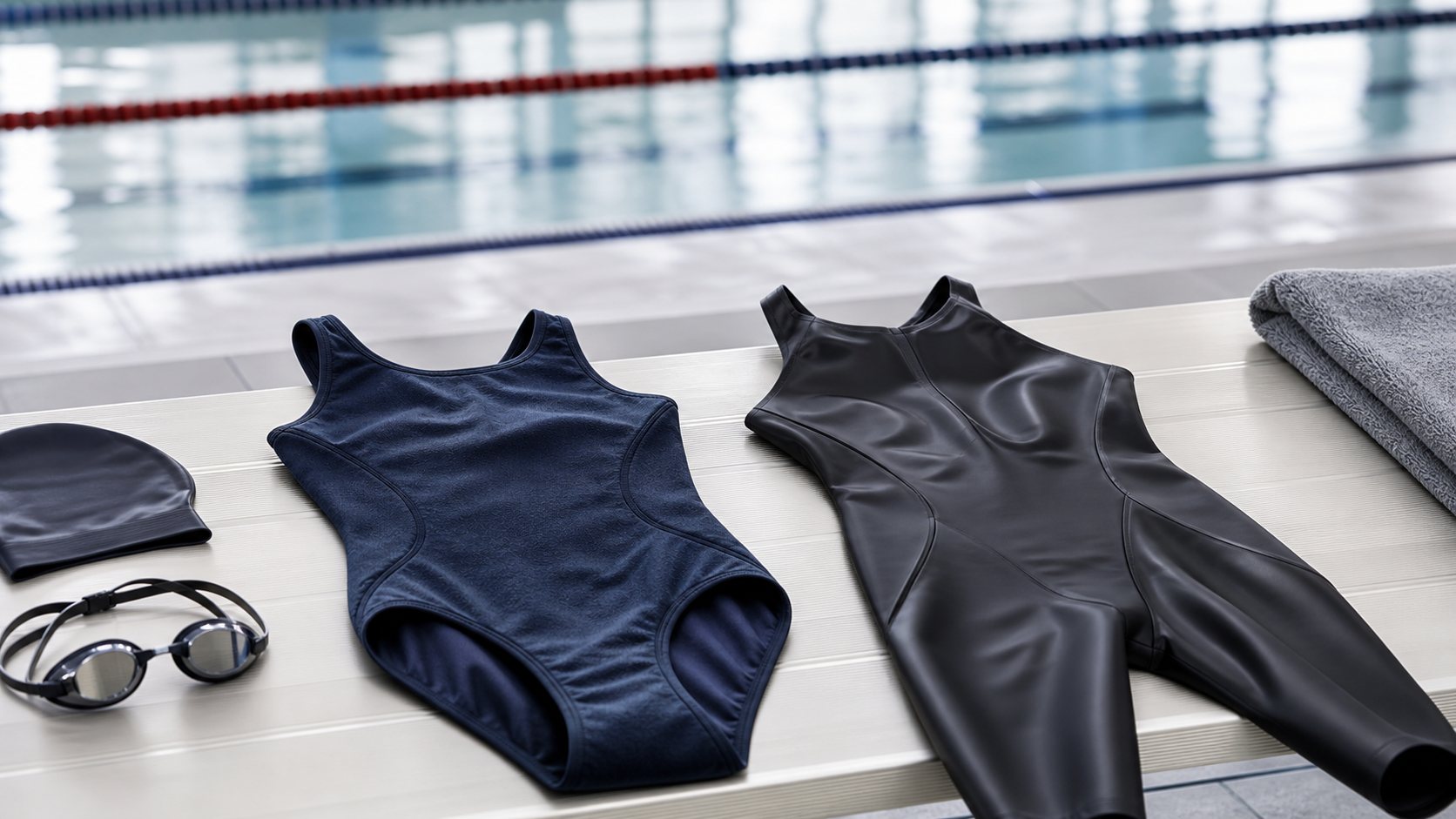
A common mistake many swimming beginners make is using racing swimwear for daily training, or conversely, wearing regular training swimwear for important competitions. These two types of swimwear are fundamentally different in design purpose, and mixing them up not only wastes money but may also compromise training effectiveness or competition performance. This article will help readers understand the fundamental differences between the two from professional perspectives such as material composition, chlorine resistance, and elastic durability.
Material Design of Training Swimwear
The core requirement of quality training swimwear is chlorine resistance—because the chlorides in swimming pools continuously erode swimwear materials, reducing elasticity, fading colors, and even causing the fabric to become brittle.
Main material categories:
- PBT (Polybutylene Terephthalate): Currently the most mainstream material for training swimwear. Chlorine resistance is approximately 20 times higher than regular nylon, with good elastic recovery. The feel is somewhat stiff but very durable.
- PBT/Nylon Blend: Strikes a balance between chlorine resistance and softness, suitable for long-distance swimmers who need comfort.
- Lycra: Excellent elasticity but poor chlorine resistance. Pure Lycra swimwear is suitable for hot springs or open-water swimming and is not recommended for pool use.
| Material | Chlorine Resistance | Elasticity | Feel | Recommended Use |
|---|---|---|---|---|
| PBT | Excellent | Good | Somewhat stiff | Competitive training |
| PBT/Nylon Blend | Good | Excellent | Comfortable | Recreational training |
| Pure Nylon + Lycra | Moderate | Excellent | Soft | General use |
| Polyurethane (PU) | Poor | High compression | Tight | Official competitions |
Material Design of Racing Swimwear
The design philosophy of racing swimwear is sacrificing durability for ultimate performance. High-end racing swimwear typically features:
- Polyurethane (PU) Coating: Nearly non-absorbent with a smooth surface, significantly reducing frictional drag.
- Multi-layer Composite Structure: Outer drag-reducing coating + middle support mesh + inner elastic fiber.
- Ultra-elastic Compression Design: Usually 1–2 sizes smaller than normal, creating a more streamlined body profile when worn.
The fatal weakness of racing swimwear lies in its extremely poor chlorine resistance. Chlorides in pool water rapidly degrade the PU coating. General recommendations:
- Rinse immediately with clean water after each race.
- Do not soak in chlorinated water for more than 2 hours.
- With proper storage, it can be used 5–10 times, after which performance will noticeably decline.
Elastic Durability Comparison
Elasticity is one of the most important performance indicators of swimwear, directly affecting wearing comfort and training effectiveness.
Elasticity characteristics of training swimwear:
- PBT material has an elastic recovery rate of approximately 85–90%, maintaining basic elasticity even with long-term use.
- With proper care, quality training swimwear can last 200–500 hours.
- Loss of elasticity is usually gradual rather than sudden failure.
Elasticity characteristics of racing swimwear:
- Initial compression is extremely strong, with a noticeable tightening effect on the body.
- Some elasticity is lost with each use.
- It is recommended to start “breaking in” the swimwear 2–4 weeks before an important competition, wearing it for 1–2 training sessions to allow the material to adapt to your body shape.
How to Tell When Swimwear Needs Replacing
Signs that training swimwear should be replaced:
- The fabric becomes translucent or the color noticeably fades.
- The waistband loses elasticity and slips down when worn.
- The fabric does not quickly snap back when stretched.
- Holes or visible loose threads appear.
Signs that racing swimwear should be replaced:
- No noticeable compression sensation when worn.
- The PU coating begins to peel or develop cracks.
- Seams begin to separate or fray.
Practical Recommendations
- For training purposes: Choose PBT or PBT-blend materials; a budget of NT$1,500–3,500 offers quality options.
- For racing purposes: Invest in PU racing swimwear based on the importance of the competition, but do not use it for daily training.
- Care habits: Whether training or racing swimwear, rinse with clean water after every use and never machine wash.
- Rotation: Prepare 2–3 training swimwear pieces and rotate them to allow the material adequate time to recover.
Conclusion
Training swimwear and racing swimwear each serve their own purpose. Using them correctly and separately allows each piece to deliver maximum benefit. Investing in a chlorine-resistant PBT training swimwear, paired with one or two racing swimwear pieces reserved for important competitions, is the ideal equipment strategy for Taiwanese swimmers. Understanding material characteristics enables you to choose the right equipment for the right occasion—saving money while safeguarding performance.
Related Reading
- Training Swimwear Buying Guide: Chlorine Resistance Comparison and Lifespan Analysis of PBT vs. Polyester
- Racing Swimwear Review: Drag Differences Between Polyurethane Fabric and Mesh
- Complete Guide to Racing Swim Cap Usage Timing: Differences Between Training vs. Racing Caps and Proper Washing Methods
- The Impact of Swimwear Choice on Performance: Time Differences Between Competitive vs. Training Swimwear
鉅齒紋輪組!? ControlTech MEG-T50 EVO 碳纖維幅條輪組/ 功率對比實驗 / 公路車 / CT Yeh
2 年前
Fitting訓練兩用功率車 ! Thinkrider ST900 完整實測!/ 坡度升降 / 鄰居測試/ smart bike/公路車/ CT Yeh
2 年前
3D 列印車褲墊 / 舒適改善? / 無痕 x 分區壓縮 / ATK & Decider系列 / JE22黑科技 / #公路車 #CTYEH
11 個月前
洗單車神器 吹水機! 實際洗車用用看 暴力洗鍊條大法 | 公路車 | CT Yeh
4 年前
公路車 BB培林大升級! / 備戰海鷗繞圈賽 Canyon Aerod & TIME 一起改 / MIT大廠 CEMA對鎖式陶瓷培林BB & 導輪 / 公路車 / CT Yeh
2 年前
再一組! 全碳幅條 碟煞/無內胎輪組 開箱! 到底好騎嗎? UNAAS X40 | 公路車 | CT Yeh
4 年前
訓練台體驗) 2019台北自行車展 三大家 訓練台體驗 Tacx Neo Flux 2 Xepdo Apx Wahoo Kickr
7 年前
Unaas X50 全碳纖幅條輪 數據實測對比PK | Lun Hyper 的高階版 | 板輪爬坡也可以很厲害? ! 武嶺2小時大師一起親測! CP值超高 | 公路車 | CT Yeh
4 年前