Introduction
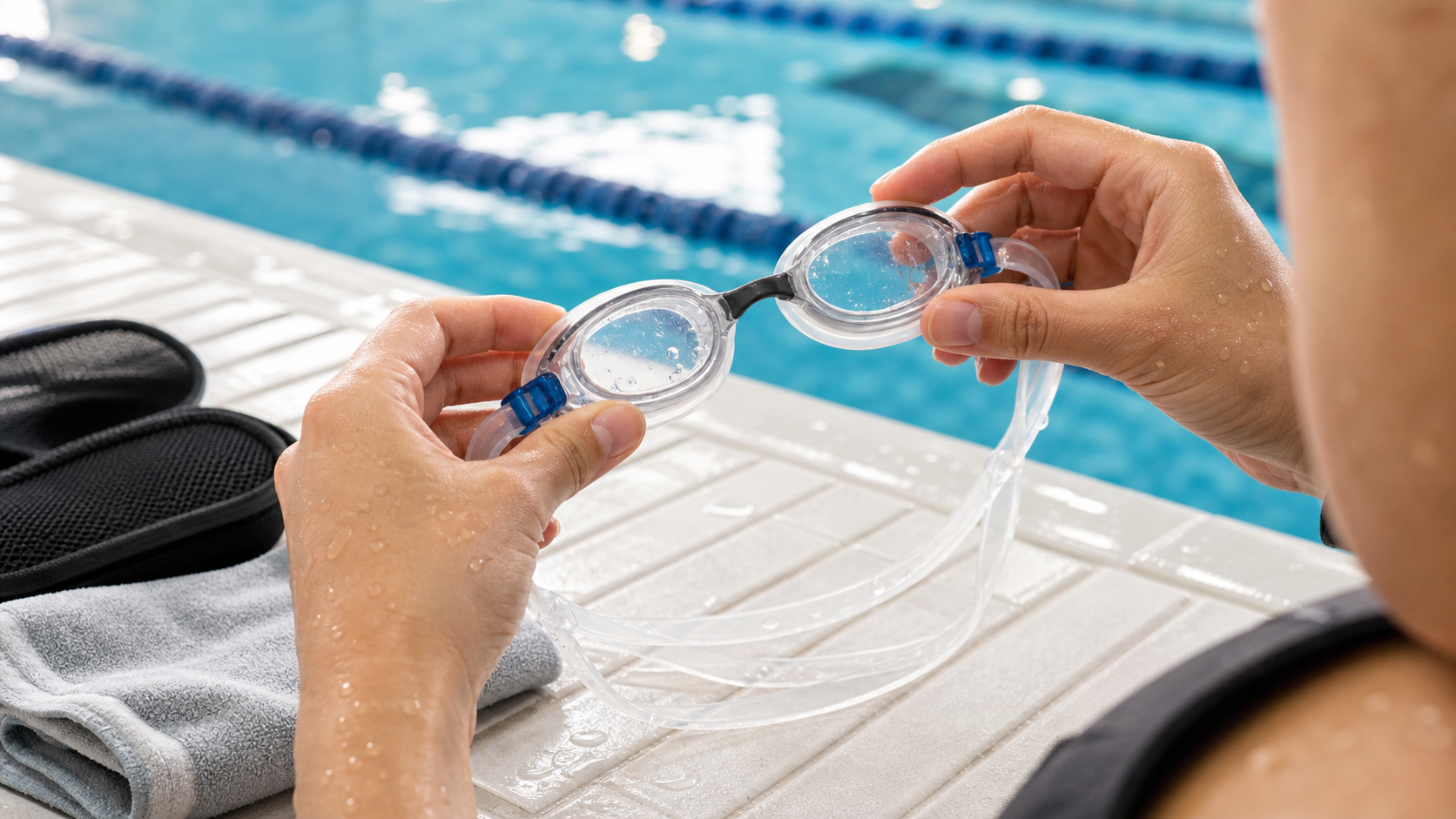
Your goggles fog up mid-swim and your vision suddenly blurs—this is an annoying experience nearly every swimmer has encountered. Anti-fog treatment is standard equipment on modern swim goggles, but many users don’t understand how the anti-fog coating works or how to care for it properly, causing new goggles to lose their anti-fog effectiveness within just a few weeks. This article will take an in-depth look at the technical principles behind anti-fog coatings, daily maintenance methods, and the criteria for determining when goggles need to be replaced.
How Anti-fog Coatings Work
The physical cause of goggle fogging is water vapor condensing on the inside of the lens. When the temperature around your eyes is higher than the water temperature, the warm moisture emitted from the eye area condenses into tiny water droplets when it meets the cooler lens. These droplets form an irregular distribution due to surface tension, causing light to scatter and creating a foggy appearance.
The principle of anti-fog coating is to apply a hydrophilic treatment to the inside of the lens, allowing water molecules to spread evenly into a thin film upon contact with the lens, rather than gathering into droplets. When water covers the surface as a film, light passes through evenly and vision remains clear.
Currently, anti-fog treatments on the market fall into three types:
| Type | Principle | Durability | Representative Brands/Models |
|---|---|---|---|
| Chemical coating anti-fog | Hydrophilic compounds coated on the inner lens | Moderate (3–6 months) | Speedo, TYR standard models |
| Nano-coating anti-fog | Nano-scale hydrophilic particles embedded in the lens | Longer (6–12 months) | Arena Carbon series |
| Physical anti-fog (thicker coating) | Dual-layer lens insulation design | Long (1+ year) | Aqua Sphere, some wide-angle models |
Why Anti-fog Coatings Fail
The most common cause of anti-fog coating failure is being touched by fingers. Skin oils are the nemesis of hydrophilic coatings—oil molecules displace the hydrophilic groups on the coating, making the lens surface hydrophobic and actually causing water droplets to gather more easily.
Other common causes of failure:
- Wiping the inside with tissue or cloth: The friction directly damages the nano-coating structure
- Storing goggles in a bag with lenses facing outward: Friction against other items damages the coating
- Cleaning with soap or dish detergent: Alkaline cleaners corrode the hydrophilic coating
- Prolonged exposure to high temperatures: Chemical bonds in the coating break down faster under heat
- Chloride accumulation: Residual chlorine in swimming pools slowly erodes the coating over time
Proper Anti-fog Maintenance Methods
To extend the life of the anti-fog coating, the most important principle is: Never touch or wipe the inside of the lens.
Correct usage and maintenance steps:
- Before use: Rinse only the outside gently with clean water, letting water flow naturally over the inside (without touching it)
- During use: If fogging occurs, lightly apply a small amount of saliva to the inside (yes, this is the industry-recognized method), then quickly rinse with water
- After use: Rinse the entire pair of goggles with clean water, gently shake to let water drain out, and air-dry naturally
- Storage: Always place goggles in the included goggle case, lenses facing up, to avoid pressure
Notes on using anti-fog spray:
- Commercial anti-fog sprays can be used to reinforce the coating after the original has worn off
- Before purchasing, confirm the spray is compatible with the goggle lens material (PC or acrylic)
- Wait for the spray to dry completely before use, and avoid direct contact between the spray and your eyes
- The effect of anti-fog spray typically only lasts for 3–7 swims
Determining When to Replace Goggles
The following situations indicate that the anti-fog effectiveness is beyond saving, and replacement should be considered:
- Fogging still occurs within a few minutes of entering the water even after using anti-fog spray
- A permanent white foggy deposit appears on the inside of the lens (not fogging, but mineral scale buildup)
- Visible scratches or peeling coating on the inside of the lens
- The silicone seal begins to crack or harden, requiring readjustment every time you swim
- The nose bridge or strap adjustment mechanism is damaged and can no longer hold securely
In general, regular swimmers are advised to replace goggles every 6–12 months, even if they look fine on the outside—aged seals and anti-fog coatings can no longer provide optimal protection.
Practical Tips
- After opening new goggles, rinse them with clean water before the first use—don’t “touch the lens first to check if it’s clear”
- 30 seconds before entering the water, gently swish a small amount of clean water inside the goggles before putting them on to activate the coating’s hydrophilic effect
- Keep a dedicated goggle case in your swim bag to avoid goggles being crushed while loose
- If using sunscreen, be sure to wait until it is fully absorbed before putting on goggles; otherwise, oil transfer will immediately damage the coating
- Keep training goggles and competition goggles separate, and minimize the number of times you use competition goggles to extend coating life
Conclusion
Caring for anti-fog coatings isn’t complicated—the core principle comes down to three rules: “don’t touch, don’t wipe, rinse with clean water.” By developing proper maintenance habits, a mid-priced pair of goggles can maintain good anti-fog performance for over a year. When the anti-fog effectiveness truly can’t be improved, decisively buying new goggles is more cost-effective than stubbornly trying to salvage the old pair—after all, a clear underwater view is the fundamental requirement for safe and efficient swimming.
Related Reading
- The Complete Guide to Buying Swim Goggles: Full Testing of Anti-fog, UV Protection, and Frame Fit
- Swim Goggle Buying Guide: Frame Shape, Anti-fog Coating, and Prescription Options Explained
- The Science of Goggles, Swim Caps, and Accessories: Engineering Trade-offs in Visibility, Field of View, and Anti-fog
- Choosing and Maintaining Waterproof Sunglasses: Visibility Management for Open Water
碟煞公路車 銑面器 !? 原來銑完差這麼多! 降低蹭碟機率! | TIME 公路車 保養小記錄 | CT Yeh
3 年前
近視雷射三個月後悔嗎?單車族/工程師必看,Smart TransPRK 術後血淚史與後遺症全公開 / CT Yeh
4 個月前
[教學] Premiere 影片 手震 修正 教學 防抖 單眼 影像 GoPro 穩定 Video Stabilization
8 年前
洗單車神器 吹水機! 實際洗車用用看 暴力洗鍊條大法 | 公路車 | CT Yeh
4 年前
自助洗車場 洗單車 50元有找 清鍊條大法 居然還有小小兵
7 年前
3C心得) 電腦用 43吋 4K 螢幕 適合嗎 ! BDM4350UC 長期使用心得 剪接影片 修圖 Premiere Davinci Lightroom
7 年前
西進武嶺 自製新版AI配速表產生器 x 賽前攻略 抱佛腳! 沒有功率計也可以產生配速表嗎?有什麼其他眉角賽前要注意的呢? | 西進武嶺 / 東進武嶺 KOM 攻略 | 公路車 | CT Yeh
4 年前
開箱) 近視車友 也可以很帥的 Envis Transform 太陽眼鏡開箱 翔鷹 配近視框超便宜秘訣
7 年前