Introduction
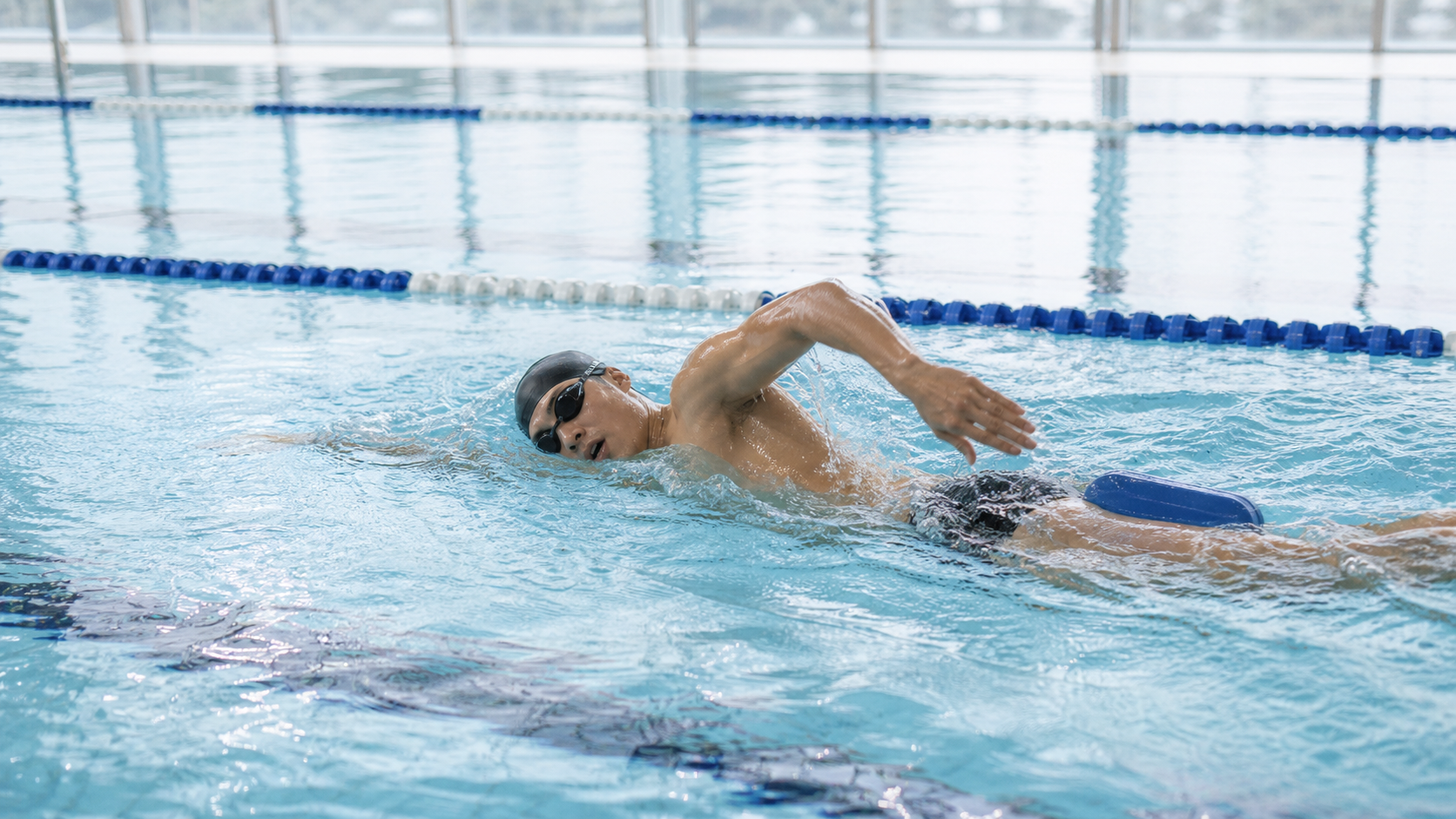
The Pull Buoy is a training tool that many swimmers are familiar with yet often misuse. This oval-shaped flotation device, clamped between the thighs, is designed to provide buoyancy that lifts the lower body, allowing swimmers to focus on arm-stroke training without kicking. However, incorrect usage posture or over-reliance on the Pull Buoy can actually lead to poor swimming habits and even lower back discomfort. This article will systematically introduce the training principles of the Pull Buoy, proper usage methods, and how to effectively integrate it into a weekly training plan.
The Training Principles of the Pull Buoy
The core function of the Pull Buoy is to replace the buoyancy provided by leg kicking. During normal swimming, leg kicking not only provides propulsion but also helps maintain a horizontal body position. When you clamp the Pull Buoy between your legs:
- The lower body is automatically lifted, keeping the body horizontal
- The leg muscles get rest, with blood circulation concentrated in the upper body
- Swimmers can more clearly feel the torque and catch quality of each stroke
- Stroke distance and stroke rate become the primary focus
This makes Pull Buoy training an ideal tool for the following goals:
- Strengthening the primary stroke muscles such as the latissimus dorsi and pectoralis major
- Improving hand entry angle and catch technique
- Increasing distance per stroke (Stroke DPS)
- Maintaining upper-body aerobic capacity during recovery from leg injuries
Proper Usage Posture
Pull Buoy Placement:
The Pull Buoy should be clamped between the upper thighs and the buttocks, not at the knees. Clamping it at the upper thigh effectively lifts the hips and lower body, while clamping it at the knees has limited corrective effect on posture and requires greater clamping force.
Body Posture Key Points:
- Slightly engage the core muscles to avoid excessive lower back sinking
- Lightly tighten the gluteal muscles to prevent hip sway
- Keep the head in a natural extension line position, avoiding excessive head lifting
- Relax the ankles, with feet slightly turned outward—no need to deliberately squeeze the legs together
Common Mistakes:
| Mistake | Problem Caused | Correction |
|---|---|---|
| Clamping at the knees | Insufficient buoyancy, sinking lower back | Move to the upper thigh |
| Squeezing too hard | Inner thigh fatigue, disrupted stroke rhythm | Hold it loosely |
| Excessive lower back arch | Increased lumbar spine pressure | Engage the core muscles |
| Excessive body roll during strokes | Loss of horizontal stability | Maintain a moderate body roll |
| Lifting the head | Sinking hips, increased drag | Look at the pool bottom about 45 degrees ahead |
Applications of Different Training Combinations
The Pull Buoy is often used with other equipment to achieve specific training goals:
Pull Buoy Used Alone:
- Purpose: Pure upper-body aerobic training, improving stroke technique
- Intensity: Can be done as long-distance continuous swimming or interval training
- Recommendation: 1–2 times per week, 500–1500m per session
Pull Buoy + Paddles:
- Purpose: Maximize stroke power training, feel the water resistance of each stroke
- Note: This combination creates significant resistance; make sure you have a foundation of using paddles alone first
- Recommendation: Use medium-sized paddles, 300–600m per session
Pull Buoy + Resistance Cord:
- Purpose: In-place explosive power training, simulating a high-resistance environment
- Suitable for: Strength training for advanced athletes
- Note: Requires supervision by a qualified coach
The Problem of Over-Reliance on the Pull Buoy
Many swimmers find that their times are faster with the Pull Buoy than without it—this is a warning sign worth paying close attention to.
Faster times with the Pull Buoy may indicate:
- Leg kicking is not actually providing propulsion and is instead adding drag (kicking technique needs improvement)
- The core muscles are not strong enough, resulting in poor body position without the Pull Buoy
Coping strategies:
- Regularly compare the speed difference between swimming with and without the Pull Buoy
- Increase kickboard training to improve leg kicking efficiency
- Perform core-specific training (bridges, planks, swimming-specific core exercises)
- Control Pull Buoy usage so it does not become an “excuse” to avoid kick training
Key Points for Purchasing a Pull Buoy
- Size: Standard adult size suits most people; smaller women or teenagers can choose a smaller size
- Material: EVA foam is the mainstream choice; pay attention to density—low-density inferior products lack buoyancy and durability
- Shape: Both traditional oval shapes and designs with leg-curve contours work; the latter provides slightly more stability when clamped
- Price: Models in the NT$100–350 range are usually sufficient in quality; there is no need to buy expensive brands
Practical Advice
- First-time use: Try it in the shallow end first to get familiar with the clamping posture before moving to deeper water
- Breathing rhythm: The Pull Buoy allows for a more stable breathing rhythm; use this opportunity to practice breathing every 2 or 3 strokes
- Combine with technique analysis: Ask a coach or swimming partner to observe your stroke posture from poolside while using the Pull Buoy—it makes technical flaws easier to spot
- Post-training stretching: After Pull Buoy training, focus on stretching the latissimus dorsi and pectoralis major to prevent muscle tightness
Conclusion
The Pull Buoy is an indispensable member of the swimming training toolbox. Used correctly, it can significantly improve upper-body stroke power and technique quality. The key lies in learning the proper clamping posture and integrating Pull Buoy training into the overall training plan in moderation, rather than using it to completely replace full-body swimming practice. Master the essence of Pull Buoy usage, and your stroke efficiency will see noticeable improvement.
Related Reading
- Swimming Pull Buoy: An In-Depth Analysis of the Best Aid for Upper-Body Isolation Training
- Kickboard vs. Paddles: Different Training Purposes—How to Use Training Aids Correctly
- Proper Usage of Resistance Aids (Paddles/Resistance Pants)
- When to Use the Pull Buoy: Core Stability and Movement Breakdown in Swimming Training
一日北高/長距離團騎 常見問題補充篇 / 組團或跟團的眉角 / 壯車友容易被瘦車友慢性拉爆 / 原來屁股痛可能是這個原因...? / 風場配速法 / 公路車 / CT Yeh
2 年前
一日北高 實用 單車手機架!Bone蹦克磁吸單車手機綁 //環島/室內訓練 / 導航的APP推薦 / 日本島波海道取景 / 公路車 / CT Yeh
2 年前
訓練台體驗) 2019台北自行車展 三大家 訓練台體驗 Tacx Neo Flux 2 Xepdo Apx Wahoo Kickr
7 年前
#公路車 #Fitting 靠人工智慧APP 幫你調整單車
6 年前
邁金 T500 訓練台開箱!有下坡輔助、路感模擬、不用插電、直驅電機 !兩萬級距頂規享受新選擇!/ 公路車 / 室內訓練 / CT Yeh
1 年前
一個測試有沒有認真練車的方法😂 #公路車
10 個月前
白沙屯媽祖進香在家走!UREVO 坡度自調走步機 / 可連接訓練遊戲APP MyWhoosh / 邊看直播邊走起來 / CT Yeh
11 個月前
CT 喇低賽) 武嶺牽車 才是王道 西進牽車四小時內秘訣 攝手位置 如何判斷 防抽筋小秘訣
7 年前