Water Temperature and Metabolism in Swimming: Calorie Burn and Core Temperature Regulation in Cold-Water Swimming
Introduction
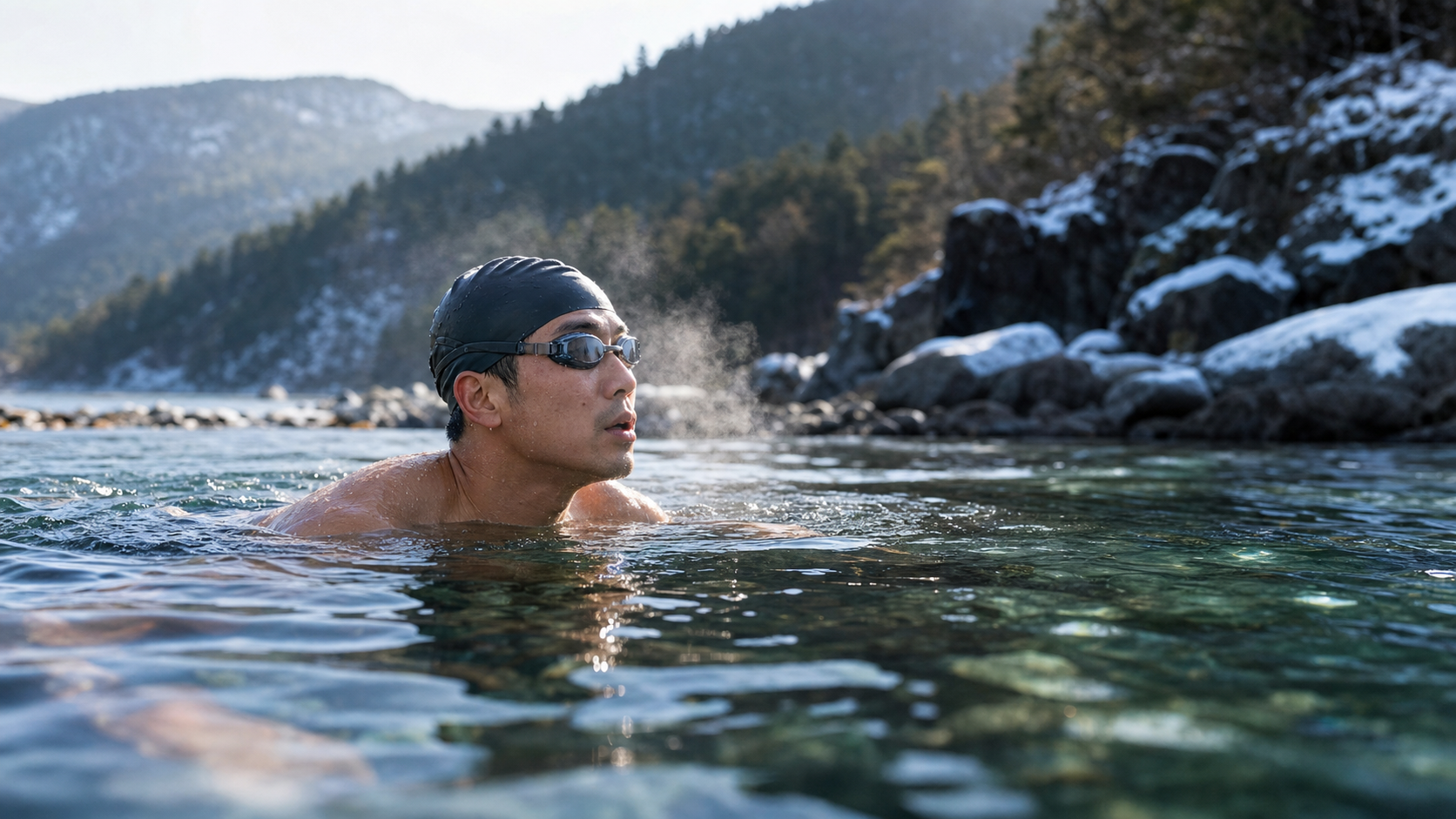
In recent years, cold water swimming has surged in popularity worldwide, from the Nordic tradition of plunging into cold water after a sauna to modern ice bucket challenges and open-water winter swimming. Even though Taiwan has a warm climate, mountain streams in winter and coastal waters in the north can drop to 15-20°C, offering a dramatically different physiological experience for people accustomed to swimming in 28-30°C pools. This article examines, from an exercise science perspective, how water temperature affects metabolic rate, calorie burn, and core temperature regulation.
Why Does the Body Lose Heat 25 Times Faster in Water Than in Air?
Human core body temperature is about 37°C, and maintaining it requires continuous heat production. Water’s thermal conductivity is roughly 25 times that of air, meaning that at the same temperature, water draws heat away from the body 25 times faster than air does.
This is why standing outside at 20°C feels comfortable, yet swimming in 20°C water quickly feels cold. Water continuously carries heat away from the skin’s surface, forcing the body to dramatically increase heat production to maintain its core temperature.
| Water Temp (°C) | Sensation | Tolerable Duration (average adult) | Physiological Response |
|---|---|---|---|
| 25-28 | Comfortable | Several hours or more | Slight increase in metabolism |
| 20-24 | Cool | 1-2 hours | Approaching shivering threshold |
| 15-19 | Cold | 30-60 minutes | Significant increase in heat production |
| 10-14 | Very cold | 10-30 minutes | Intense shivering, rapid heart rate |
| < 10 | Dangerous | < 10 minutes | Very high risk of hypothermia |
Metabolic Responses to Cold-Water Swimming
Once the body senses a drop in water temperature, a cascade of metabolic and physiological adjustments kicks in:
1. Non-Shivering Thermogenesis
The body’s first line of defense is activating brown adipose tissue (BAT). Brown fat is rich in mitochondria and can burn triglycerides directly to produce heat without muscle contraction. Long-term cold-water swimmers tend to have higher brown fat activity and a stronger adaptive capacity for cold.
2. Shivering Thermogenesis
When non-shivering thermogenesis is insufficient, skeletal muscles begin involuntary contractions (shivering) at a frequency of 10-20 times per second, which can raise heat production to 2-5 times resting metabolic rate. Shivering is the body’s emergency heat-production mechanism, but it also rapidly depletes muscle glycogen.
3. Vasoconstriction
Blood vessels in the skin constrict, reducing blood flow to the body’s surface and limiting heat loss. This is a “core-first” survival strategy, at the cost of dropping limb temperature and potentially impairing muscle function.
Calorie Burn in Cold-Water Swimming
Cold-water swimming burns significantly more calories than warm-water swimming, for three reasons:
- Additional metabolic cost of maintaining body temperature: Swimming in 18°C water burns roughly 30-50% more calories than swimming the same distance at 28°C.
- Reduced muscle efficiency: Low temperatures increase muscle viscosity and reduce contraction efficiency, requiring more energy to complete the same stroke.
- Continued heat production after swimming: After exiting the water, the body continues burning calories to restore core temperature — this “afterburn effect” can last 30-60 minutes.
Example estimate: A 65 kg adult swimming for 30 minutes in a 28°C pool burns roughly 350-400 kcal. Swimming the same distance in 18°C water may burn 500-550 kcal or more, including the metabolic cost of maintaining body temperature.
The Limit of Core Temperature Regulation: Hypothermia
When heat loss exceeds heat production, core temperature begins to fall, entering the danger zone of hypothermia:
- Core temperature 35°C: Mild hypothermia, intense shivering, judgment begins to decline
- Core temperature 32°C: Moderate hypothermia, shivering stops (a danger sign!), confusion sets in
- Core temperature < 30°C: Severe hypothermia, risk of cardiac arrhythmia, life-threatening
Warning: When shivering stops, it does not mean you have warmed up — it means the body can no longer sustain heat production. This is a signal for immediate emergency evacuation.
Practical Recommendations
-
Gradual water temperature acclimatization: Do not jump straight into extremely cold water. Start at 24°C and lower the temperature by 1-2°C per week to gradually build cold acclimatization.
-
Control single-session exposure time: The first time swimming in water below 20°C, limit exposure to 15-20 minutes, observe your body’s response, and extend gradually afterward.
-
Never swim in cold water alone: Low temperatures rapidly impair judgment and muscle function. Always swim with a partner and have an emergency plan in place beforehand.
-
Rewarming after exiting the water: Dry your skin with a towel, change into warm clothing, and drink a warm (non-alcoholic) beverage if needed. Do not take a hot bath to rewarm immediately, as this can cause low blood pressure and circulatory shock.
-
Know your personal risk factors: People with cardiovascular disease, Raynaud’s disease, or diabetes have a lower tolerance for cold water and should be especially cautious or avoid cold-water swimming altogether.
Conclusion
The metabolic stimulus of cold-water swimming is genuinely strong, and both the calorie burn and brown fat activation effects are backed by science. However, the body’s core temperature regulation mechanism has its limits, and blindly challenging cold water carries real life-threatening risk. Exploring cold-water swimming gradually and under supervision is the way to safely enjoy the unique physiological stimulation this sport offers.
Related Reading
- The Effect of Water Temperature on Swimming Performance: Heat Adaptation and Cold-Water Swimming Physiology
- Cold-Water Adaptation in Swimming: How Water Temperature Affects Heart Rate, Metabolic Rate, and Oxygen Consumption
- Seasonal Physiology of Swimming: Cold Water vs. Warm Water Performance
- Adjusting Swimming Technique for Different Water Temperatures: The Body’s Response and Adaptation to Cold-Water Swimming
水金九不厭五分 10度寒流冷到不願停!feat. 卡卡 / 公路車 / CT Yeh
6 個月前
[防寒衣體驗] 鐵人魂 三鐵 防寒衣試穿會 於松運 深水游泳池 鯨魚池
8 年前
CT暗黑廚房) 車友必備 宇宙無敵鮮蚵湯 幫助訓練恢復 天然食補 好市多 超肥鮮蚵 破PR
7 年前
2016/05/13 單車 冷水坑下滑
10 年前
西進武嶺 免費訓練分析服務 Intervals | 練不夠還是練過頭?你哪一種類型選手?AI模型告訴你! | 備戰神器 | 公路車 訓練 | CT Yeh
4 年前
靠單車減肥35公斤 心得分享與整理
7 年前
GoPro Hero 10 畫質好但 他是個吃電怪物 過熱只是小CASE 單車錄影實測 ! 耗電 災情 過熱實測 購買前請三思 OSMO Action 2了 !? | CT Yeh
4 年前
5 ℃ 櫻花之旅 / 75萬單車直接雨中洗車.../ 平菁街 / 北迴歸小隊 / 公路車 / CT Yeh
5 個月前