The Respiratory Physiology of Swimming: The Relationship Between Breathing Rhythm and Blood Oxygen Saturation
Introduction
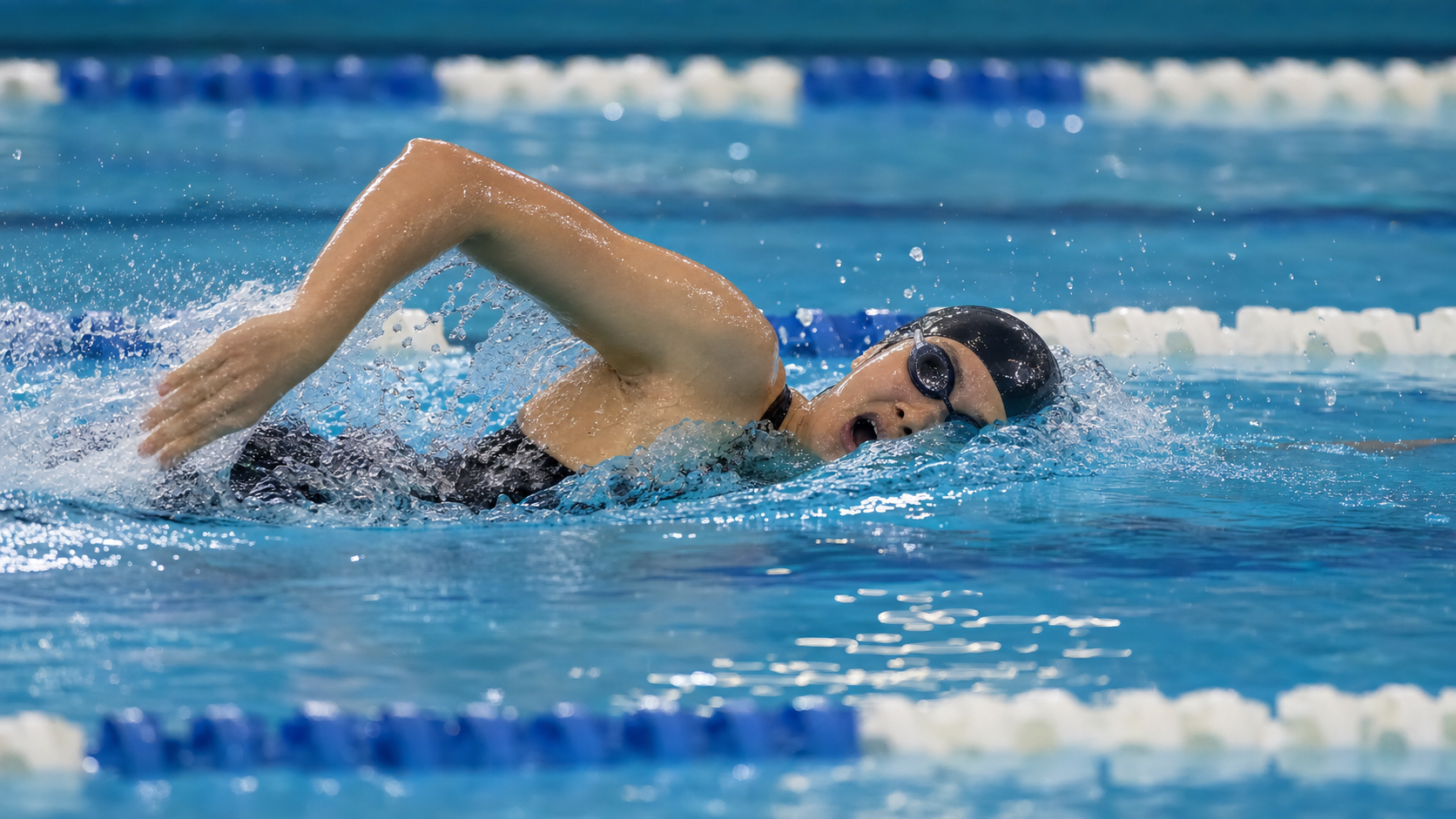
If you ask swimming beginners what the hardest part is, nine out of ten will answer: “breathing.” Swimming is the only aerobic sport that imposes strict timing constraints on breathing—you cannot breathe at will; you must coordinate with your stroke rhythm, complete a side head turn to inhale at a specific moment, and then exhale underwater. This seemingly simple action involves complex respiratory physiology and directly affects blood oxygen saturation, the rate of carbon dioxide accumulation, and ultimately athletic performance.
The Physiological Constraints of Breathing in Swimming
At rest, the human body requires approximately 6 liters of ventilation per minute, which can reach 100–150 liters per minute at maximal exercise intensity. However, breathing rhythm in swimming is constrained by the stroke cycle:
Typical breathing frequencies in freestyle:
- Breathe every 2 strokes: high breathing frequency, suitable for short-distance sprinting
- Breathe every 3 strokes (bilateral breathing): moderate frequency, the most common long-distance strategy
- Breathe every 4–5 strokes: low breathing frequency, only feasible in low-to-moderate intensity training
When breathing is restricted, the rate of CO₂ accumulation in the blood becomes the critical factor. Rising CO₂ levels stimulate chemoreceptors located in the medulla oblongata, triggering a strong urge to breathe. This is why holding your breath too long or breathing insufficiently produces that “about to suffocate” sensation.
Dynamic Changes in Blood Oxygen Saturation During Swimming
In healthy adults, blood oxygen saturation (SpO₂) at rest typically remains at 97–99%. Breathing restrictions during swimming cause SpO₂ to fluctuate, but under normal swimming intensity it usually does not drop to dangerous levels.
| Scenario | Estimated SpO₂ | Description |
|---|---|---|
| Rest | 97–99% | Normal baseline |
| Moderate-intensity swimming (breathing every 3 strokes) | 94–97% | Slight decrease, normal |
| High-intensity sprinting (breathing every 5 strokes) | 91–95% | More noticeable decrease |
| Hypoxic training (breath-hold swimming) | 88–93% | Marked hypoxia, requires caution |
| Dangerous level | < 90% | Immediate breathing or stop required |
Important warning: Shallow Water Blackout
Hyperventilation before swimming is an extremely dangerous behavior. While hyperventilation can flush out large amounts of CO₂, it does not significantly increase blood oxygen, yet it drives CO₂ down to very low levels, delaying the trigger of the breathing urge. A swimmer may black out from hypoxia before oxygen runs out and CO₂ has had time to rise enough to trigger the breathing impulse—this is called “shallow water blackout” and is one of the major causes of sudden death in swimming.
Training Adaptations in Breathing Rhythm
Long-term systematic swimming training induces a series of adaptations in the respiratory muscles and breathing patterns:
1. Strengthening of Respiratory Muscles
Swimming places greater demands on the respiratory muscles (diaphragm, intercostal muscles) than land-based exercise, because water pressure (especially when the chest is submerged) adds extra resistance to inhalation. Research shows that regular swimmers have significantly greater respiratory muscle strength and endurance than the general population.
2. Refinement of Exhalation Technique
Exhalation underwater is an active process, unlike on land where the chest passively recoils after inhalation. Swimmers need to learn to exhale continuously and evenly in the water (rather than holding their breath until the head turns), so that they can complete a full inhalation during the brief moment of the head turn.
Optimizing exhalation technique:
- Begin slow exhalation immediately after entering the water (via nose or mouth)
- 60–70% of stale air should already be expelled before the head turns
- After the head turn, inhale quickly and fully, then return the head to the water promptly
- Avoid the inefficient “breath-hold + explosive exhale” pattern
3. Increased CO₂ Tolerance
Well-trained swimmers have a higher tolerance threshold for rising CO₂ levels and can maintain motor coordination at higher CO₂ concentrations. This allows them to swim at the same speed with fewer breaths, forming part of their competitive advantage.
The Physiological Benefits of Bilateral Breathing
Bilateral breathing in freestyle (breathing every 3 strokes, alternating sides) is not just a technical recommendation—it also has physiological justifications:
- Prevention of muscle asymmetry: Unilateral breathing causes the body to habitually rotate to one side, which over time can lead to muscle imbalances and spinal misalignment
- More even oxygen supply: Compared to breathing every 2 strokes, the every-3-stroke rhythm involves less frequent breathing but maintains a stable CO₂/O₂ balance over longer aerobic sessions
- Competitive adaptability: Bilateral breathing allows swimmers to keep track of competitors on both sides, making it a practical skill in open water
Practical Recommendations
-
Master underwater exhalation before practicing breathing: For many beginners, the root of their breathing problems is incomplete exhalation underwater. First practice “blowing bubbles” in calm water to establish proper exhalation habits.
-
Practice bilateral breathing: Even if it feels difficult, incorporate bilateral breathing sets into training so that both sides can breathe comfortably.
-
Be cautious with hypoxic training: Breath-hold swimming (hypoxic sets, such as swimming 25 meters without breathing) has training value, but it must be done in a supervised environment and must never be preceded by hyperventilation.
-
Do not hyperventilate before swimming: Whether before training or competition, breathe normally. Never “take a few deep breaths before getting in the water” in hopes of holding your breath longer—this is a dangerous behavior.
-
Slow down when breathing becomes difficult: Rapid breathing is usually a signal that intensity is too high. Reduce your pace until breathing returns to normal, rather than pushing through.
Conclusion
Breathing is the most central yet most easily overlooked technical aspect of swimming. From blood oxygen saturation to CO₂ tolerance, from exhalation technique to bilateral breathing, every element has a clear physiological foundation. Mastering the science of respiratory physiology not only makes you swim more efficiently but also keeps you safer in the water.
Related Reading
- Swimming Lung Capacity Training: The Physiology of Breath-Hold Training and Breathing Rhythm
- Transfer of Swimming Breathing Training: The Effect of Swimming Breathing on Running Respiratory Rhythm
- The Physiology of Breathing in Swimming: CO₂ Accumulation and the Control Mechanism of the Breathing Urge
- The Science of Swimming Breathing Technique: Breath-Hold Training and CO₂ Tolerance
#公路車 #Vo2Max #最大攝氧量 測驗 體驗 | 心肺測試
6 年前
JE22 百里任務體驗,心跳不能過150,三小時內有可能...? 沒有天時地利難度有多高? / 公路車 / CT Yeh
1 年前
一起升級!海鷗盃LSD團練...JJSC Zone2招待 騎到手抖 / 公路車 / CT Yeh
1 天前
西進武嶺 免費訓練分析服務 Intervals | 練不夠還是練過頭?你哪一種類型選手?AI模型告訴你! | 備戰神器 | 公路車 訓練 | CT Yeh
4 年前
戰略) Zwift Race 如何咬在第一集團 如何評估自己要開多少推力 (請開1.5倍速看)
7 年前
live) 超越北高 之一日北高12小時 策略
7 年前
[教學] Premiere 影片 手震 修正 教學 防抖 單眼 影像 GoPro 穩定 Video Stabilization
8 年前
滑雪新手們慘摔學習全紀錄(請開字幕),滑雪好好玩 | Snowboard + Ski | 岩原 スキー場 | 滑雪APP使用 | GoPro Max
6 年前