Introduction
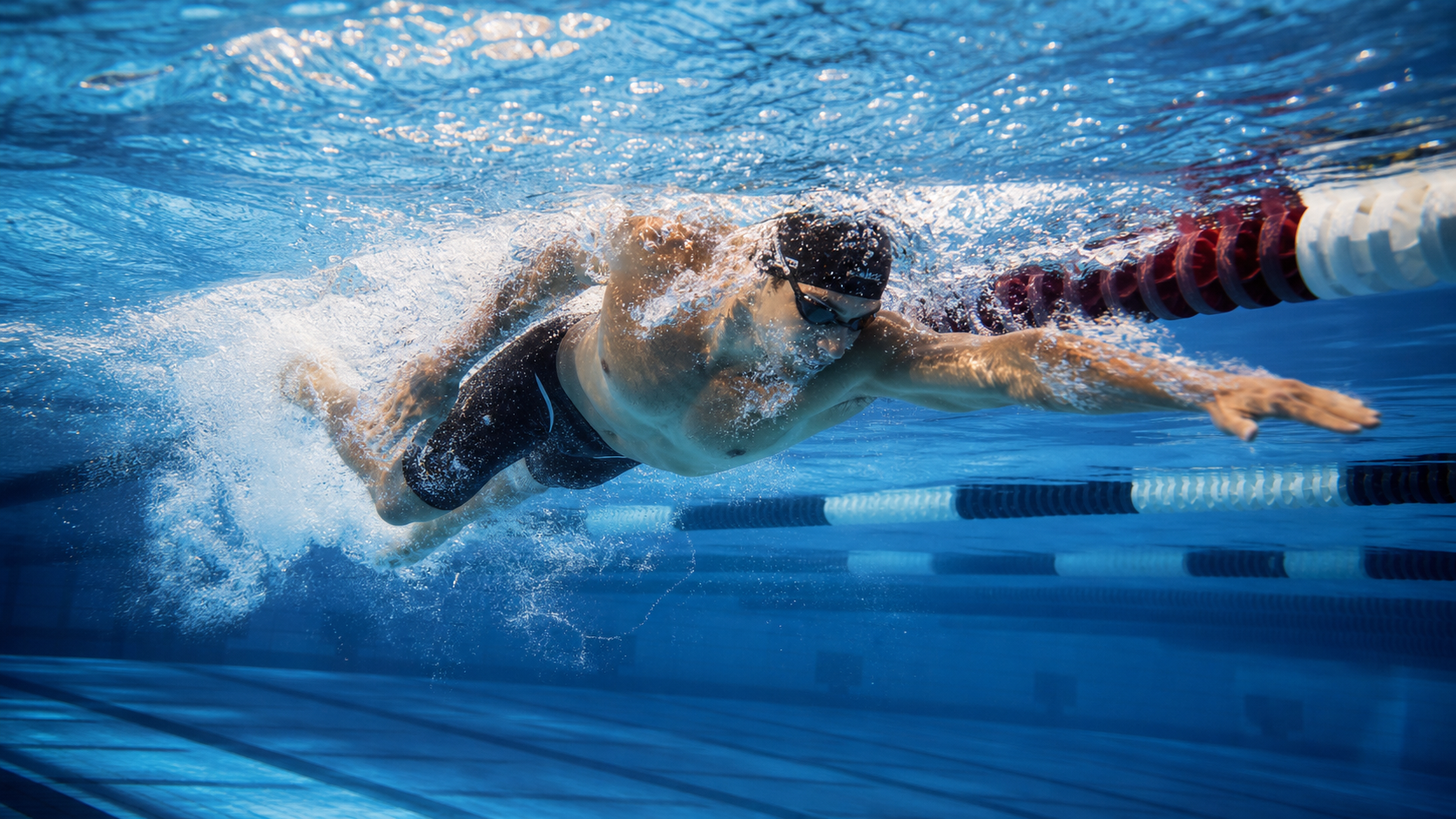
At the 2024 Paris Olympics, Pan Zhanle set a world record by swimming the 100-meter freestyle in 46.40 seconds. What does this speed mean physiologically? How can maximum muscle output be sustained in under a minute? The answer lies at the forefront of the energy metabolism systems—anaerobic metabolism, particularly the lactic acid (glycolytic) system. Understanding the energy supply mechanisms of short-distance swimming is the scientific foundation for improving sprint performance.
The Division of Roles Among the Three Energy Systems
The human body uses all three energy systems simultaneously during exercise, but the contribution ratio of each system changes with exercise duration and intensity:
| Energy System | Fuel | Maximum Power | Duration | Primary Distances |
|---|---|---|---|---|
| ATP-PC System (Phosphocreatine) | Phosphocreatine (CP) | Highest | < 10 seconds | 12.5m–25m sprints |
| Lactic Acid System (Glycolysis) | Muscle glycogen | High | 30 seconds–2 minutes | 50m–200m |
| Aerobic System | Glycogen + Fat | Moderate | Minutes to hours | 400m and above |
For 50-meter swimming (approximately 22–30 seconds), the ATP-PC system supplies about 50–60% of the energy, the lactic acid system supplies about 30–40%, and the aerobic system contributes only about 10%. For 100 meters (approximately 50–60 seconds), the lactic acid system’s contribution rises to about 45–55%, becoming the primary energy source.
How the Lactic Acid System Works
The lactic acid system (also called fast glycolysis) rapidly produces ATP by anaerobically breaking down muscle glycogen:
Simplified glycolysis process:
Muscle glycogen (glucose) → Pyruvate → Lactic acid + ATP (fast, no oxygen required)
Each glucose molecule can produce 2 ATP through glycolysis (compared to 36–38 ATP through aerobic breakdown). Although the efficiency is low, the speed is fast, allowing rapid ATP replenishment at maximum intensity.
Lactic Acid ≠ The Culprit of Pain
A common misconception: lactic acid is the cause of “muscle soreness.” Modern sports science has clarified this:
- Lactic acid itself is not waste, but can be reused as fuel by the heart, slow-twitch muscle fibers, and the liver (lactate shuttle)
- What truly affects short-distance performance is H⁺ accumulation (acidic metabolic byproducts), which lowers intramuscular pH, inhibits enzyme activity, and causes the “burning sensation” and fatigue in muscles
- Post-exercise muscle soreness (DOMS) mainly comes from micro-damage to muscle fibers, not lactic acid
Lactate Threshold: A Key Indicator of Training Intensity
The lactate threshold (LT) is the turning point at which blood lactate begins to accumulate significantly as exercise intensity increases. Below the LT, the body’s rate of lactate clearance can keep pace with production; above the LT, lactate accumulates rapidly, H⁺ concentration rises, and fatigue accelerates.
Implications for swim training:
- Training raises the intensity corresponding to the LT, meaning you can swim “aerobically” at faster speeds without fatiguing quickly
- Race pacing for 100m–400m swimming is typically at or above the LT, making LT training a core component for middle- and short-distance swimmers
Training Methods for Short-Distance Swimming
To improve anaerobic performance in short-distance swimming, targeted stimulation of both the ATP-PC system and the lactic acid system is required:
ATP-PC System Training:
- Supramaximal intensity sprints: 10–15 meters at full speed, with complete recovery (2–3 minutes) before repeating
- Goal: Increase phosphocreatine stores and resynthesis rate
- Example: 8×12.5m all-out sprints, 2.5 minutes recovery
Lactic Acid System Training:
- High-intensity intervals: 50m–200m at race pace or faster, with short recovery (20–60 seconds) repeated
- Goal: Increase glycolytic enzyme activity and H⁺ buffering capacity (muscle buffering capacity)
- Example: 8×50m at race pace, 15 seconds recovery; or 5×100m all-out, 60 seconds recovery
| Training Type | Target Pace | Distance | Recovery Time | Primary System Stimulated |
|---|---|---|---|---|
| Maximum Speed | 100–105% | 15–25m | 3–5 minutes | ATP-PC |
| Lactate Clearance | 95–100% | 50–100m | 3–5 minutes | Lactic Acid System (high intensity) |
| Lactate Tolerance | 90–95% | 100–200m | 30–60 seconds | Lactic Acid System (accumulation) |
The Physiological Mechanisms of Recovery
During the recovery period after short-distance training, lactate is cleared through the following pathways:
- Oxidation (60–70%): Slow-twitch muscle fibers and the heart use lactate as fuel, oxidizing it for energy production
- Gluconeogenesis (15–20%): The liver converts lactate back into glucose (Cori cycle)
- Other pathways (10–15%): Some lactate is converted into amino acids or excreted in urine
The scientific basis for active recovery:
Easy, low-intensity swimming (active recovery) clears blood lactate faster than remaining still in the water (passive recovery), because low-intensity exercise maintains muscle blood flow, accelerating the oxidative utilization of lactate.
Practical Recommendations
-
Don’t fear the “burning sensation”: The discomfort of lactate training is part of the stimulus. Learning to maintain technique and speed under high H⁺ conditions is key to sustaining speed in the latter stages of a race.
-
Prioritize warm-up: Short-distance sprints require a thorough warm-up (including several progressive 50m swims) to raise muscle temperature and enzyme activity, maximizing the output of the ATP-PC and glycolytic systems.
-
Consider creatine supplementation: Creatine supplementation is currently the most scientifically supported supplement for short-distance sports, increasing muscle phosphocreatine stores with significant benefits for 10–30 second high-intensity performance.
-
Periodize high-intensity training: Fatigue accumulates quickly with lactic acid system training, so high-intensity weeks and recovery weeks need to be planned systematically to avoid overtraining.
Conclusion
Short-distance swimming performance depends on the capacity and efficiency of the anaerobic energy systems. The lactic acid system plays a crucial role in energy contribution for 50m–200m events. Understanding its mechanisms not only aids training decisions but also dispels the myth that “lactic acid = something bad.” Guided by science and driven by high-intensity training, the potential of short-distance swimming is greater than you think.
Related Reading
- The Energy Systems of Swimming: Metabolic Characteristics of Different Distance Events
- Energy Metabolism in Swimming: The Ratio of Aerobic and Anaerobic Systems at Different Intensities
- Swimming Energy System Training: The Ratio of Phosphagen, Lactic Acid, and Aerobic Systems
- The Energy Systems of Running: The Ratio of Phosphagen, Lactic Acid, and Aerobic Systems at Different Distances
西進武嶺 免費訓練分析服務 Intervals | 練不夠還是練過頭?你哪一種類型選手?AI模型告訴你! | 備戰神器 | 公路車 訓練 | CT Yeh
4 年前
#公路車 #Vo2Max #最大攝氧量 測驗 體驗 | 心肺測試
6 年前
Live) 備戰2019彰化經典百K 賽前攻略 (已完賽請看新影片
7 年前
CT暗黑廚房) 車友必備 宇宙無敵鮮蚵湯 幫助訓練恢復 天然食補 好市多 超肥鮮蚵 破PR
7 年前
全段數據 2024富士山登山賽 ((銅環)) 請開字幕! /全程解說版 4K高畫質/ feat. 樂華演城旭 / 公路車 / CT Yeh / 第20回Mt.富士ヒルクライム
2 年前
西進武嶺 自製新版AI配速表產生器 x 賽前攻略 抱佛腳! 沒有功率計也可以產生配速表嗎?有什麼其他眉角賽前要注意的呢? | 西進武嶺 / 東進武嶺 KOM 攻略 | 公路車 | CT Yeh
4 年前
2019 柯P 超越北高 第一集團實錄 (11小時實錄請參考另一部影片) 一日雙城 一日北高 NeverStop Taiwan Long Distance Cycling Challenge
7 年前
實景訓練台) 彰化經典百K 高強度喵團 90分鐘 跟著一起練功 2019 Indoor workout Changhua Classic 100 Taiwan
7 年前