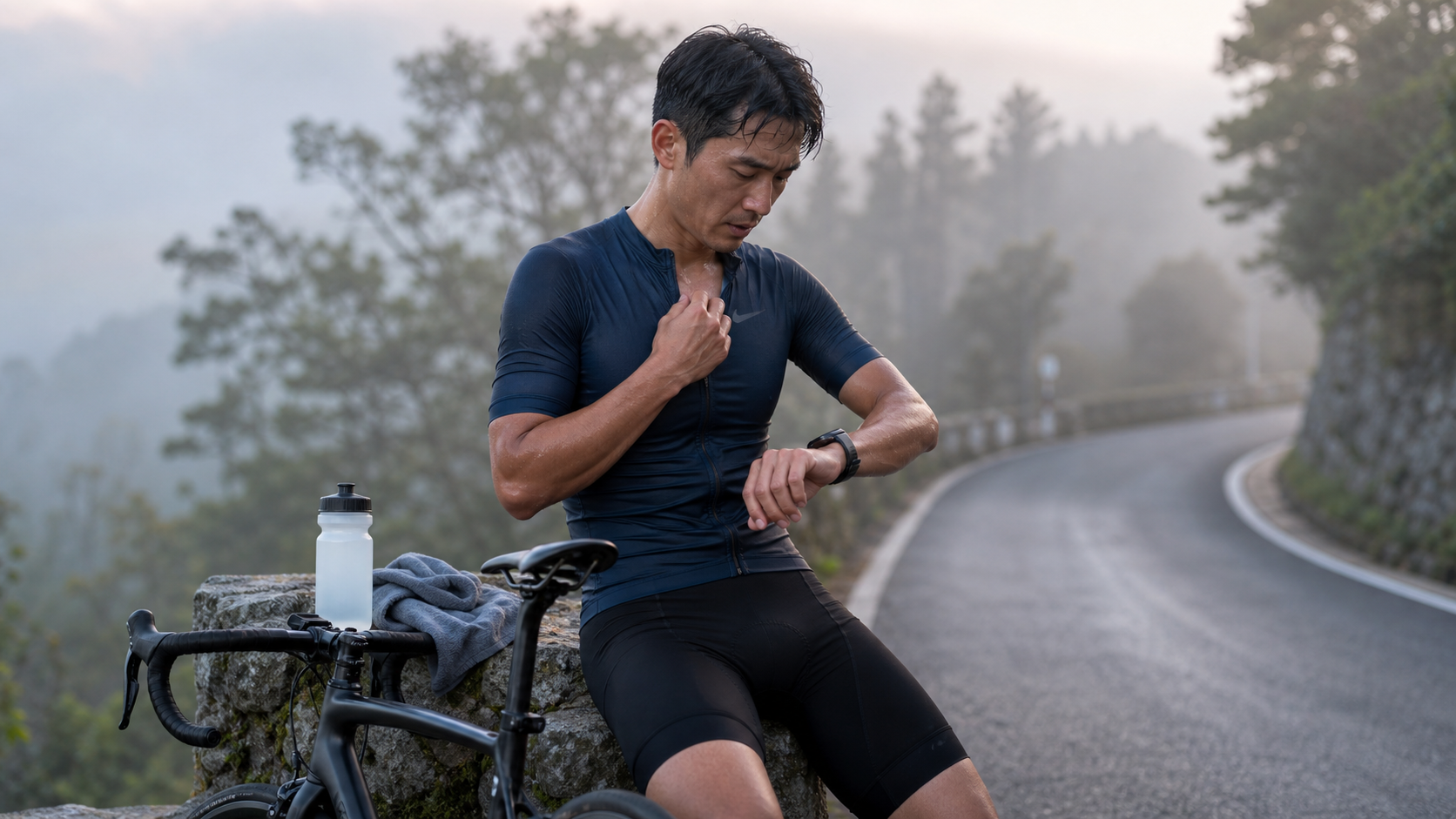
Introduction
“I’ve been training a lot lately, but my performance keeps getting worse…” — If you’ve ever had this confusion, you might be in the early stages of overtraining without even realizing it.
Overtraining Syndrome (OTS) is one of the trickiest problems endurance athletes face. Once you fall into full-blown OTS, recovery can take anywhere from 3 months to over a year, and during that time not only is your training affected, but your overall quality of daily life drops significantly. What’s worse, many cyclists don’t realize the severity of the problem until they hit a breakdown, because early symptoms are easily overlooked or misinterpreted as “normal fatigue.”
Classification of Overtraining
Sports science currently categorizes training fatigue into three levels:
| Stage | Name | Characteristics | Recovery Time |
|---|---|---|---|
| 1 | Functional Overreaching (FOR) | Planned short-term fatigue accumulation, supercompensation after rest | A few days to 2 weeks |
| 2 | Non-Functional Overreaching (NFOR) | Excessive fatigue accumulation, performance decline, recoverable with rest | A few weeks to 2 months |
| 3 | Overtraining Syndrome (OTS) | Systemic neuroendocrine dysregulation, long-term performance collapse | 3 months to over 1 year |
Most amateur cyclists’ “overtraining” actually falls into the NFOR stage. If identified and adjusted in time, 1–4 weeks of rest is usually sufficient for recovery. True OTS is relatively rare, but when it does occur, the consequences are severe.
Early Warning Signs: Physical
Below are common physical warning signs. If multiple appear simultaneously, you should be on high alert:
- Persistently elevated resting heart rate: Morning resting heart rate 5–7 bpm above your personal baseline for 3 consecutive days
- Continuously declining HRV: 7-day HRV trend shows a continuous decline rather than normal fluctuation
- Same pace feels more effortful: Previously riding at 28 km/h felt easy, now the same speed has noticeably higher RPE
- Declining FTP or power output: Unable to reach previous maximum power, and not due to terrain or weather
- Prolonged muscle soreness: DOMS takes more than 72 hours to subside after training
- Worsened sleep quality: Unusual difficulty falling asleep, excessive dreaming, waking up without feeling rested
- Decreased or abnormally increased appetite: Especially a loss of craving for carbohydrates
- Recurring minor ailments: Mild colds, scratchy throat, mouth ulcers for several consecutive weeks (signs of suppressed immune function)
Early Warning Signs: Psychological and Behavioral
Psychological symptoms often appear earlier than physical symptoms but are even easier to overlook:
- Loss of passion for riding: Previously looked forward to heading out, now you have to force yourself to get on the bike
- Increased mood swings: Easily irritated, overreacting to small things
- Declined attention and focus: Difficulty concentrating at work or while studying
- Motivational drop: No desire to train, nor to do anything else
- Increased anxiety: Excessive anxiety about races or training, rather than normal excitement
Quantitative Monitoring Tools
Subjective “something feels off” is certainly important, but adding objective quantitative tools can detect problems even earlier:
Daily Morning Self-Assessment (1–5 Scale)
Record the following 5 items daily, each scored 1–5 (1 being worst, 5 being best):
- Sleep quality
- Muscle fatigue (reverse-scored: the more tired, the lower the score)
- Emotional state
- Training motivation
- Overall energy level
If the total score is below 15 out of 25 for 3 consecutive days, seriously consider reducing training volume or taking rest.
Abnormal Patterns in Training Logs
Periodically review your training logs from the past 4 weeks and watch for:
- Has weekly total TSS (Training Stress Score) been rising continuously for over 4 weeks without a down week?
- Is the weekly frequency of high-intensity sessions (Zone 4+) too high (more than 3 times per week)?
- Is the proportion of rest days below 1 day per week?
Coping Strategies: Tiered Response
Early Warning Signs Detected (1–3 items)
- Reduce training volume by 20–30% that week
- Cancel high-intensity sessions, switch to Zone 1–2
- Ensure 8+ hours of sleep each night
Multiple Warning Signs Present Simultaneously (4–6 items)
- Schedule 7–10 days of complete rest or very light active recovery
- Don’t rush to “make up for lost training”
- Increase intake of high-protein and carbohydrate foods
Suspected NFOR
- Seek help from a sports medicine physician or certified coach
- Undergo blood tests (testosterone/cortisol ratio, CBC, ferritin, vitamin D)
- Training volume needs to be drastically reduced (possibly 4–8 weeks), prioritizing full recovery
Practical Recommendations
- Establish a non-negotiable rest week system: Schedule a “deload week” every 3–4 weeks, reducing training volume by 40–50%
- Training logs must include a “feelings column”: Recording only distance and intensity isn’t enough; subjective feelings matter just as much
- Count life stress as training stress: During weeks with high work pressure or insufficient sleep, proactively reduce training volume
- Don’t use “I slacked off last week” as an excuse to add volume: The catch-up mindset is an accelerator for overtraining
Conclusion
The strongest rider isn’t the one who trains the most, but the one who knows when to hit the brakes before crashing. The early warning signs of overtraining are your body’s distress signals — the earlier you listen, the faster you recover, and the more stable your long-term progress. Save this checklist and compare it against your own condition every two weeks. You’ll discover that much of what you thought was “normal fatigue” is actually a clear signal to adjust your training.
Related Reading
- Identifying Overtraining Syndrome: 6 Physical Warning Signs You Can’t Ignore
- Overtraining Syndrome Detection Guide: Recognizing Warning Signs to Avoid Training Collapse
- Recognizing Chronic Fatigue in Runners: Early Warning Signs of Overtraining Syndrome
- Cycling Overtraining Syndrome: 7 Warning Signs and Recovery Strategies (Amateur Rider Edition)
西進武嶺 免費訓練分析服務 Intervals | 練不夠還是練過頭?你哪一種類型選手?AI模型告訴你! | 備戰神器 | 公路車 訓練 | CT Yeh
4 年前
FTL 與 SYB 車隊專訪 西進武嶺 實用攻略分享! 2小時 如何練?!你不知道的眉角!新手準備武嶺必看 EP1 | 實力派女車友 | 精華版 | 公路車 | CTYeh
4 年前
一日北高前的高裝檢 | 北高 360 | 挑戰11小時的裝備 | 一日雙塔 | 補給
6 年前
一個測試有沒有認真練車的方法😂 #公路車
10 個月前
一日北高/長距離團騎 常見問題補充篇 / 組團或跟團的眉角 / 壯車友容易被瘦車友慢性拉爆 / 原來屁股痛可能是這個原因...? / 風場配速法 / 公路車 / CT Yeh
2 年前
滑雪新手們慘摔學習全紀錄(請開字幕),滑雪好好玩 | Snowboard + Ski | 岩原 スキー場 | 滑雪APP使用 | GoPro Max
6 年前
2026 輪霸西濱200K 挑戰VLOG / 第一集團 / 首次參加..經驗不足、膀胱不足 /死守6H內 / AI戰鬥力顯示系統 / 公路車 / CT Yeh
4 個月前
一日北高常見問題大集合 | 攻略 | 路線 | 訓練 | 補給 | 自行車 單車 | 一日雙城 | 雙塔 | TWB北高360 | 屁股痛
6 年前