Introduction
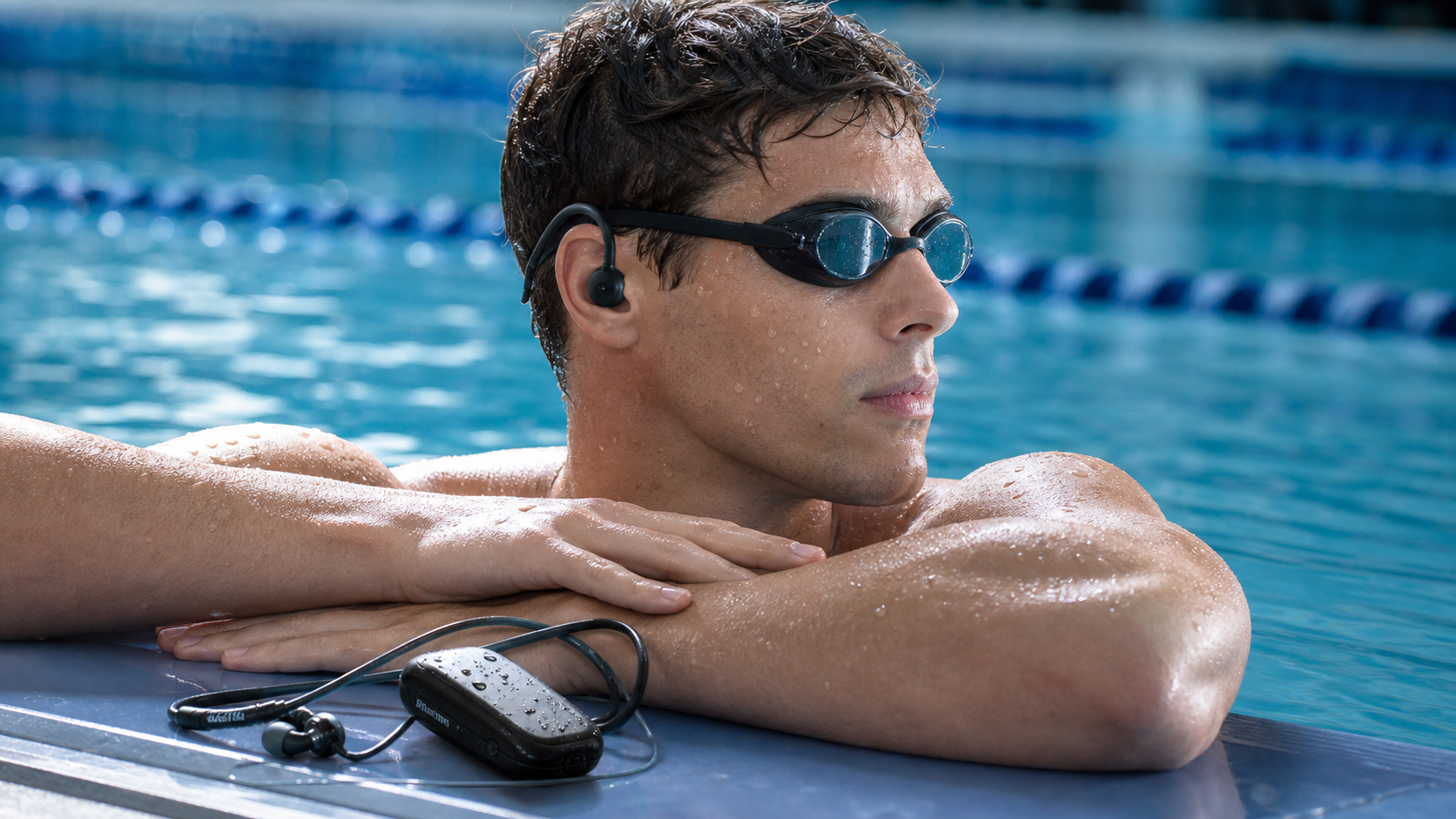
Monotonous lap training becomes more enjoyable with music, and research shows that music can effectively enhance athletic performance and training engagement. In recent years, underwater audio technology has advanced significantly, from the bulky waterproof MP3 players of the past to today’s slim bone-conduction swimming earphones, offering an increasingly diverse range of choices. However, “waterproof” does not equal “suitable for swimming.” Many consumers purchase unsuitable products without understanding the differences, resulting in a greatly diminished user experience. This article will systematically compare the technical differences among underwater audio devices to help you make the right investment.
Understanding Waterproof Ratings
Before purchasing underwater audio equipment, you must first understand waterproof rating standards. The IP (Ingress Protection) rating established by the International Electrotechnical Commission is the most common standard:
- IPX4: Splash-proof, only suitable for running and sweating, not for swimming
- IPX5/IPX6: Resistant to water jets, not suitable for submersion
- IPX7: Withstands submersion in 1 meter of water for 30 minutes, suitable for shallow swimming
- IPX8: Withstands submersion beyond 1 meter (specific specifications defined by the manufacturer), suitable for pool use
Important note: Pool water is more corrosive to electronic devices than regular fresh water. The chlorides and disinfectants it contains will accelerate the aging of sealing gaskets with prolonged contact. Before purchasing, confirm whether there is an explicit statement that the device is “suitable for swimming pool use”, rather than relying solely on IPX7/8 certification.
Comparison of Audio Transmission Methods
Underwater audio devices primarily use three transmission methods:
1. Air Conduction (Traditional In-Ear)
Sound waves are transmitted through the vibration of the earphone diaphragm, traveling into the ear canal. When used in water, water in the ear canal obstructs sound wave transmission, causing a noticeable decline in sound quality. The advantage is the best sound quality for everyday use; the disadvantage is poor performance in water, and the ear tips require a good seal for swimming use.
2. Bone Conduction
Sound is transmitted by directly stimulating the cochlea through vibrations of the cheekbone or mastoid bone, bypassing the ear canal and eardrum. Aftershokz (now renamed AfterShokz) and Shokz OpenSwim are representative brands. Transmission in water is more stable than air conduction, but sound quality still suffers some loss in water.
3. Direct Bone Vibration Conduction (Underwater-Specific)
Models like the FINIS Duo use jawbone vibration conduction, with vibration units mounted on the goggle frame, directly contacting the cheekbone. This is currently the most effective transmission method in water, but the design limits portability.
| Transmission Method | Underwater Sound Quality | On-Land Sound Quality | Ear Canal Comfort | Representative Brands | Price Range |
|---|---|---|---|---|---|
| Air Conduction (In-Ear) | Moderate (depends on seal) | Excellent | Requires adaptation | Sony NW-WS Series | NT$2,500–5,000 |
| Bone Conduction | Good | Moderate | High | Shokz OpenSwim | NT$3,000–5,500 |
| Jawbone Vibration Conduction | Best | Not applicable | High | FINIS Duo | NT$2,800–4,500 |
The Importance of Ear Canal Fit
For products using air-conduction earphones, ear canal fit determines the quality of the underwater experience. Problems caused by insufficient fit:
- Water enters through gaps in the ear tips during swimming, causing immediate sound quality degradation
- Earphones are prone to shifting or falling out during the breath phase of breaststroke
- At steep entry angles, water pressure may forcibly push the ear tips out of the ear canal
Methods to improve fit:
- Choose earphones that come with multiple ear tip sizes (S/M/L) and find the size that fits your ear canal
- Use “memory foam” ear tips, which fill irregular ear canal shapes better than silicone
- Pair with ear hooks or shark-fin style stabilization accessories to prevent earphone shifting during swimming
Features of Mainstream Products
Sony NW-WS413 (Air Conduction):
- Built-in 4GB storage, no Bluetooth connection required
- IPX5/IPX8 dual certification, suitable for swimming pools
- Comes with multiple ear tip sizes, good sealing
- USB charging, approximately 12 hours of battery life
Shokz OpenSwim (Bone Conduction):
- Bone-conduction earphones designed specifically for swimming
- Built-in 4GB, no Bluetooth support (Bluetooth signals can barely penetrate water)
- Does not block the ear canal, providing more natural hearing during breathing
- IP68 waterproof rating
FINIS Duo (Jawbone Vibration Conduction):
- Clips onto the goggle frame, with vibration units contacting the face
- Best-rated underwater sound quality among similar products
- Does not rely on ear canal fit, no ear tip issues
- Requires use with specific goggle models
Practical Recommendations
- First-time underwater earphone buyers: We recommend choosing bone-conduction models for convenience and no ear canal fit issues
- Those who prioritize sound quality: Try the FINIS Duo’s jawbone conduction design for the best underwater sound quality
- Bluetooth needs: Bluetooth signals cannot transmit through water during swimming, so be sure to choose models with built-in storage
- Maintenance tips: Rinse with clean water after each swim and regularly check that the charging port cover is securely closed
- Volume control: When using earphones in water, it is recommended to keep the volume no higher than 60% of maximum to protect your hearing
Conclusion
Choosing underwater audio equipment is more complex than choosing regular earphones. Waterproof ratings, transmission methods, and ear canal fit are all key considerations. For most swimming enthusiasts, the convenience and underwater performance of bone-conduction models offer the most balanced choice; advanced athletes seeking the best sound quality can try jawbone vibration conduction designs. Investing in a quality underwater audio device, so that every training session is accompanied by music, can often unexpectedly boost training motivation and results.
Related Reading
- Underwater Swimming Earphones: A Complete Guide to Bone Conduction Technology and Pool Music Training
- Swimming Ear Plugs and Nose Clips: A Guide to Buying and Correctly Using Waterproof Protection Gear
- Swimming Ear Plug Buying Guide: A Complete Comparison of Waterproof Performance Between Silicone and Wax Ear Plugs
- Heart Rate Monitoring for Swimming Training: Effective Methods for Using Waterproof Heart Rate Straps
單車 重低音 藍芽喇叭 音質實測 SoundBot SB525 Real Sound Test
8 年前
DJI OSMO Pocket 外接麥克風 測試 External Microphone Audio Adapter 原廠 聲音轉接頭 開箱 3.5mm
7 年前
3C開箱) 重低音藍芽喇叭 SoundBot SB526 音質實測 美國聲霸 單車戶外 大音量
7 年前
#公路車 #Vo2Max #最大攝氧量 測驗 體驗 | 心肺測試
6 年前
大家都在開箱的...單車用藍芽對講耳機真的有幫助嗎? SENA BiKom 20 長距離旅遊 & 海鷗繞圈賽 實際體驗心得 / 公路車 / CT Yeh
9 個月前
3C開箱) SoundBot 老車升級智慧音響 SB360 藍芽 免持 接收器 Aux in 手機 汽車音響 美國聲霸
7 年前
洗單車神器 吹水機! 實際洗車用用看 暴力洗鍊條大法 | 公路車 | CT Yeh
4 年前
iPhone 13 Pro 電影級 VLOG 實拍測試!優缺點 原理分析! 夜間效果對決 GoPro10!蘋果沒有說的超強錄影體驗!? | CT Yeh
4 年前