Introduction
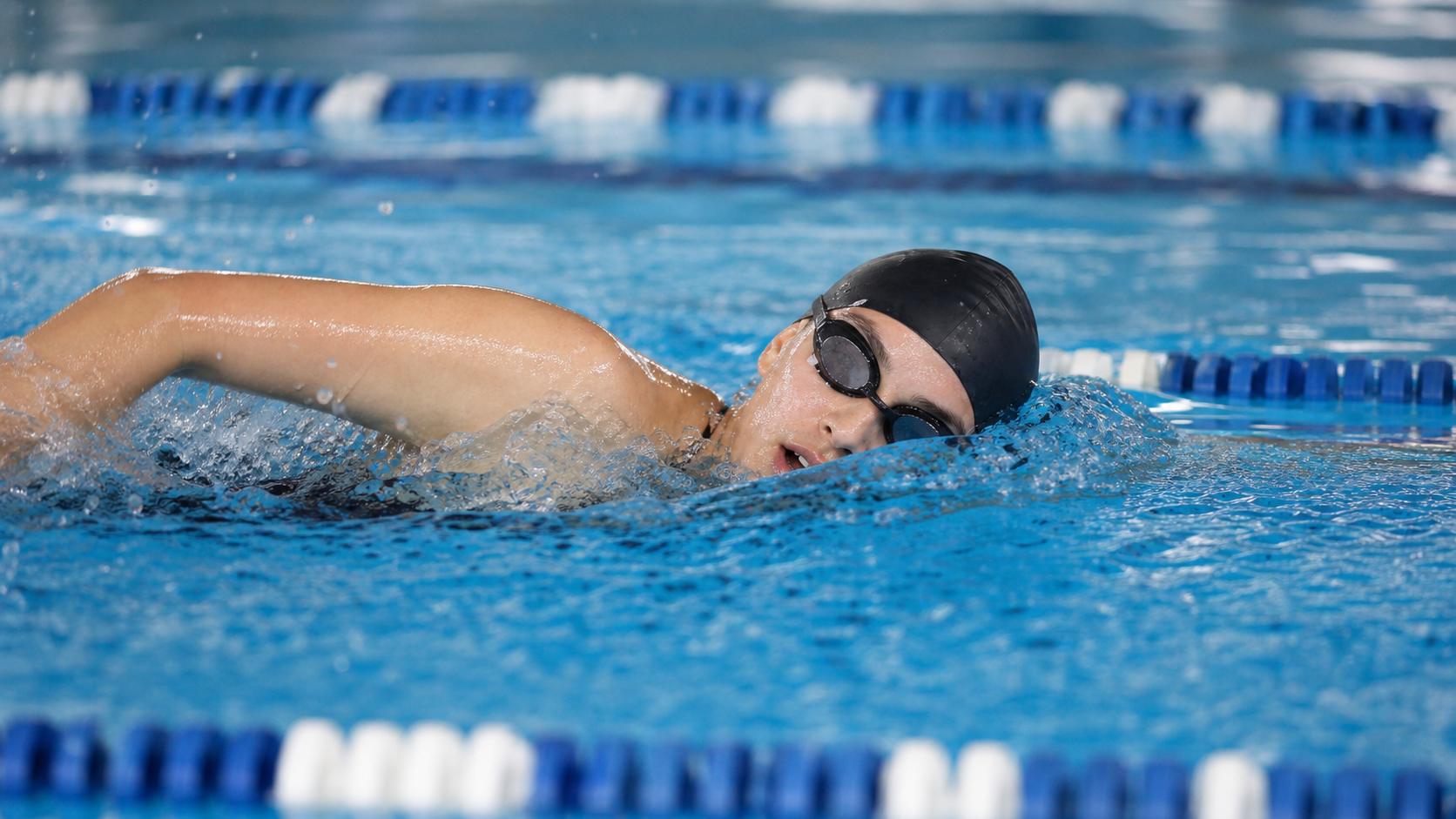
A stiff neck after swimming is a common complaint among many swimmers. Feeling sore and tight in the neck after a training session is often the cumulative result of “excessive head-lift breathing” over time. Breathing should be a natural, fluid rotational movement, but when swimmers lift their heads too high, the neck muscles must continuously resist water pressure, becoming one of the most fatigued areas in the entire swimming stroke. This article will explain how to improve breathing technique and provide neck relaxation exercises.
Identifying Excessive Head-Lift Breathing
| Feature | Excessive Head Lift | Correct Rotational Breathing |
|---|---|---|
| Mouth position when breathing | Well above the water surface | Corner of the mouth just at the waterline |
| Head rotation style | Entire face turned upward | Head rotated to the side, cheek facing up |
| Eye position | Both eyes above the water | One eye underwater, one just at the surface |
| Neck sensation | Noticeably tense, strained | Rotates naturally with body roll |
| Neck condition after swimming | Sore and stiff | Relaxed with no discomfort |
Causes of Excessive Head-Lift Breathing
Breathing Anxiety (Primary Cause)
The fear of “not getting enough air” drives swimmers to keep their mouths as far from the water as possible. This anxiety causes the head to lift too high, creating a vicious cycle: the higher the head lifts, the harder breathing becomes; the harder breathing becomes, the higher the head lifts next time.
Insufficient Body Roll
Proper breathing relies on the body’s natural roll, allowing the mouth to “rise above the water with the body’s rotation.” If body roll is insufficient, swimmers need greater head movement to get their mouths clear of the water.
Lack of Awareness of the “Side Breathing Pocket”
Elite swimmers breathe using the “bow wave trough” formed by the wave at the front of the head along the side of the body—this low point allows the mouth to inhale with minimal movement. Swimmers lacking this awareness instead lift their heads to create breathing space.
Key Technical Points for Correct Rotational Breathing
- Breathing is “head rotation” rather than “head lifting”—rotate the head 60-70 degrees so the mouth faces sideways rather than upward
- “One eye in the water, one eye above the water” is the ideal head position when breathing
- The power for breathing comes from the body’s natural roll; the head merely “hitches a ride” on the rotation
- Return the head to the water immediately after breathing; do not linger at the surface
Breathing Technique Correction Drills
Drill One: Side Breathing with a Kickboard
Hold a kickboard with both hands and kick to move forward, practicing side breathing (rather than head-lift breathing). On each breath, confirm that your face is facing the side wall of the lane (not the ceiling). This is the most fundamental drill for building the feel of rotational breathing.
Drill Two: The “One Eye Underwater” Check
While swimming, after each breath, ask yourself: “During that breath, was one eye underwater?” If both eyes surfaced, you are lifting your head too high and need to reduce the rotation angle.
Drill Three: The Gentle Bite Breathing Method
When breathing, imagine gently biting the water surface with the corner of your mouth (without actually drinking water). This cue ensures your mouth does not drift too far from the water, keeping head rotation within the minimal necessary range.
Neck Relaxation Exercises (Before and After Swimming)
Pre-Swim Warm-Up
- Neck Flexion and Extension: Slowly lower your chin to your chest, then tilt your head back, holding each position for 10 seconds. Repeat 5 times.
- Neck Lateral Flexion: Bring your left ear toward your left shoulder, gently place your right hand on top of your head and apply light pressure. Hold for 15-20 seconds, then switch sides.
- Neck Rotation: Slowly rotate your head from left to right, pausing 3-5 seconds in each direction. Repeat 3-4 times.
Post-Swim Relaxation
- Trapezius Stretch: Lower your head, interlace your fingers on top of your head, and gently apply downward weight to feel a stretch along the back of the neck. Hold for 30 seconds.
- Sternocleidomastoid Stretch: Turn your head to the side and then slightly tilt it upward to feel a stretch along the front of the neck. Hold for 20 seconds, then switch sides.
- Warm Compress: If your neck feels stiff after training, apply a warm towel to the neck for 10-15 minutes to promote blood circulation.
Practical Tips
- Breathing drills are highly effective: Practice the side-breathing motion in place in calm water (without swimming), focusing on feeling the rotation of the head rather than lifting, to build correct movement memory.
- Relaxed breathing in the water: After every 50-100 meters, swim one lap at a very relaxed pace, carrying the feeling of “relaxed breathing” into the subsequent training segments.
- Consider using a nose clip: For swimmers with severe breathing anxiety, short-term use of a nose clip can reduce the worry of “getting water up the nose,” making it easier to relax the breathing motion.
Conclusion
A stiff neck is the body’s signal of excessive head-lift breathing. By correcting breathing technique—shifting from lifting to rotating—and pairing it with daily neck relaxation exercises, swimmers can make their breathing motion more natural and effortless within a few weeks. Remember: good breathing technique allows you to swim longer and more relaxed, which is the foundation for swimming to bring health and enjoyment.
Related Reading
- Swimming Neck Stiffness: Solutions for Breathing Side Dominance and Long-Term Muscle Imbalance
- Neck Pain in Swimming: Injuries and Corrections from Improper Breathing Posture
- Cervical Spine Issues and Swimming Breathing: Is Your Breathing Posture Hurting Your Neck?
- Head Movement in Breathing: The Destructive Impact of Excessive Head-Lift Breathing
一日北高/長距離團騎 常見問題補充篇 / 組團或跟團的眉角 / 壯車友容易被瘦車友慢性拉爆 / 原來屁股痛可能是這個原因...? / 風場配速法 / 公路車 / CT Yeh
2 年前
CT暗黑廚房) 車友必備 宇宙無敵鮮蚵湯 幫助訓練恢復 天然食補 好市多 超肥鮮蚵 破PR
7 年前
[教學] Premiere 影片 手震 修正 教學 防抖 單眼 影像 GoPro 穩定 Video Stabilization
8 年前
CT 喇低賽) 武嶺牽車 才是王道 西進牽車四小時內秘訣 攝手位置 如何判斷 防抽筋小秘訣
7 年前
抖肩舞 台灣x日本交流版 (台灣 vs 前橋) 赤城山登山賽 coincidance
8 年前
一日北高常見問題大集合 | 攻略 | 路線 | 訓練 | 補給 | 自行車 單車 | 一日雙城 | 雙塔 | TWB北高360 | 屁股痛
6 年前
戰略) Zwift Race 如何咬在第一集團 如何評估自己要開多少推力 (請開1.5倍速看)
7 年前
#公路車 #Vo2Max #最大攝氧量 測驗 體驗 | 心肺測試
6 年前