Introduction
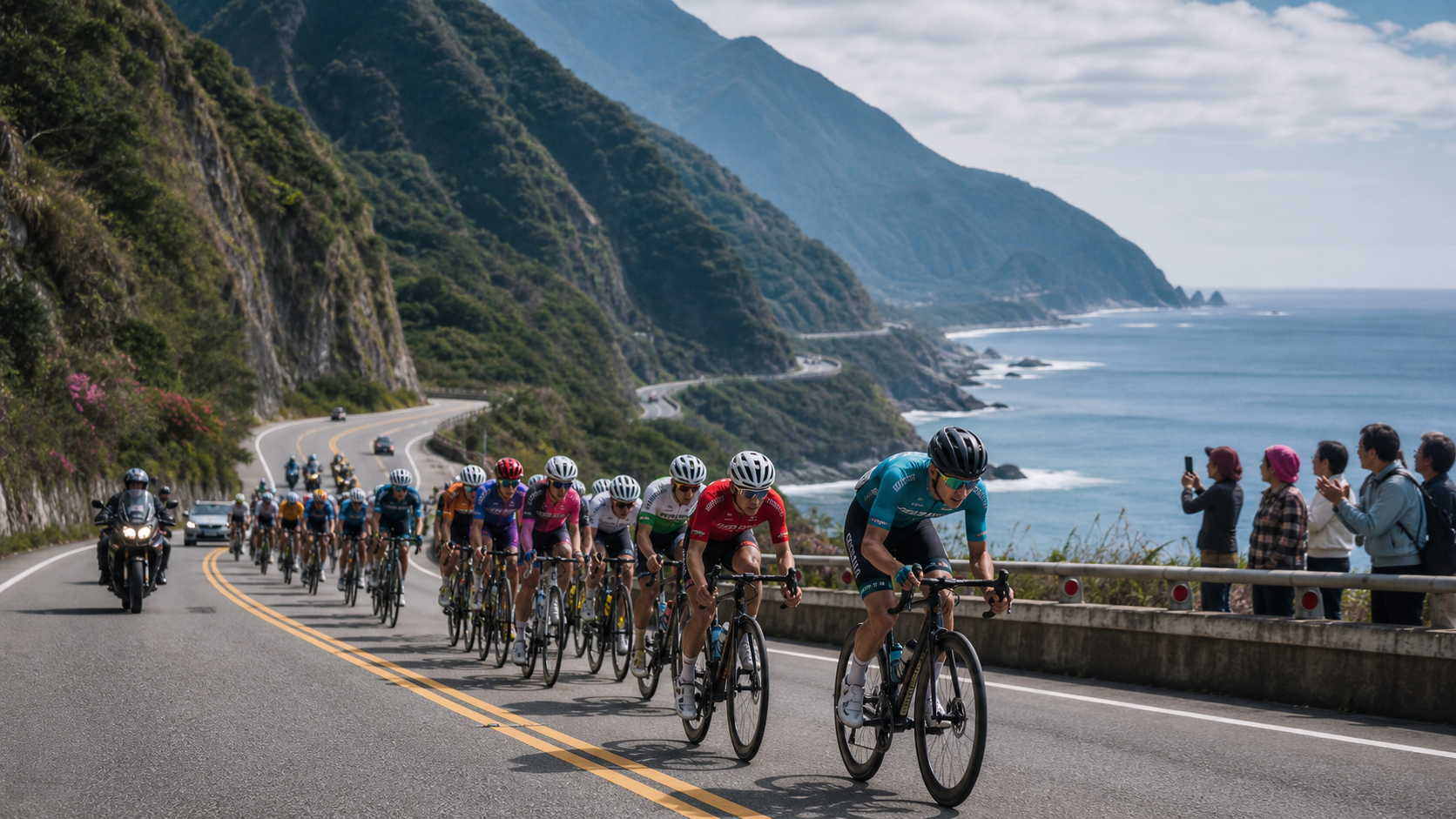
Every March, Taiwan’s provincial highways and mountain roads suddenly look very different from their usual selves. Lead motorcycles, technical vehicles, team buses, and dozens of professional riders in brightly colored team kits sweep past at 50 km/h under police motorcycle escort. Grandparents by the roadside, students out of school, and café owners setting down their phones all look up at the same time, watching a spectacle that feels both out of place in their daily lives and yet so close to home.
This is the Tour de Taiwan, one of Asia’s most important road races and Taiwan’s brightest calling card on the international cycling map.
Race Origins: From Experiment to Stage
The Tour de Taiwan’s predecessor can be traced back to trial events in the late 1990s. At the time, Taiwan’s cycling industry was at the peak of global manufacturing, with brands like Giant, Merida, and Kenda having established a firm foothold in international markets. Industry leaders began to ask: how can “Made in Taiwan bicycles” be more than just a manufacturing label, but a sports culture brand?
Hosting an international stage race became the most compelling answer.
In 2005, the Tour de Taiwan officially received UCI (Union Cycliste Internationale) certification, upgrading to a 2.2 category event. In 2012, it was further upgraded to UCI 2.1, placing it alongside Asia’s other top-tier races. What does this certification mean? Professional teams can use points from this race to compete for wildcard entries into major tours like the Tour de France and the Giro d’Italia. Taiwan’s mountain roads had officially entered the preparation plans of the world’s top riders.
The Art of Route Design: Showing Taiwan to the World
The Tour de Taiwan’s route design balances competitiveness with showcase appeal. Every year, the race committee faces a core question: how can they show foreign riders and global media the most spectacular side of Taiwan within one week?
| Route Type | Representative Section | Competitive Characteristics |
|---|---|---|
| Flat sprint stage | Tainan, Changhua plains | Mass sprint, suited to sprinters |
| Key climbing stage | Wuling, Hehuan Mountain | Decides the overall classification, fierce battle for the King of the Mountains |
| Time trial | City centers | Test of individual ability, easiest for spectators to watch up close |
| Coastal scenic stage | Suhua Highway, East Coast | Visually stunning, favorite filming spot for international media |
The Suhua Highway section has always been the most talked-about stretch among foreign journalists and riders. A coastal highway along cliff edges, the azure Pacific Ocean, and snow-capped peaks of the Central Mountain Range in the distance—scenery like this is hard to replicate anywhere else in the world. One European rider said in a post-race interview: “I’ve climbed the mountains of the Tour de France, but I’ve never raced while looking at the sea.”
Behind the Scenes: A Logistical Operation Mobilizing All of Taiwan
The Tour de Taiwan’s success relies on a massive behind-the-scenes team. During the race, the following resources are mobilized:
- Traffic control: Police departments in each county and city coordinate road closure plans weeks in advance, sometimes requiring closures of provincial highways stretching dozens of kilometers
- Feed station setup: Multiple rider feed zones are set up along each stage, with support staff starting work from early morning
- Medical support: Accompanying ambulances, mobile medical stations, and emergency contact systems at local hospitals on standby throughout
- Media services: Press centers, broadcast vehicles, and drone aerial coverage ensure real-time broadcast quality
- Local hospitality: Host cities provide team hotels, training facilities, and local cuisine receptions
After each year’s race, the organizing committee holds review meetings lasting several weeks, and these improvement suggestions often play a crucial role in the following year’s event.
Cultural Exchange: When Pro Riders Walk Taiwan’s Streets
The Tour de Taiwan is not just a race; it’s also a cultural collision. Riders from Europe, Australia, and across Asia often leave Taiwan with impressions that go far beyond the race itself:
- Night market culture: On evenings when the race schedule allows, riders can be found at night markets across the country, with bubble tea and stinky tofu becoming favorite topics of discussion among foreign riders
- Spectator enthusiasm: While Taiwanese spectators don’t shout and cheer as loudly as Europeans do by the roadside, their quiet encouragement and orderly rows of flags leave a deep impression on foreign riders
- Volunteer culture: Hundreds of volunteers assist with the race free of charge, and this spirit of selfless dedication surprises many international riders
A Stage for Taiwanese Riders
The Tour de Taiwan is also the most important home-ground test for Taiwanese riders. Competing against the world’s top professional cyclists on home soil is a dream experience for every Taiwanese rider.
Over the years, Taiwanese riders have performed admirably in the mountain stages. With familiar terrain and climate, plus the boost of home crowd support, they often go toe-to-toe with foreign rivals on the climbs.
Practical Tips
Want to experience the thrill of watching the Tour de Taiwan in person?
- Check the route in advance: The official website announces the year’s route around January; choose a suitable viewing spot
- Pick a mountain stage: Climbing sections are slower, allowing you to see riders’ expressions up close, and offer the best photo opportunities
- Time trials are the easiest to watch: Riders start one by one, so spectators can leisurely admire each rider’s form
- Bring binoculars: On long straight sections, binoculars let you spot the peloton approaching from afar
Conclusion
The Tour de Taiwan is the perfect embodiment of the fusion between Taiwan’s cycling industry and competitive cycling culture. Each year’s race is an opportunity to showcase Taiwan’s stunning landscapes and warm humanity to the world. When foreign riders ride past the East Coast cliffs and over the snow line of Wuling, what they take away is not just points and trophies, but an indelible memory of this island. That, in the end, is the greatest meaning of Taiwan hosting this race.
Related Reading
- Tour de Taiwan: Complete History and Route Analysis
- Tour de Taiwan Complete Guide: Stage Analysis and Past Champions Review
- The Ultimate Guide to Watching and Racing the Tour de Taiwan: An In-Depth Experience of Taiwan’s Highest-Level Road Cycling Event
- Tour de Taiwan History and International Impact
2023自行車展!與環台賽選手一同表演賽 / 全自動AI Fitting?/ TIME新車發表/神秘充電桌等 精華分享 VLOG | CT Yeh | 公路車
3 年前
2024 如來神掌 百人約騎挑戰!feat. 秘境單車社團 / 神人們太可怕 / 全程錄影 x 完整坡度解析 / 公路車 / CT Yeh
2 年前
小野田真的存在!日本赤城山爬坡公路賽 台灣首發團完全實錄 | 頭文字D真實賽道! | 看完東奧自行車賽後好想再去騎一次啊! | 公路車 | CT Yeh
4 年前
日本公路最高登山賽,台灣首位YT挑戰實錄,乘鞍登山賽40週年,賽前篇完整版,請到我的YT收看 #公路車 #cycling
10 個月前
2025 乘鞍 KOM 登山賽挑戰實錄 / 日本公路最高 ! 賽前探路篇 / 比富士山厲害,無敵絕景!/ 40週年 / 中文YT首發 / 公路車 / CT Yeh #乘鞍ヒルクライム
10 個月前
2024 春季KOM 賽事精華版 / 太魯閣 / 貓捉老鼠精彩追擊 / 錄影剪輯版 / 東進武嶺 / 公路車 (請開啟字幕)
2 年前
超激烈!2025 南庄仙山KOM 賽事精華 / 男菁英A x 女菁英A / 公路車 / CT Yeh
9 個月前
單車實況) 車測中心高速賽道 96 彰化讚 挑戰組一圈實錄 | ARTC
6 年前