Cross-Training for Marathon Training: When and Why to Swap Running for Swimming and Cycling
Introduction
Marathon training doesn’t have to be (and shouldn’t be) all running. Cross-training is a training tool endorsed by many elite runners and coaches, allowing you to maintain cardiovascular fitness while significantly reducing the cumulative impact load of running, thereby lowering the risk of overuse injuries.
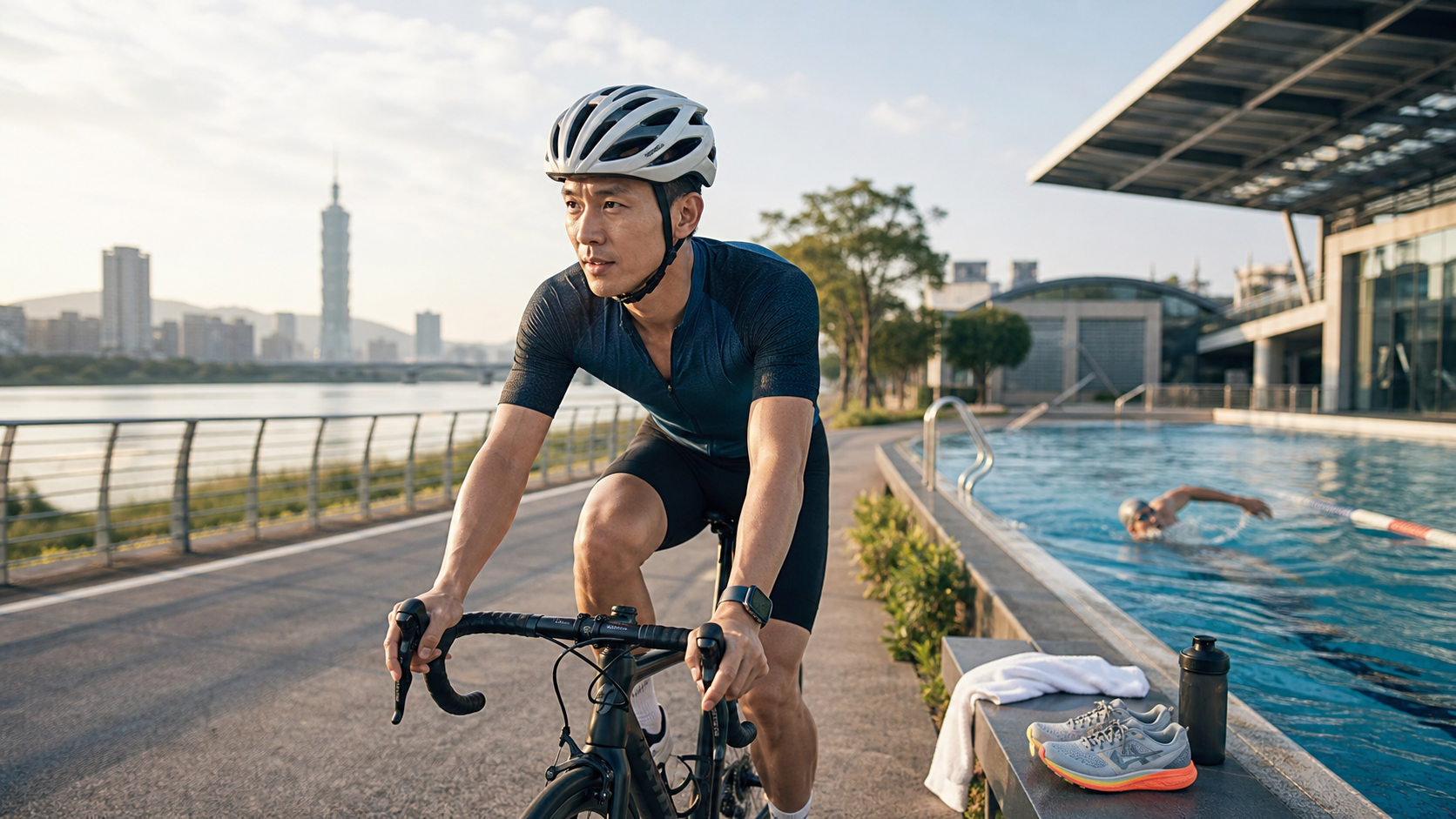
In Taiwan, the two most convenient cross-training options are swimming and cycling, both of which offer excellent cardiovascular training benefits and complement the muscle groups used in running.
Why Do Marathon Runners Need Cross-Training?
With every step, your feet absorb an impact force of roughly 2.5 times your body weight, and a full marathon involves approximately 35,000–45,000 steps. Without proper distribution, high long-term training volumes most commonly lead to injuries such as:
- Tibial stress fractures
- Iliotibial band syndrome (ITBS)
- Plantar fasciitis
- Achilles tendinitis
- Runner’s Knee
Cross-training provides “aerobic stimulus without impact,” allowing the body to rest from impact while maintaining cardiorespiratory fitness, making it one of the most effective tools for preventing these injuries.
Swimming: The Lowest-Impact Aerobic Training
Advantages
- Full-body immersion in water, nearly zero impact
- Strengthens the upper body and core, addressing running weaknesses
- Cool water environment promotes recovery, ideal for the day after high-intensity running
- Pools are available in every city and county in Taiwan, and outdoor swimming venues are convenient in summer
Disadvantages
- Higher technical barrier (freestyle technique affects training efficiency)
- Heart rate response differs from running, making it harder to match running intensity
- Deep water running more closely mimics running mechanics but requires a flotation belt
How to Substitute Swimming for Running Workouts
| Running Workout | Swimming Substitute | Duration |
|---|---|---|
| Easy run 8 km | Continuous easy swimming | 30–35 minutes |
| Tempo run 10 km | Swim intervals (200m × 8) | 40 minutes |
| Easy long run 16 km | Continuous swimming + easy deep water running | 60–70 minutes |
Cycling: The Cross-Training Closest to Running Aerobic Intensity
Advantages
- Aerobic intensity can be precisely controlled, closely matching running training intensity
- High aerobic training benefits for the quadriceps and calves
- Many Taiwanese road runners are also triathlon enthusiasts, so a cycling base is common
- Indoor trainers can be used at home
Disadvantages
- Prolonged cycling can cause saddle discomfort and requires an adaptation period
- Excessive training volume can increase leg fatigue (cycling and running share muscle groups)
How to Substitute Cycling for Running Workouts
| Running Workout | Cycling Substitute | Duration |
|---|---|---|
| Easy run 8 km | Easy ride (low resistance) | 40–50 minutes |
| Tempo 10 km | Moderate-intensity continuous ride | 45–55 minutes |
| Easy long run 20 km | Aerobic ride (may include hills) | 75–90 minutes |
When Should You Substitute Cross-Training for Running?
Scenario 1: During Minor Injury or Pain
When you experience mild discomfort in the knees, IT band, or Achilles tendon but it hasn’t reached the point of stopping training, substitute swimming or cycling for easy running days to rest the injured area while maintaining aerobic capacity.
Scenario 2: Recovery After Peak Weekly Volume
During the first easy week following a peak week, replace the Tuesday or Wednesday easy run with swimming or cycling to give the running muscles more complete rest.
Scenario 3: Hot Weather Substitution
When temperatures exceed 35°C in Taiwan from June to September, replace easy runs with indoor swimming or trainer cycling to avoid heat-related injuries.
Scenario 4: Supplementing Weekly Mileage Goals
If a busy schedule causes you to miss a running workout in a given week, use swimming or cycling to supplement aerobic training volume and maintain continuity in your periodized plan.
Recommended Cross-Training Ratio in a 16-Week Plan
| Training Phase | Running Workouts | Replaceable with Cross-Training |
|---|---|---|
| Base Phase (Weeks 1–6) | 4 sessions/week | 1 session replaceable |
| Build Phase (Weeks 7–12) | 4–5 sessions/week | 1 session replaceable |
| Peak Phase (Weeks 13–14) | 5 sessions/week | 0–1 session replaceable |
| Taper Phase (Weeks 15–16) | 3–4 sessions/week | 1–2 sessions replaceable |
Practical Recommendations
- The Golden 48 Hours When Injured: Within the first 48 hours of noticing signs of pain, immediately stop running and switch to swimming. This can potentially keep minor injuries within a manageable range that doesn’t disrupt training.
- Setting Cycling Intensity: Target heart rate on easy cycling days should be 5–8 bpm lower than on easy running days (because cycling recruits fewer muscle groups, resulting in a lower heart rate).
- Warm Up Thoroughly Before Swimming: Muscles may be locally tight after running. Before swimming, warm up with 5 minutes of easy floating kick in the water before starting the main session.
Conclusion
The myth that “only running can train you for running” has been debunked by modern sports science. Smart cross-training allows you to accumulate training throughout a 16-week marathon preparation with a healthier body and lower injury risk, ultimately crossing the finish line in peak condition on race day. Swimming and cycling are the most worthwhile running support tools for marathon runners.
Related Reading
- Marathon Cross-Training Integration: Timing and Methods for Swimming and Cycling Supplemental Training
- Cross-Training in Full Marathon Training: When to Incorporate Swimming and Cycling
- Cross-Training for Half Marathon Training: Supplemental Aerobic Methods with Swimming and Cycling
- Cross-Training in Full Marathon Training: Aerobic Supplementation with Swimming and Cycling
靠單車減肥35公斤 心得分享與整理
7 年前
2018 田中馬拉松 全程健跑 VR 360 環景錄影 體驗現場狂野加油氣氛! Insta 360
7 年前
西進武嶺 免費訓練分析服務 Intervals | 練不夠還是練過頭?你哪一種類型選手?AI模型告訴你! | 備戰神器 | 公路車 訓練 | CT Yeh
4 年前
大家都在開箱的...單車用藍芽對講耳機真的有幫助嗎? SENA BiKom 20 長距離旅遊 & 海鷗繞圈賽 實際體驗心得 / 公路車 / CT Yeh
9 個月前
Never Stop 西進武嶺 前後雙機 完整全程錄影 訓練台 實境
8 年前
太平山單車員工旅遊 | 這樣玩CP值最高!| 公路車
5 年前
4K 東眼山 x 水蜜桃冰沙 百人單車約騎! 操完再吃冰 多爽快
7 年前
單車 一日北高 ( 雙城 ) 肥宅雙人瘋狂行 紀錄片 REACTO
10 年前