The Slow Running Philosophy of Road Running: A Lifestyle of Not Chasing Speed and Enjoying the Running Process
/no_think
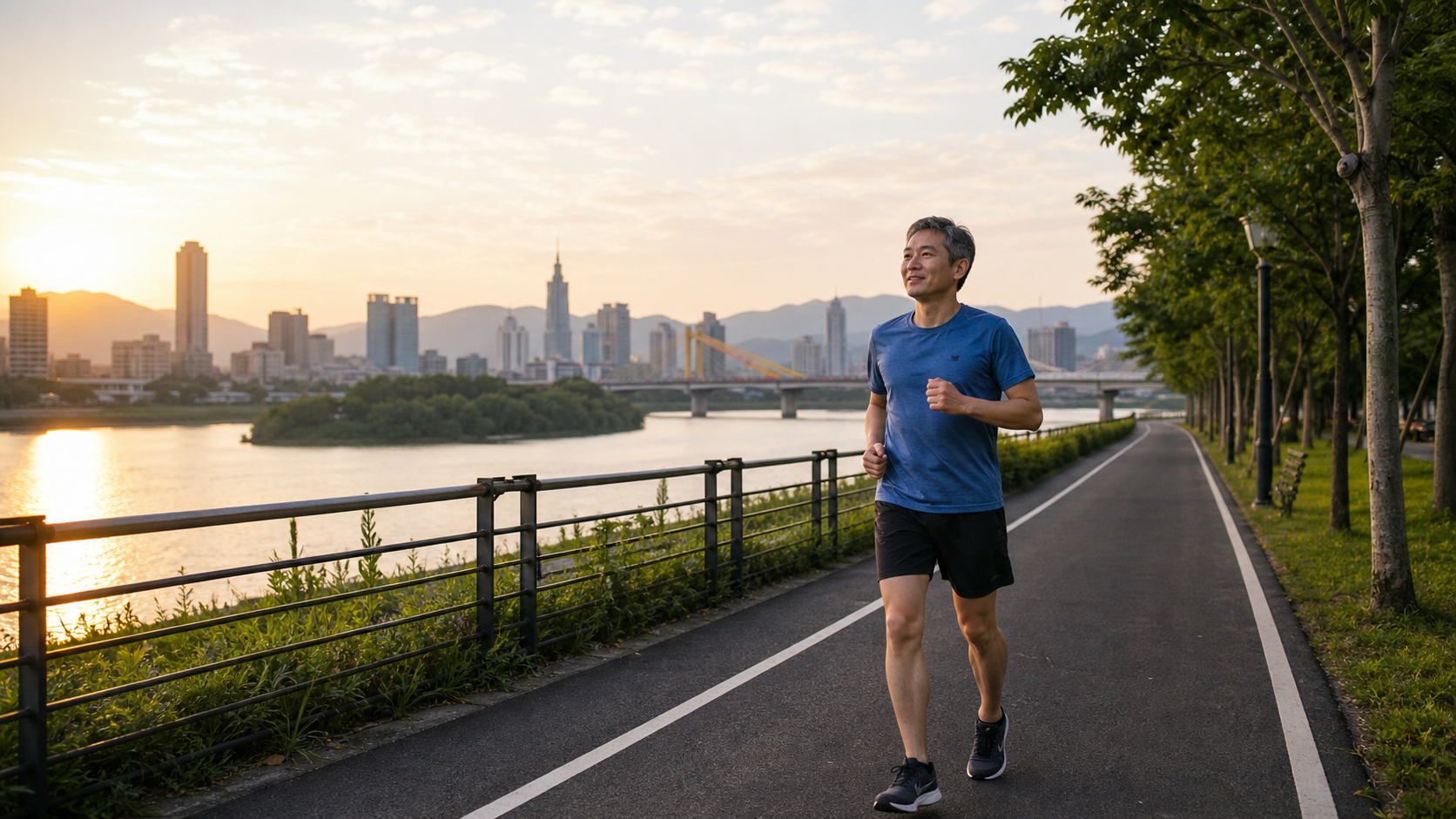
Jogging in a World Obsessed with Speed
In Taiwan’s running community, there is an invisible pressure: you have to run fast enough to be qualified to talk about running. A runner at 7:00 / km sometimes feels an inexplicable sense of inferiority in front of someone at 5:00 / km, like someone who has wandered into the wrong club.
But beyond this speed-chasing culture, there is a group of Taiwanese runners who have chosen a different path. They are called “jogging philosophers”—this is not an official community name, just what I call them in this article. What they share in common is this: they don’t care about pace numbers, they enjoy the act of moving itself, and they view running as a form of meditation rather than competition.
What Is the Philosophy of Jogging?
The philosophy of jogging is not simply “running slowly is fine,” but rather a reinterpretation of what running means. Its core concepts include:
- Process over outcomes: The meaning of running lies in the moment of running, not in the finishing numbers
- Body awareness over external data: Listen to your body rather than your watch, and run at a pace that feels comfortable
- Consistency over intensity: Jogging 30 minutes every day is more valuable than one high-intensity session a week followed by three days of collapse
- Connection with the environment over isolation: No earphones—feel the ground beneath your feet, the air around you, and the scenery you pass by
The Inspiration of Japan’s “Morning Running” Culture
Taiwan’s jogging philosophy has been considerably influenced by Japanese culture. Japan has a widely known running concept called “LSD” (Long Slow Distance)—running a very long distance at a very slow pace, not to train speed, but to build an aerobic base and mental-physical endurance.
| Running Type | Target Pace | Heart Rate Zone | Purpose |
|---|---|---|---|
| Speed Training | Target pace ±5 sec | 85–95% max HR | Improve speed, threshold |
| General Aerobic Run | Target pace +30–60 sec | 70–80% max HR | Aerobic base |
| Jogging (LSD type) | Very slow, singable pace | 60–70% max HR | Recovery, enjoyment, mind-body balance |
| Meditative Run | Entirely by feel | Not measured | Mindfulness, stress reduction |
The Life Scenes of Taiwanese Joggers
The City Before Dawn
In Taipei, there is a group of people who head out every morning at 5:30, before the city has fully woken up, moving along the Keelung River or the tree-lined avenues of Xinsheng South Road at a pace close to walking.
They don’t wear earphones, and sometimes they stop to look at an old banyan tree they pass every day. They know the elderly morning exercisers along the route, know what time each breakfast shop opens, and know that in a certain season a strange mist appears over the river.
“I’m not chasing speed; I’m chasing that feeling,” says a copywriter who works in Taipei’s Eastern District. “That’s the only stretch of time in my day that truly belongs to me alone.”
Running as a Stress-Relief Tool
Jogging is especially favored by people in high-pressure jobs. Unlike high-intensity training, jogging doesn’t pile another layer of stress onto an exhausted body; instead, it gently allows the nervous system to unwind.
Research shows that light-to-moderate aerobic exercise—exactly the intensity range of jogging—can effectively lower cortisol (the stress hormone) while raising serotonin and dopamine levels. In Taiwan, counselors and psychiatrists are also increasingly recommending regular jogging to clients with mild anxiety or depressive symptoms.
Practical Advice for the Jogging Philosophy
- Turn your watch over: At least once a week, run without looking at pace or heart rate—just run
- Set time instead of distance: The pressure of “run for 40 minutes” is far less than “run 8 kilometers”
- Choose beautiful routes: Let the environment itself be the motivation, not the numbers
- Allow yourself to walk: The jogging philosophy doesn’t reject walking—walking is also movement, also presence
- Don’t post your results: Sometimes, keep the run to yourself—don’t share, just feel
The Long-Term Dividends of Jogging
Adopting the jogging philosophy doesn’t mean giving up progress. In fact, many runners who embrace “slow” end up achieving better results—because they no longer get injured from overtraining, no longer lose their passion from obsessing over results, and are able to keep running steadily, year after year.
“Consistency matters more than intensity,” is the phrase jogging philosophers say most often. A runner who can run for twenty years accumulates far more life-running moments than one who burns bright for three years and then quits.
Conclusion
In a world where everything must be faster, stronger, and more, choosing to run slowly is a gentle act of rebellion.
It says: my body is not a tool, but a partner. Running is not training, but companionship. Speed is not the goal—feeling is.
Next time you head out for a run, try going a little slower. You might discover that there are things on that road you’ve never noticed before.
Related Reading
- The Race Mentality Culture of Taiwanese Runners: An Analysis of the Problem of Overemphasizing Results
- The Slow-Living Philosophy of Cycling: A Riding Mindset That Ignores Speed and Enjoys the Journey
- The After-Work Culture of Road Running: Morning vs. Evening Running Preferences Among Taiwanese Urban Runners
- Road Running Special Feature | A Morning Jogging Rhythm Friendly to Taipei Office Workers (R086)
2019 柯P 超越北高 第一集團實錄 (11小時實錄請參考另一部影片) 一日雙城 一日北高 NeverStop Taiwan Long Distance Cycling Challenge
7 年前
Live) 備戰2019彰化經典百K 賽前攻略 (已完賽請看新影片
7 年前
台北大雁西飛 約騎挑戰 feat. Doris | 公路車 | CT Yeh
3 年前
小野田真的存在!日本赤城山爬坡公路賽 台灣首發團完全實錄 | 頭文字D真實賽道! | 看完東奧自行車賽後好想再去騎一次啊! | 公路車 | CT Yeh
4 年前
#PUSHBIKE 原來這麼好玩! 小朋友 滑步車 初體驗 超可愛
6 年前
JJSC南台灣單車走春三日行 DAY 1 / 強度 x 美食 x 節慶體驗 / 公路車 CT Yeh
5 個月前
2025 海鷗團體繞圈賽 網路直播 超激烈裁判長視角 / EIPC 李廷威、Waypoint 等眾多高手競爭 / feat. 卡密兒主持 / 海鷗繞圈賽
9 個月前
CT 喇低賽) 單車 比賽總是沒照片? 攝影師的觀點大公開 姿勢就是力量! 請加速1.25倍收看
7 年前