Bicycle Vibration Transmission: A Quantitative Study of How Road Roughness Affects Rider Fatigue
Introduction
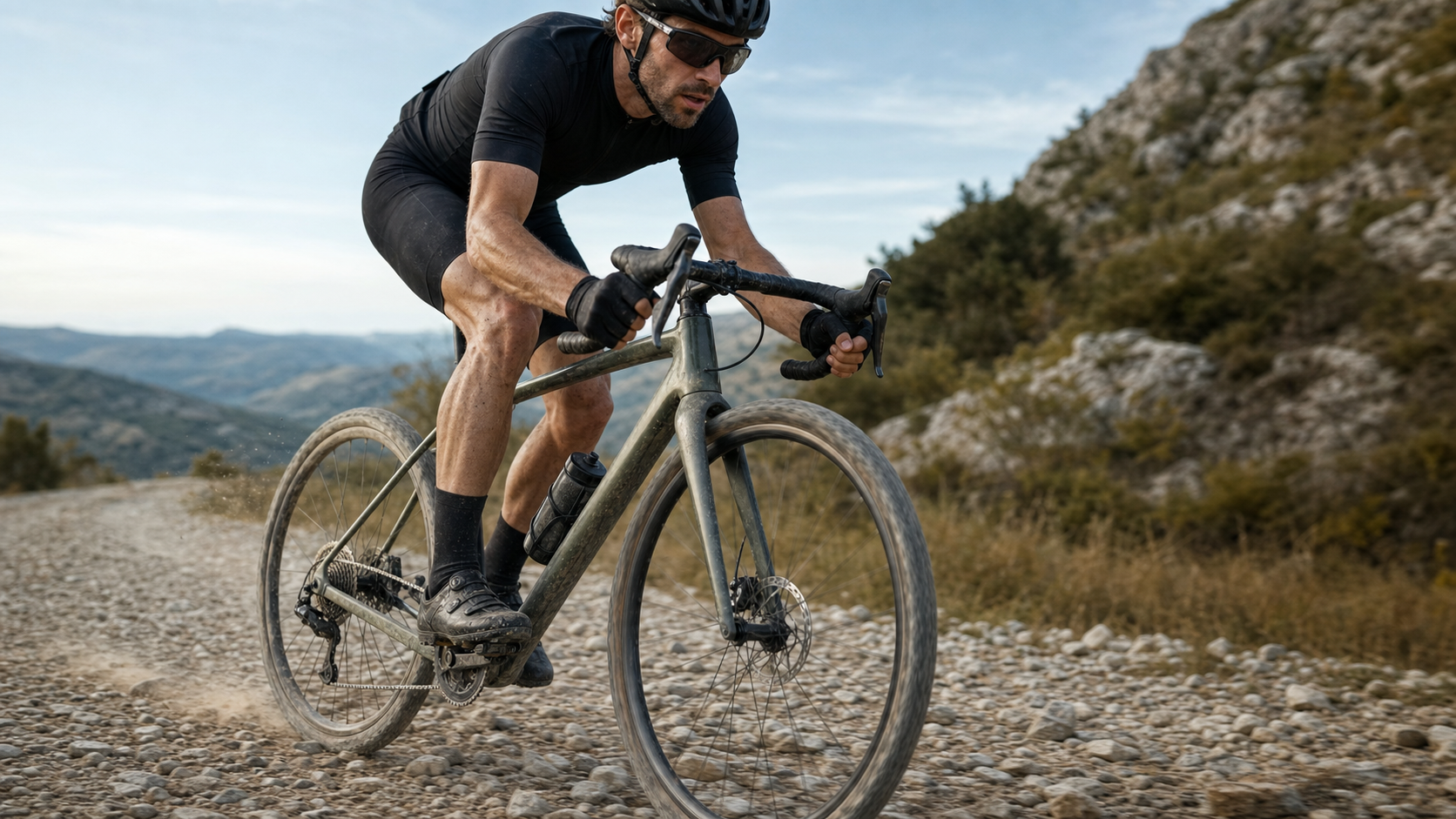
The popularity of gravel riding has brought the issue of bicycle vibration transmission back into the research spotlight. During hours of continuous riding on rough terrain, vibration energy from the road surface is transmitted uninterrupted through the tires, frame, handlebars, and saddle to the rider’s hands, buttocks, and lower back. This prolonged exposure to low-frequency vibration is closely linked to various musculoskeletal discomforts and even long-term occupational health issues.
But exactly how much fatigue does vibration cause? Which bike components are most critical? Can vibration-damping designs deliver quantifiable benefits? This article compiles existing research to systematically analyze the science of bicycle vibration transmission.
The Physical Properties of Vibration
Frequency Range and Human Body Response
Road vibration is a broadband signal, but the frequency range with the most significant impact on the human body is 1–80 Hz:
| Frequency Range (Hz) | Source | Primary Body Response Area |
|---|---|---|
| 1–8 | Large potholes, overall rough road surface | Lower back (lumbar spine resonance) |
| 8–16 | Gravel roads, road joints | Neck, shoulders |
| 16–40 | Rough asphalt, gravel | Palms, wrists (risk of white finger syndrome) |
| 40–80 | Fine gravel, road texture | Perceived as “buzz,” less harmful |
The natural resonance frequency of the human lumbar spine is approximately 4–6 Hz, meaning road vibrations in this frequency range are amplified by the human body system rather than attenuated—this is one of the key mechanisms behind lower back pain after prolonged riding.
Vibration Acceleration Measurement Standards
Research typically quantifies vibration intensity using “Root Mean Square Acceleration (RMS Acceleration, m/s²)” and evaluates its impact on the human body according to the ISO 2631-1 standard:
| Vibration Level (RMS) | Subjective Sensation | Recommended Maximum Daily Exposure |
|---|---|---|
| < 0.315 m/s² | Comfortable | Unlimited |
| 0.315–0.63 m/s² | Slightly uncomfortable | Acceptable |
| 0.63–1.0 m/s² | Uncomfortable | Requires assessment |
| 1.0–2.5 m/s² | Very uncomfortable | Restriction recommended |
| > 2.5 m/s² | Intolerable | Avoidance recommended |
Research on Bicycle Vibration Transmission Paths
Vibration Attenuation Rates of Components
Laurent et al. (2015) and subsequent studies measured the vibration transmissibility of various bicycle components under different road conditions:
| Component | Typical Vibration Attenuation Rate | Influencing Factors |
|---|---|---|
| Tires (25c → 32c) | 15–25% | Lower pressure yields greater attenuation |
| Carbon fork vs. aluminum | 10–20% | Depends on design, not just material |
| Carbon frame | 8–15% | Composite material damping characteristics |
| Suspension seatpost (e.g., BMC design) | 20–35% | Effectively reduces pelvic vibration |
| Carbon handlebar vs. aluminum | 5–12% | Cross-sectional shape has greater influence |
| Gel bar tape vs. standard tape | 10–18% | More effective for high-frequency vibration |
The Decisive Role of Tire Pressure
Research consistently shows that tire pressure is the most easily adjustable and most effective vibration control measure:
- 25c tires: Reducing from 110 psi to 80 psi lowers saddle vibration RMS by approximately 20–30%
- The trend toward wider tires (32c → 40c) is partly supported by vibration comfort research
- Tubeless systems allow lower pressures without increasing pinch-flat risk, further improving vibration comfort
Quantified Physiological Effects of Vibration
Quantifying Muscle Fatigue
Millikan et al. (2020 research direction) compared muscle fatigue indicators after riding on smooth versus rough surfaces at the same power output:
- After 2 hours of riding on rough surfaces, the median power frequency (MPF) of electromyography (EMG) decreased by approximately 8–12% (30% more than on smooth surfaces)
- Surface EMG amplitude of the lumbar erector spinae muscles was 15–20% higher on bumpy sections compared to flat sections
- Grip strength endurance declined approximately 1.5–2 times more after gravel sections than after asphalt sections
Attention and Reaction Time
Vibration not only causes muscle fatigue but also affects cognitive function:
- After 60 minutes of continuous vibration exposure, fine motor control precision decreased by approximately 5–10%
- Reaction time increased by approximately 3–8% under high-vibration conditions
- This has safety implications for gravel road riders who need to make rapid shifting and braking decisions
Modern Trends in Vibration-Damping Design
Material Damping vs. Geometric Design
There are two schools of design philosophy in the industry regarding the most effective way to damp vibration:
Material Damping School: Uses special carbon fiber layups and embedded damping materials (such as Trek’s IsoSpeed decoupler, Specialized’s Future Shock front suspension) to absorb vibration energy
Geometric Flexibility School: Designs geometric structures that allow flex in specific directions (such as slender seat stays, sharply angled seatposts), absorbing vibration through structural compliance
Both approaches have advantages and disadvantages; modern high-end gravel bikes and endurance road bikes typically combine both strategies.
Practical Recommendations
- Lower tire pressure first: Within safe limits (60–80 psi recommended for tubeless, 75–90 psi for tubed), lowering pressure is the most cost-effective vibration damping measure
- Consider upgrading to wider tires: Switching from 25c to 28c or 32c, where modern frame clearances allow, can significantly reduce vibration transmission
- Use multi-wrap bar tape for gravel sections: Multi-layer (thicker) bar tape can reduce the impact of high-frequency vibration on the palms
- Watch for lower back warning signs: If lower back pain persists after long gravel rides, evaluate saddle height and lumbar support, and consider a vibration-damping seatpost
- Increase rest frequency: On high-vibration surfaces, it is recommended to stand and pedal briefly for 30 seconds every 45–60 minutes to give the lower back muscles some rest
Conclusion
The impact of road vibration on rider fatigue goes beyond subjective sensation and is supported by clear quantitative physiological data. With the growing popularity of gravel bikes and long-distance endurance riding, the science of vibration transmission will play an increasingly important guiding role in equipment design and riding strategy. Understanding the frequency characteristics of vibration is essential to making more scientific vibration-damping choices.
Related Reading
- The Impact of Taiwanese Road Quality on Bicycle Vibration Transmission: A Biomechanical Study of Pavement Materials
- Bicycle Aerodynamic Drag: A Study of Power Loss Based on Rider Body Type and Riding Speed
- Stiffness Analysis of Integrated Road Handlebars: A Biomechanical Study of Vibration Transmission and Fatigue
- The Correlation Between Spinal Flexion Angle and Lumbar Pain in Cyclists: A Prospective Study Analysis
2025 自行車錶排行榜 兩萬車友大數據 / Garmin Bryton 排名會大洗牌嗎? / 全新的碼表前身分析 /公路車 / CT Yeh
1 年前
單車AI教練!全新 ChatGPT4o 幫你分析訓練成果!排武嶺課表,分析騎車姿勢! 太神了! / 公路車 / CT Yeh / feat. 緯緯
2 年前
西進武嶺 免費訓練分析服務 Intervals | 練不夠還是練過頭?你哪一種類型選手?AI模型告訴你! | 備戰神器 | 公路車 訓練 | CT Yeh
4 年前
高雄綠園道鐵路自行車道 / 外地人能輕鬆駕馭 還是整路崩潰? / 2025 全線開通 春節實地探索一次!(附GPS連結)/ 公路車 / CT Yeh
1 年前
鉅齒紋輪組!? ControlTech MEG-T50 EVO 碳纖維幅條輪組/ 功率對比實驗 / 公路車 / CT Yeh
2 年前
2022 前十五大自行車錶 !? 兩萬名車友大數據統計 | 你的上榜了嗎? | 菁英車友都用哪些錶? | Bryton Garmin 誰能拔得頭籌?| 車錶推薦 | 公路車 CT Yeh
4 年前
大家都在開箱的...單車用藍芽對講耳機真的有幫助嗎? SENA BiKom 20 長距離旅遊 & 海鷗繞圈賽 實際體驗心得 / 公路車 / CT Yeh
9 個月前
ThinkRider 智騎 XXPRO 訓練台,高階機種功能 只要 1/3價格!? 實測功率對比、噪音實測 / 公路車 / CT Yeh
1 年前