The Science of Climbing Pace: Differences in Energy Expenditure Between Average Power and Steady Climbing
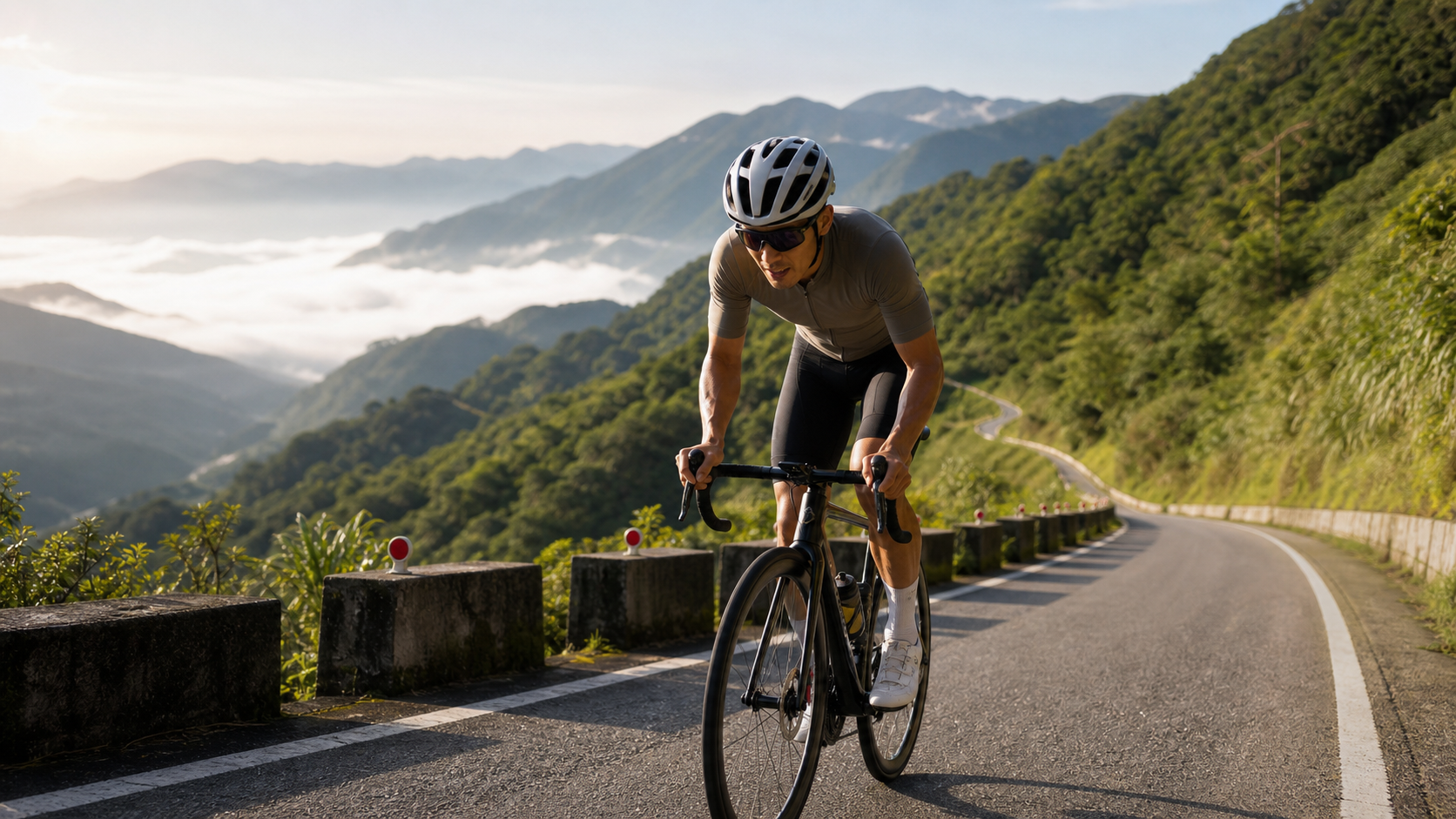
The Science of Climbing Pace: Energy Expenditure Differences Between Average Power and Even Pacing
Introduction
Every time a long climb approaches, many cyclists face the same dilemma: should you maintain a steady speed, or maintain a steady power output? This may seem like a minor detail, but it could determine whether you finish the ride smoothly or “blow up” before reaching the summit. This article delves into the fundamental differences between these two strategies from the perspectives of exercise physiology and physics, helping you make smarter pacing decisions on your next climb.
The Trap of Even-Paced Climbing
Intuitively, maintaining a fixed speed while climbing seems reasonable. However, real mountain roads often have undulating gradients—even on climbs known for “steady gradients” like Wuling or Alishan, each section can still vary by 1–3%.
When the gradient increases by 1%, maintaining the same speed requires roughly 8–12% more power (depending on body and bike weight). This means you must briefly surge on steeper sections and recover on flatter ones, creating a sawtooth power pattern. This “surge–recover” mode places higher anaerobic demands on your muscles, accelerating lactate accumulation, and ultimately causing faster fatigue in the latter half of the climb.
The Physiological Advantage of Even Power
Maintaining a steady power output keeps your body working at the same metabolic intensity throughout the entire climb. According to the power–heart rate relationship, a steady power output results in a more stable heart rate, reduces excessive sympathetic nervous system activation, and slows the rate of glycogen depletion.
Research shows that at the same average power, variable power (Variability Index > 1.10) consumes approximately 5–8% more energy than steady power (VI ≈ 1.02–1.05). In a 2–3 hour climbing event, this difference could mean hitting the “wall” 30–45 minutes earlier.
| Climbing Strategy | Advantages | Disadvantages | Best Suited For |
|---|---|---|---|
| Even speed | Intuitive, easy to execute | Large power fluctuations when gradient changes | Gentle, steady gradients |
| Even power | High metabolic efficiency, delays fatigue | Requires a power meter | Any long climb |
| Heart rate control | No equipment needed, reflects actual intensity | Has lag, affected by temperature | When no power meter is available |
How to Execute Even Power on Real Climbs
Executing an even-power strategy requires several prerequisites:
- Know your FTP: Target power for long climbs is typically set at 75–85% of FTP (i.e., Zone 3–4).
- Use a power meter or smart trainer: Real-time power data is the most direct feedback tool.
- Shift down early: Switch to an easier gear before the gradient increases, avoiding sudden power spikes.
- Accept slower speeds: Slowing down on steeper sections is correct—don’t sprint just because someone passes you.
Key Numbers: The Relationship Between Gradient and Power
For a rider weighing 70 kg (78 kg combined bike and rider), the power required to climb at 15 km/h is approximately as follows:
| Gradient | Required Power (approx.) | Percentage of 240W FTP |
|---|---|---|
| 5% | ~185 W | 77% |
| 7% | ~240 W | 100% |
| 9% | ~295 W | 123% |
| 11% | ~350 W | 146% |
As the table shows, when the gradient exceeds 9%, almost everyone must slow down to maintain power within the aerobic threshold. Forcing the same speed will only push you above FTP in a short time, rapidly accumulating fatigue.
Practical Recommendations
- Set a target power zone before starting—for long climbs, maintain 75–85% of FTP, and in the final 2 km of a race, you can increase to 90–95%.
- Check your average power every 10 minutes—if it exceeds the target, actively slow down.
- Learn to “save” on gentler sections—pedal lightly on 4–5% gradients to let your heart rate drop slightly, reserving energy for the steeper sections ahead.
- Accept your speed dropping to 8–10 km/h on gradients above 10%—this is normal, not a failure.
- Record the power variability index (VI) of each climb—aim to keep VI below 1.05.
Conclusion
The core logic of climbing pace is simple: manage energy, not speed. A power meter makes this tangible rather than abstract, but even without one, as long as you understand the principle of “slow down on steep sections, hold steady on gentle ones,” you can complete the same ascent with less energy. Next time you face a long climb, try letting go of your obsession with speed and let power data—or your body’s perception—guide your pacing rhythm.
Related Reading
- Climbing Power Strategies: A Scientific Comparison of Constant Power vs. Variable Power Riding
- Climbing Race Power Strategies: Power Distribution and Pacing on Uneven Climbing Sections
- Power Distribution on Climbs: Steady-Paced Climbing vs. Negative Split Strategies
- A Complete Guide to Climbing Race Pacing: Power Management from Start to Finish
西進武嶺 自製新版AI配速表產生器 x 賽前攻略 抱佛腳! 沒有功率計也可以產生配速表嗎?有什麼其他眉角賽前要注意的呢? | 西進武嶺 / 東進武嶺 KOM 攻略 | 公路車 | CT Yeh
4 年前
Stages功率計 和 智騎 X7 Pro 訓練檯同時騎兩個 Rouvy 角色會一起進終點嗎?最後來點數據分析 | 公路車
5 年前
如果Pogačar騎西進武嶺可以多快?會破2嗎?各種情況深度推估探討 / 公路車 / CT Yeh
2 年前
武嶺配速表最佳使用方式 #bike
1 年前
西進武嶺 免費訓練分析服務 Intervals | 練不夠還是練過頭?你哪一種類型選手?AI模型告訴你! | 備戰神器 | 公路車 訓練 | CT Yeh
4 年前
西進武嶺配速器 3.0更新 / NEW 免功率FTP估算! / 大數據xAI體能模型 / 如何模擬人止關前集團效應 / 配速儲存功能 / AI全台自行車賽事行事曆 / 公路車 / CT Yeh
1 年前
西進武嶺各路段 前8000名 大數據分析 配速攻略/功率/心律/推力比/維持率/踏頻/踏瓦比/牽車率 大公開 | 建大盃 NeverStop 可參考 | 公路車 | CT Yeh
5 年前
公路車 爬坡 破PR 紀錄 小技巧 分享
6 年前