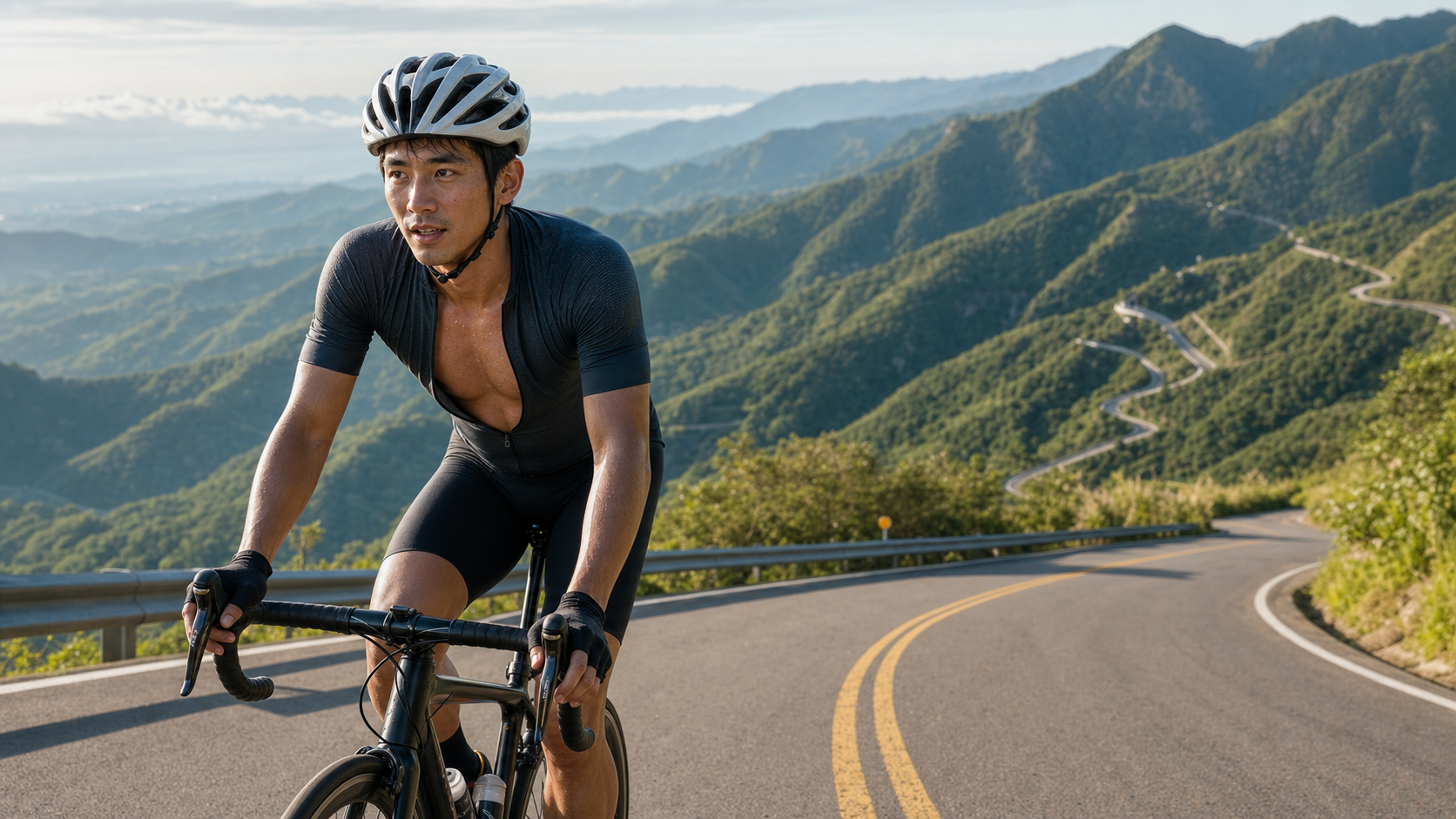
Post-Climb Descending Recovery: How to Use Downhill Sections to Clear Lactic Acid
Introduction
On a ride with multiple climbs, the descent is not just a fun time to “fly down”—it is also a precious physiological recovery window. Top climbers know how to use every downhill section to clear as much lactic acid accumulated from the climb as possible within a limited time, preparing the body for the next climb. This article analyzes the mechanisms of descending recovery from a sports physiology perspective and provides practical recommendations.
The Nature of Lactic Acid and Clearance Mechanisms
Lactate has long been misunderstood as a “fatigue waste product,” but modern sports science has clarified that lactate itself is an energy substrate that can be reabsorbed and utilized by muscles (especially slow-twitch muscle fibers), the heart, and other tissues working at low intensity.
Lactate clearance occurs primarily through the following pathways:
- Oxidative metabolism: Lactate is converted to pyruvate and then enters aerobic metabolism, occurring at Zone 2 exercise intensity.
- Gluconeogenesis: Lactate is converted back to glucose in the liver, but this process is slower and is not the main player in immediate recovery.
- Myocardial utilization: The heart preferentially uses lactate as fuel at low intensity.
Key point: Light active movement (Zone 1–2) accelerates lactate clearance more than complete rest, which is the scientific basis for “active recovery” being superior to “passive rest.”
Physiological Conditions During Descents
When descending, the body’s energy demand drops sharply, but at this time:
- Heart rate takes 2–4 minutes to fall from its climbing peak
- Blood circulation remains vigorous, with adequate muscle perfusion
- Body temperature remains elevated, and metabolic rate is still higher than baseline
This brief window of “low energy input, high blood circulation” is the ideal condition for active recovery.
| Descent Method | Muscle Activity | Lactate Clearance Efficiency | Suitable Scenario |
|---|---|---|---|
| No pedaling at all (free coasting) | Very low | Average | Technical descents with corners |
| Light pedaling 50–80W (Zone 1) | Low | Good | Straight, gentle descents |
| Maintaining 80–100W (Zone 2) | Low to moderate | Best | Gentle uphill sections after descents |
| Descending sprint | Moderate to high | Poor (wastes recovery time) | Not recommended |
Practical Application of Active Recovery on Descents
Step 1: Control the Heart Rate Decline Pace
After finishing a climb and transitioning to a descent, do not immediately “coast and rest.” Maintain a light pedaling cadence of 50–70 rpm, combined with deep abdominal breathing, allowing heart rate to naturally drop from 165–175 bpm to below 130–140 bpm within 2–3 minutes.
Step 2: Aim to Maintain Zone 1–2
Once heart rate drops to 120–135 bpm (approximately 65–72% HRmax), try to maintain this range with light pedaling, keeping blood circulating to carry away lactate rather than letting metabolism come to a complete halt.
Step 3: Timing for Nutrition
Descents are the best time for fueling:
- Water: Descents are safe with good visibility, so you can confidently grab your bottle to hydrate.
- Solid food: During climbs, blood flow to the gastrointestinal tract is restricted, making digestion poor; on descents, gastrointestinal blood flow recovers, making it the best time to eat.
- Electrolytes: After heavy sweating on climbs, replenishing sodium and potassium helps prevent muscle cramps later on.
Step 4: Muscle Assessment
Use the light pedaling on descents to feel the condition of your legs:
- Is the front of the thighs (quadriceps) heavy?
- Is there a slight twitching sensation in the calves (an early sign of lactate accumulation)?
- Is there any discomfort around the knees?
These sensations help you adjust the target intensity for the next climb before the descent ends.
Multi-Descent Strategy in Long-Distance Rides
Many climbing routes in Taiwan (such as Wuling and Alishan) feature a “climb one section, descend one section” road profile. Here is a suggested time allocation for recovery on descents between multiple climbs:
- First 3 minutes of the descent: Heart rate recovery phase, light pedaling at 50–80W, deep breathing.
- Middle section of the descent: Maintain Zone 1–2 (70–100W), fuel and eat.
- Last 1–2 minutes of the descent: Confirm the body is ready for the next climb, slightly increase cadence (75–80 rpm) to activate the muscles.
Common Mistakes
- Not pedaling at all on descents: Although easy, lactate clearance is slower, essentially wasting the recovery window.
- Sprinting on descents and exhausting recovery time: Using descent time to show off skills or keep up with a companion’s sprint pace causes the lactate clearance opportunity to disappear.
- Not fueling on descents: Missing the best opportunity to refuel leads to insufficient energy for the next climb.
- Overcooling on descents: Wind speed is high on descents in Taiwan’s mountain areas, and even in summer, sudden temperature drops can cause muscle tightness. Wear a lightweight windproof vest on descents—it keeps you warm without hindering recovery.
Conclusion
Descents are not just free speed from nature—they are also a precious opportunity for physiological recovery. Learning to actively recover on descents is the key transformation from being able to “ride only one climb” to “riding multiple consecutive climbs.” Next time you ride in the mountains, treat every descent as a “mobile recovery room,” and you will notice a significant improvement in your overall climbing performance.
Related Reading
- Active Recovery Rides After Cycling: Correct Intensity and Benefits of Easy Riding (Advanced Edition)
- Active Recovery vs. Passive Recovery: Research on Lactate Clearance Efficiency of Low-Intensity Pedaling After Rides
- Lactate Clearance After Swimming: The Science of Recovery Effects from Slow Swimming in Water
- Active Recovery Rides After Cycling: Correct Intensity and Benefits of Easy Riding
公路車 爬坡 破PR 紀錄 小技巧 分享
6 年前
單車 梅山36灣 坡度介紹 路段介紹 空拍 (相關遊記影片,請參考說明或我的頻道喔,歡迎訂閱)
6 年前
靠單車減肥35公斤 心得分享與整理
7 年前
CT暗黑廚房) 車友必備 宇宙無敵鮮蚵湯 幫助訓練恢復 天然食補 好市多 超肥鮮蚵 破PR
7 年前
鎮西堡 公路車首航 你排乳酸 我排卵... | 宇老又爆胎 要直接棄坑了嗎?
4 年前
一日北高常見問題大集合 | 攻略 | 路線 | 訓練 | 補給 | 自行車 單車 | 一日雙城 | 雙塔 | TWB北高360 | 屁股痛
6 年前
一日北高/長距離團騎 常見問題補充篇 / 組團或跟團的眉角 / 壯車友容易被瘦車友慢性拉爆 / 原來屁股痛可能是這個原因...? / 風場配速法 / 公路車 / CT Yeh
2 年前
碟煞公路車 銑面器 !? 原來銑完差這麼多! 降低蹭碟機率! | TIME 公路車 保養小記錄 | CT Yeh
3 年前