Climbing Nutrition Strategy: Timing Your Intake on Ascents and Choosing Between Solid Food and Gels
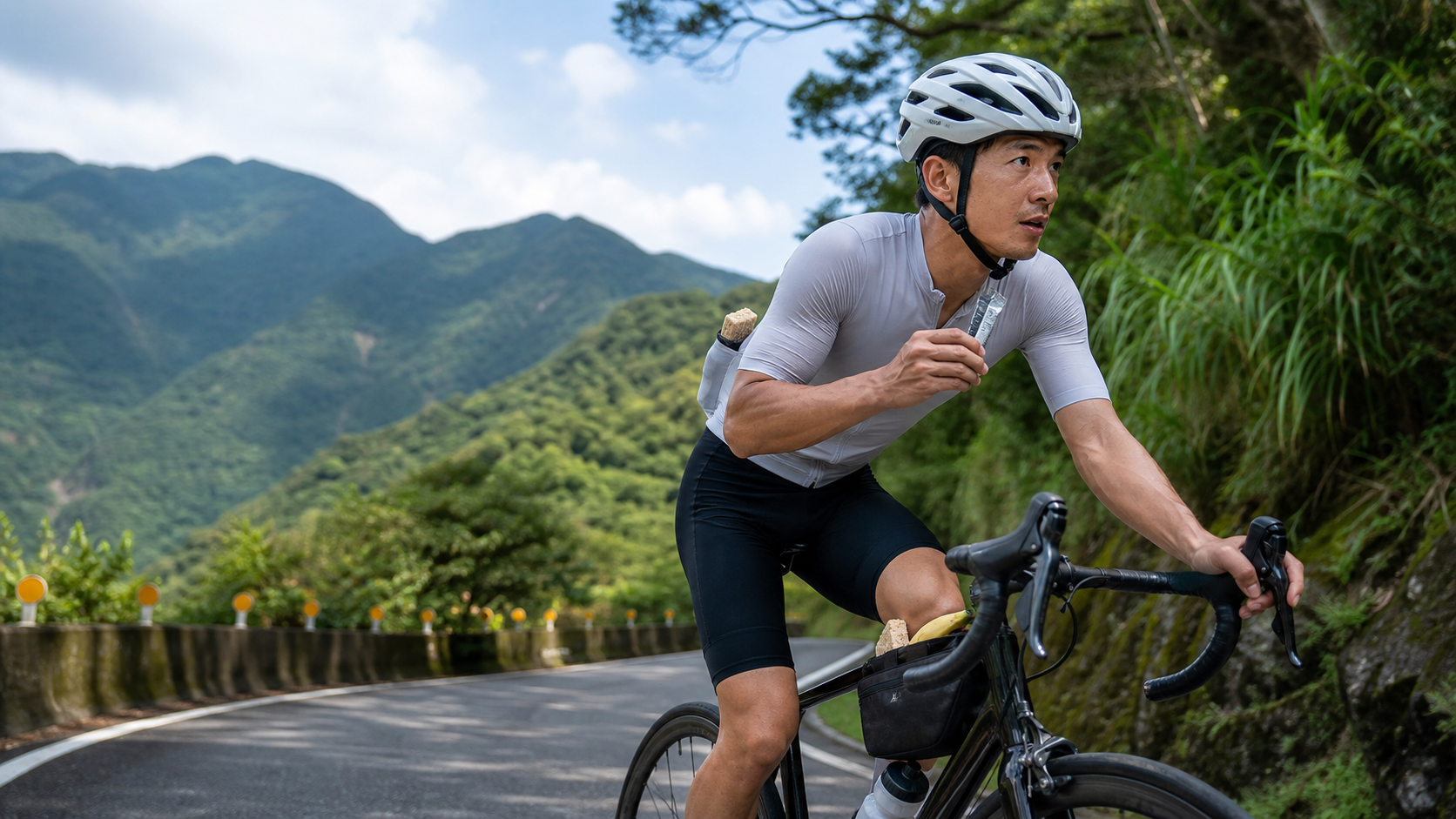
Climbing Nutrition Strategy: Timing of Refueling on Ascents and Choosing Between Solid Food and Gels
Introduction
“Fueling is the sixth sense” — elite endurance athletes understand that nutrition strategy is just as important as physical training. Climbing is a high-intensity sustained effort, burning far more calories per hour than flat riding. If fueling is mismanaged, even the best training can leave you “running on empty” on the climb. This article starts from digestive physiology to help you design a nutrition strategy suited to climbing scenarios.
How Climbing Affects the Digestive System
During high-intensity exercise, the body prioritizes blood flow to muscles and the cardiopulmonary system, and blood flow to the gastrointestinal tract can decrease by 60–70%. This leads to:
- Reduced digestion rate, prolonging absorption time for solid food
- Slower gastric emptying, making fullness more pronounced
- Increased risk of gastrointestinal discomfort (nausea, bloating, diarrhea)
The higher the climbing intensity, the lower the gut’s “capacity.” This is why many riders feel uncomfortable eating mid-climb but eat normally on descents or gentle gradients.
Pre-loading Energy Before the Climb
In the 3–4 hours before the climb officially begins, you should complete your main energy intake:
| Timing | Recommended Food | Amount |
|---|---|---|
| 3–4 hours before departure | White rice, bread, oatmeal | 100–150g carbs |
| 60–90 minutes before departure | Banana, energy bar | 30–50g carbs |
| 15–30 minutes before departure | Energy gel or sports drink | 20–30g carbs |
If the climb exceeds 90 minutes, the benefit of pre-loading energy is significant. In Taiwan, a Wuling summit attempt often takes 4–6 hours, making pre-loading before departure a critical factor for success.
Refueling Strategy During the Climb
Refueling Frequency
It is recommended to consume carbohydrates every 30–45 minutes, rather than waiting until you feel hungry. When hunger sets in, blood sugar has often already dropped noticeably, and it takes 15–20 minutes after refueling to feel the energy return.
Recommended carbohydrate intake per hour:
- Low exercise intensity (Zone 2–3): 30–40g/hr
- Moderate exercise intensity (Zone 3–4, the main climbing range): 50–70g/hr
- High exercise intensity (Zone 4–5): 60–90g/hr (requires training the gut to tolerate this intake)
Choosing When to Refuel
Recommended timing for refueling:
- When the gradient eases or on gentler sections (gradient < 5%)
- On descents (the best time to refuel, as gastrointestinal blood flow recovers)
- In the first half of the climb (before intensity peaks)
Avoid refueling at these times:
- On steep sections where the gradient surges (least gastrointestinal blood flow)
- When heart rate > 88% HRmax (poor digestion capacity at high intensity)
- On corners requiring precise handling (safety first)
Energy Gels vs. Solid Food Comparison
| Characteristic | Energy Gel | Solid Food (banana, rice ball, etc.) |
|---|---|---|
| Digestion speed | Fast (15–20 minutes) | Slow (30–60 minutes) |
| Gut friendliness | Varies greatly by brand | Generally more friendly |
| Convenience | High (one-handed operation) | Moderate (requires advance preparation) |
| Texture and satiety | Low | High |
| Suitable intensity | High-intensity climbing | Low-to-moderate intensity or descents |
| Electrolyte content | Some brands contain sodium/potassium | Food naturally contains electrolytes |
| Cost | Higher (about NT$50–80 per pack) | Lower |
Recommended local options in Taiwan:
- Banana: Natural potassium, easy to digest, abundant in Taiwan, and one of the best fueling foods.
- Taiwanese rice ball: Rich in carbohydrates, but higher in fat (tuna/dried pork floss versions), slower to digest, suitable for low-intensity sections.
- Red bean bun: Ample carbohydrates with moderate sweetness; a staple climbing fuel for many veteran riders.
- Sports drink: Sips provide both hydration and carbohydrates, making it the easiest fueling format to manage during high-intensity climbing.
Don’t Overlook Electrolyte Replacement
In Taiwan’s summer, climbing produces heavy sweating, and sodium loss is one of the main causes of muscle cramps and accelerated fatigue. Sodium lost through sweat can reach 500–2000 mg per hour, which plain water cannot replace.
- Consume 500–750 mL of electrolyte-containing sports drink per hour
- If using plain water, pair it with a sodium-containing energy gel (check the ingredient label)
- If you feel dizzy or notice muscle twitching, immediately take an electrolyte tablet or high-sodium food
Nutrition Strategy Differences by Climb Length
- Short climbs (< 30 minutes): Fueling before departure is sufficient; no need to force food during the climb, just hydrate.
- Medium climbs (30–90 minutes): Fuel up thoroughly before departure, and refuel 1–2 times during the climb (mainly gels or drinks).
- Long climbs (> 90 minutes, e.g., Wuling): Refuel on a fixed schedule every 30–45 minutes, alternating between solid food and gels, and never wait until hungry or thirsty.
Conclusion
Climbing nutrition strategy is a discipline that requires practice. It is recommended to deliberately test different fueling strategies during long training rides to find the food types and refueling frequency your gut tolerates best, and to establish your own “fueling rhythm.” Remember: race day or challenge route day is not the time to try new foods—use the fueling plan you have already validated in training.
Related Reading
- Refueling Timing for Long Climbs: How to Replenish Energy Mid-Ascent
- Refueling Timing for Mountain Riding: Carbohydrate Strategies Before, During, and After Climbs
- Solid Food vs. Energy Gels in Races: How to Choose the Fueling Format That Suits You Best
- 2026 Energy Bars and Solid Fuel Buying Guide: Balancing Cravings and Fullness on Long Rides
一日北高/長距離團騎 常見問題補充篇 / 組團或跟團的眉角 / 壯車友容易被瘦車友慢性拉爆 / 原來屁股痛可能是這個原因...? / 風場配速法 / 公路車 / CT Yeh
2 年前
靠單車減肥35公斤 心得分享與整理
7 年前
公路車 爬坡 破PR 紀錄 小技巧 分享
6 年前
CT暗黑廚房) 車友必備 宇宙無敵鮮蚵湯 幫助訓練恢復 天然食補 好市多 超肥鮮蚵 破PR
7 年前
一日北高常見問題大集合 | 攻略 | 路線 | 訓練 | 補給 | 自行車 單車 | 一日雙城 | 雙塔 | TWB北高360 | 屁股痛
6 年前
一日北高前的高裝檢 | 北高 360 | 挑戰11小時的裝備 | 一日雙塔 | 補給
6 年前
大武山後門26%歡樂陡坡!JJSC南台灣單車行Day2 / 被颱風追著跑 / 公路車 / CT Yeh
2 年前
單車 梅山36灣 坡度介紹 路段介紹 空拍 (相關遊記影片,請參考說明或我的頻道喔,歡迎訂閱)
6 年前