Choosing Cycling Shoes: The Differences Between Cleat Systems (Look vs Shimano SPD-SL vs Speedplay)
Choosing Cycling Shoes: The Differences Between Cleat Systems (Look vs Shimano SPD-SL vs Speedplay)
Riders clipping in for the first time usually feel a mix of excitement and nerves — excitement at the huge boost in pedaling efficiency, and nerves about forgetting to unclip and tipping over at a stop. Beyond brand preference, choosing a cleat system means understanding the fundamental differences between systems in float angle, walkability, and knee protection.
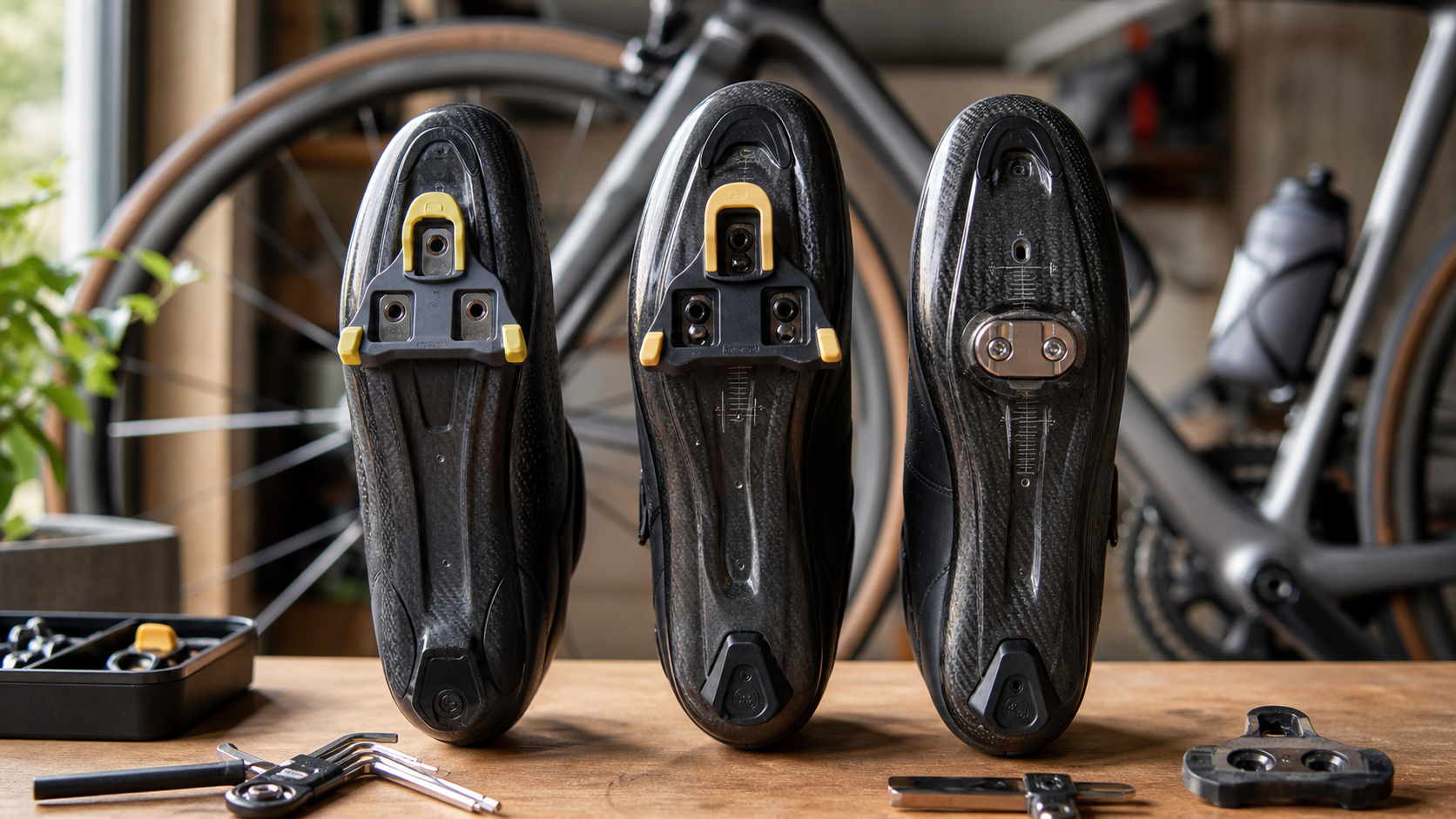
Core Comparison of the Three Major Cleat Systems
| Spec | Look Kéo | Shimano SPD-SL | Speedplay |
|---|---|---|---|
| Cleat shape | Triangular | Triangular | Round |
| Float angle (standard) | 4.5–9° | 6° | 0–15° adjustable |
| Walkability | Medium | Medium | Poor |
| Weight (pair) | ~230g | ~280g | ~180g |
| Cleat cross-compatibility | Look cleats only | Shimano cleats only | Speedplay only |
| Reference price in Taiwan | NT$2,000–8,000 | NT$1,500–10,000 | NT$5,000–15,000 |
Look Kéo: An Elegant European Classic
Look pioneered the road bike cleat system, and the Kéo line carries on the brand’s obsession with pedaling feel. Look pedals click in crisply, and unclipping feels intuitive — a heel twist of about 25–30 degrees releases the cleat, closer to a “natural rotation” than Shimano’s motion.
Main Look Kéo models:
- Kéo Classic 3: Entry-level, steel body, heavier but durable
- Kéo 2 Max: Steel spindle, wide pedal contact surface for improved comfort
- Kéo Blade Carbon: Carbon leaf spring, the lightest option, release tension adjustable with the included torque wrench
Why float angle matters: Look offers three cleat colors — red (0° float), grey (4.5° float), and black (9° float). Float angle refers to how freely the foot can rotate laterally once clipped in; more float means less lateral stress on the knee. Riders with a history of knee issues are advised to start with grey cleats (4.5°) and monitor how their knees respond after long rides.
Shimano SPD-SL: The Most Widely Available System
SPD-SL is currently the most commonly used road cleat system in Taiwan, largely because the popularity of Shimano groupsets drives cleat adoption. SPD-SL is known for its large cleat contact area (good power transfer surface) and a clear, defined release motion — a heel twist of 15–20 degrees is the standard way to unclip.
SPD-SL cleat colors and float angles:
- Yellow cleats: 6° float (standard, most common)
- Blue cleats: 2° float (for riders who prefer a more fixed pedaling position)
- Red cleats: 0° float (for racing, not recommended for beginners)
Advantages of SPD-SL: The widest service network — nearly every bike shop in Taiwan stocks SPD-SL parts. For beginners, the Shimano PD-R550 is the best entry-level choice, priced around NT$1,500, with stable quality and strong reviews.
Things to watch for: SPD-SL’s protruding cleats make a noticeable “clack” when walking, and can be slippery indoors (café floors, convenience stores) — extra caution is needed.
Speedplay: The Engineer’s Choice
Speedplay (now a Wahoo brand) is known for its round pedal design, instantly recognizable as something out of the ordinary. Its biggest advantage is fully customizable float (0–15°), making it the most precise option for riders with specific biomechanical needs related to knee alignment.
Speedplay’s unique advantages:
- Dual-sided entry: No need to flip the pedal to check orientation — it clips in naturally from either side (Look and SPD-SL only clip in from one side)
- Lightest option: The Speedplay Zero pair weighs only around 155g, the lightest of the three systems
- Adjustable float: With Speedplay’s proprietary tool, float angle can be fine-tuned in 1° increments
Downsides of Speedplay: It requires Speedplay-specific cleat mounting bases, which are only natively supported by a handful of shoe brands — other brands require a separate adapter plate. The mechanism is also more complex, and the float bearings need regular maintenance (annual lubrication) after long-term use, making it more costly to maintain than Look or Shimano.
Matching Shoes with Your Pedal System
Pedals are only half the equation — your shoes need to be a good match too:
- Sole stiffness (BOA rating / carbon score): A stiffer sole improves power transfer efficiency but reduces comfort. Choose medium stiffness (BOA 8–10) for training, and high stiffness (BOA 12+) for racing
- Shoe fit: European brands (Sidi, Fizik) tend to run narrow; Japanese brands (Shimano) offer wide-fit options that are friendlier to the broader foot shapes common among Taiwanese riders
- Straps vs BOA dials: BOA dials allow faster adjustment, ideal for situations where you need to fine-tune tightness mid-ride
Best Recommendations for Beginners
- First cleat system: Shimano PD-R550 (SPD-SL, yellow cleats) — durable, affordable, and well-supported
- Upgrade option: Look Kéo 2 Max (larger contact area, slightly lighter, better comfort on long rides)
- Serious racing or knee considerations: Speedplay Zero (higher budget, but the most adjustable)
Conclusion
There’s no absolute “best” cleat system — only the one that’s “best for your knees and riding habits.” Once you’ve settled on your primary riding intensity and distance, prioritize knee protection (adequate float) over chasing the lightest or most expensive system. If you have a pre-existing knee injury, be sure to consult a sports physical therapist before purchasing, and pair your choice with proper cleat positioning to safely and comfortably enjoy the benefits of clipless pedaling.
Related Reading
超開放的自行車錶!可以玩遊戲裝APP!?/ SRAM合併的 Hammerhead Karoo深入開箱!/ 即時爬坡偵測 / 全球導航地圖 / Garmin Bryton / CT Yeh
1 年前
Nepest NOVA 碳條輪組:輕量、空力、舒適一次滿足!/ 公路車 / CT Yeh
7 個月前
#公路車 #Fitting 靠人工智慧APP 幫你調整單車
6 年前
訓練台體驗) 2019台北自行車展 三大家 訓練台體驗 Tacx Neo Flux 2 Xepdo Apx Wahoo Kickr
7 年前
來都來了!改好改滿 / CS大導輪 + BB 可以省幾瓦? / 同場加映 TIME XPRO卡踏 / #公路車 #ceramicspeed / CT Yeh
1 年前
Fitting訓練兩用功率車 ! Thinkrider ST900 完整實測!/ 坡度升降 / 鄰居測試/ smart bike/公路車/ CT Yeh
2 年前
Vision Metron RS 37碳幅條輪組 (非SL)官網沒有的 低調開箱 / 這重量太銷魂了 / 公路車 / CT Yeh
6 個月前
2026 車錶排行榜!誰是最多車友正在使用?練家子最愛哪款?🏆 (2萬名車友數據) / 公路車 / CT Yeh
5 個月前