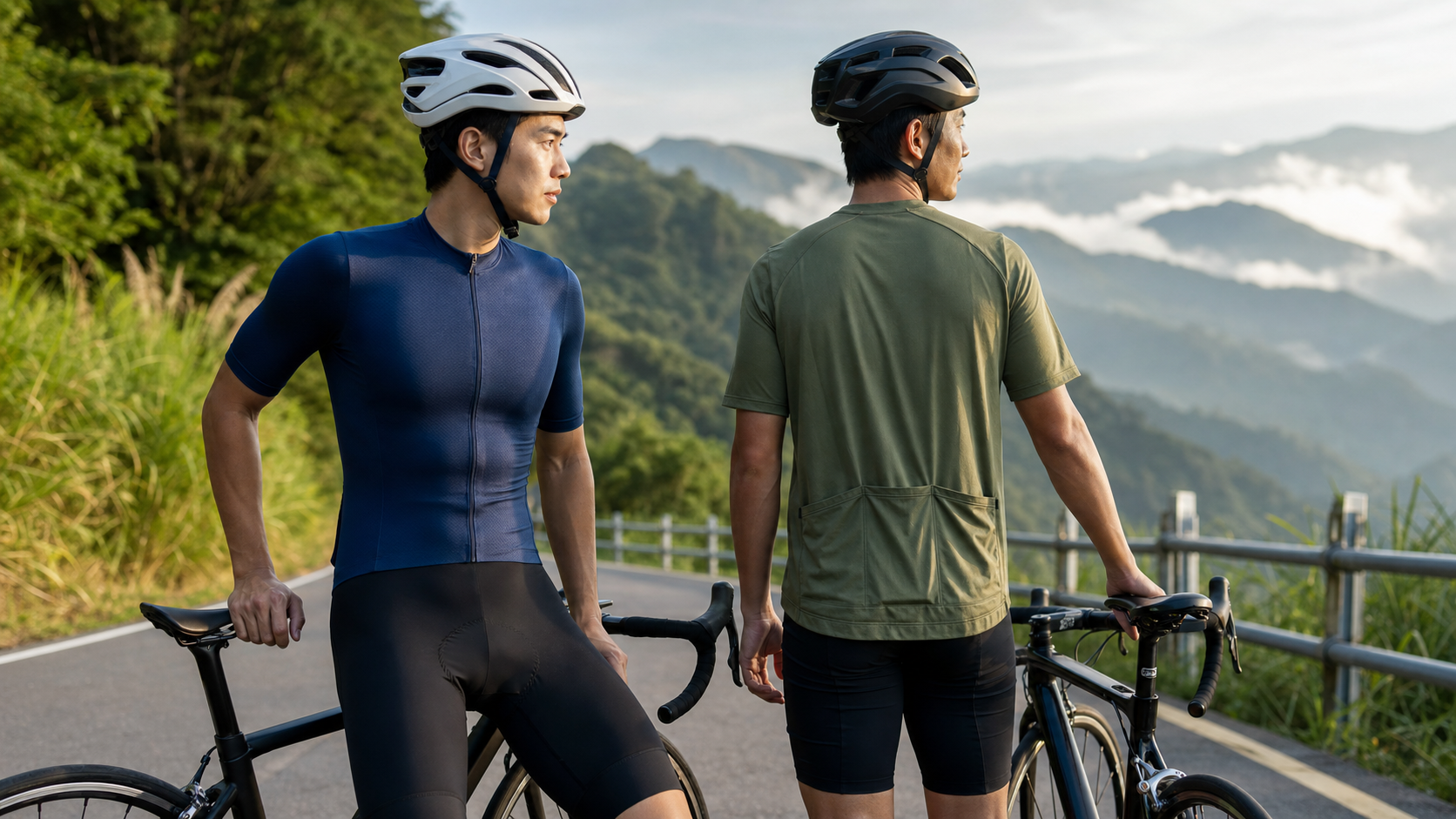
Cycling Jersey Buying Guide: Aero Jersey vs. Casual Jersey Functional Differences
A cycling jersey is the most visible piece of a rider’s kit and a key garment that directly affects riding performance and comfort. Jerseys on the market range from a few hundred to several thousand dollars, and the design differences between aerodynamic race jerseys and casual riding jerseys go beyond brand and price—they stem from fundamentally different functional purposes.
Jersey Type Functional Comparison
| Feature | Aero Jersey | Standard Training Jersey | Casual Jersey |
|---|---|---|---|
| Fit Tightness | Extremely tight (race-snug) | Tight (comfortable snug) | Relaxed |
| Fabric Moisture Wicking | Excellent | Good | Fair |
| Rear Pocket Count | 2–3 (snug) | 3 (standard) | 1–3 (oversized) |
| Front Zipper Design | Short/Hidden | Standard | Full-length |
| Aero Benefit | High (requires low, tucked riding position) | Low–Medium | Low |
| Ventilation | Medium (emphasizes fit) | High | High |
| Suitable Temperature | 18–35°C | 15–32°C | All temperatures (depending on model) |
Aero Jersey: A Second Skin for Speed
The design philosophy of an aero jersey is to “minimize aerodynamic drag.” At high speeds of 35–45km/h, aerodynamic drag accounts for 70–80% of total resistance, and garment drag makes up about 15% of aerodynamic drag. A well-designed aero jersey can save approximately 30–60 seconds in a 40km time trial compared to a traditional loose jersey—a significant margin in racing.
Aero Jersey Design Details:
- Textured Fabric: Certain zones use rough-surface fabric based on the “golf ball dimple” principle, creating a turbulent boundary layer at specific speeds to actually reduce wake drag.
- Hidden Zipper: The metal teeth of a traditional zipper are a source of airflow turbulence; a hidden zipper or shortened zipper length reduces this effect.
- Rear Pocket Placement: Aero jerseys position pockets at the center of the back to accommodate items with minimal drag profile, rather than the traditional three-pocket design.
- Silicone Grip on Sleeve Cuffs: Keeps the cuffs snug against the skin, preventing the fabric from flapping under wind pressure.
Prerequisites for Using an Aero Jersey: The aero benefit can only be fully realized with a “low, tucked riding position.” If you tend to ride upright (such as casual riding) or at speeds below 30km/h, the aero advantage of an aero jersey is almost negligible.
Standard Training Jersey: The All-Rounder for Daily Riding
The standard training jersey is the go-to style for most riders’ daily use. Its fit is snug without being extremely tight, and the three deep rear pockets easily accommodate food, a phone, and tools, making it the most practical everyday choice.
Key Buying Criteria for Training Jerseys:
- Moisture-Wicking Fabric: Sweat output in Taiwan’s summer is extremely high. Choose jerseys made of 100% synthetic fibers (Polyester or Nylon blends), which wick sweat 5–10 times faster than pure cotton.
- Pocket Design: The depth of the three rear pockets should be sufficient to hold a typical smartphone (not so shallow that the phone flies out while riding). The abrasion resistance of the pocket material is also important.
- UPF Sun Protection Rating: Taiwanese riders are exposed to prolonged sun. Choose jerseys with UPF 30–50 certification for extra protection on the forearms and back of the neck.
- Reflective Elements: Reflective prints or piping on jerseys improve visibility during night rides or early morning riding.
Casual Jersey: Styling Freedom for Urban Riding
Casual jerseys are designed to balance “cycling functionality” with “everyday styling after getting off the bike.” The fit is more relaxed, can conceal the look of cycling shorts, and won’t look out of place when stopping at a convenience store or café.
Scenarios Suited for Casual Jerseys:
- Urban commuting or light touring rides
- Participating in cycling events (where speed is not emphasized)
- Family rides or activities with non-cyclist companions
Fabric Trends: Some brands’ casual jerseys now use Technical Fabric with moisture-wicking properties, combining aesthetics with functionality. Rapha’s Core Trail Jersey or Velocio’s casual line are representative products in this direction.
Special Considerations for Taiwan’s Climate
Summer (May–September, temperatures 28–38°C):
- Prioritize mesh or ultra-thin moisture-wicking fabrics
- Avoid dark-colored jerseys (they absorb noticeable heat); light colors or white are more comfortable in summer
- Consider fabrics with cooling technology (such as styles with mint fiber added)
Winter in Northern Taiwan / Mountain Areas (October–March, temperatures 8–18°C):
- Long-sleeve jerseys or lightweight autumn/winter styles (Autumn Weight)
- Asymmetric designs with windproof fronts and breathable backs are best suited for Taiwan’s winter mountain roads
- Can be layered with a lightweight windproof vest (Gilet) to flexibly handle temperature changes between climbing and descending
Size Selection: Asian Fit vs. European Fit
European and American brand jerseys are typically designed based on Western body types, with broader shoulders and longer torsos, which may not suit Asian body shapes. Before purchasing, it is recommended to:
- Check whether the brand offers an Asian Fit
- Choose size based on both chest circumference and torso length dimensions (a single size is often inaccurate)
- Pearl Izumi, Castelli, and Shimano all offer cuts designed for Asian body types
Conclusion
The first step in choosing a jersey is to confirm your riding purpose: choose an aero jersey for speed-focused race training; a standard training model for versatile daily training; and a casual style for urban light riding and touring. Taiwan’s summers are hot, so moisture-wicking performance is the most important indicator across all styles. If the budget allows, having one race model (for races and high-intensity training) and two training models (for rotation during washing) is the smartest jersey configuration strategy.
Related Reading
- The Complete Jersey Buying Guide: Cut, Material, Sun Protection, and Pocket Design
- Road Bike Jersey and Bib Shorts Buying Guide: The Perfect Balance of Comfort and Performance
- The Complete Cycling Apparel Buying Guide: Material and Function Analysis of Jerseys, Bib Shorts, Gloves, and Cycling Shoes
- Jersey and Bib Shorts Buying Guide: Breathability and Moisture-Wicking Needs Under Taiwan’s Summer Heat
3D 列印車褲墊 / 舒適改善? / 無痕 x 分區壓縮 / ATK & Decider系列 / JE22黑科技 / #公路車 #CTYEH
11 個月前
鉅齒紋輪組!? ControlTech MEG-T50 EVO 碳纖維幅條輪組/ 功率對比實驗 / 公路車 / CT Yeh
2 年前
#公路車 #Fitting 靠人工智慧APP 幫你調整單車
6 年前
#公路車 #Vo2Max #最大攝氧量 測驗 體驗 | 心肺測試
6 年前
Fitting訓練兩用功率車 ! Thinkrider ST900 完整實測!/ 坡度升降 / 鄰居測試/ smart bike/公路車/ CT Yeh
2 年前
再一組! 全碳幅條 碟煞/無內胎輪組 開箱! 到底好騎嗎? UNAAS X40 | 公路車 | CT Yeh
4 年前
ThinkRider 智騎 XXPRO 訓練台,高階機種功能 只要 1/3價格!? 實測功率對比、噪音實測 / 公路車 / CT Yeh
1 年前
2023自行車展!與環台賽選手一同表演賽 / 全自動AI Fitting?/ TIME新車發表/神秘充電桌等 精華分享 VLOG | CT Yeh | 公路車
3 年前