Intermediate Swimmers Breaking Through Plateaus: Training Strategies to Progress from 1000m to 2000m
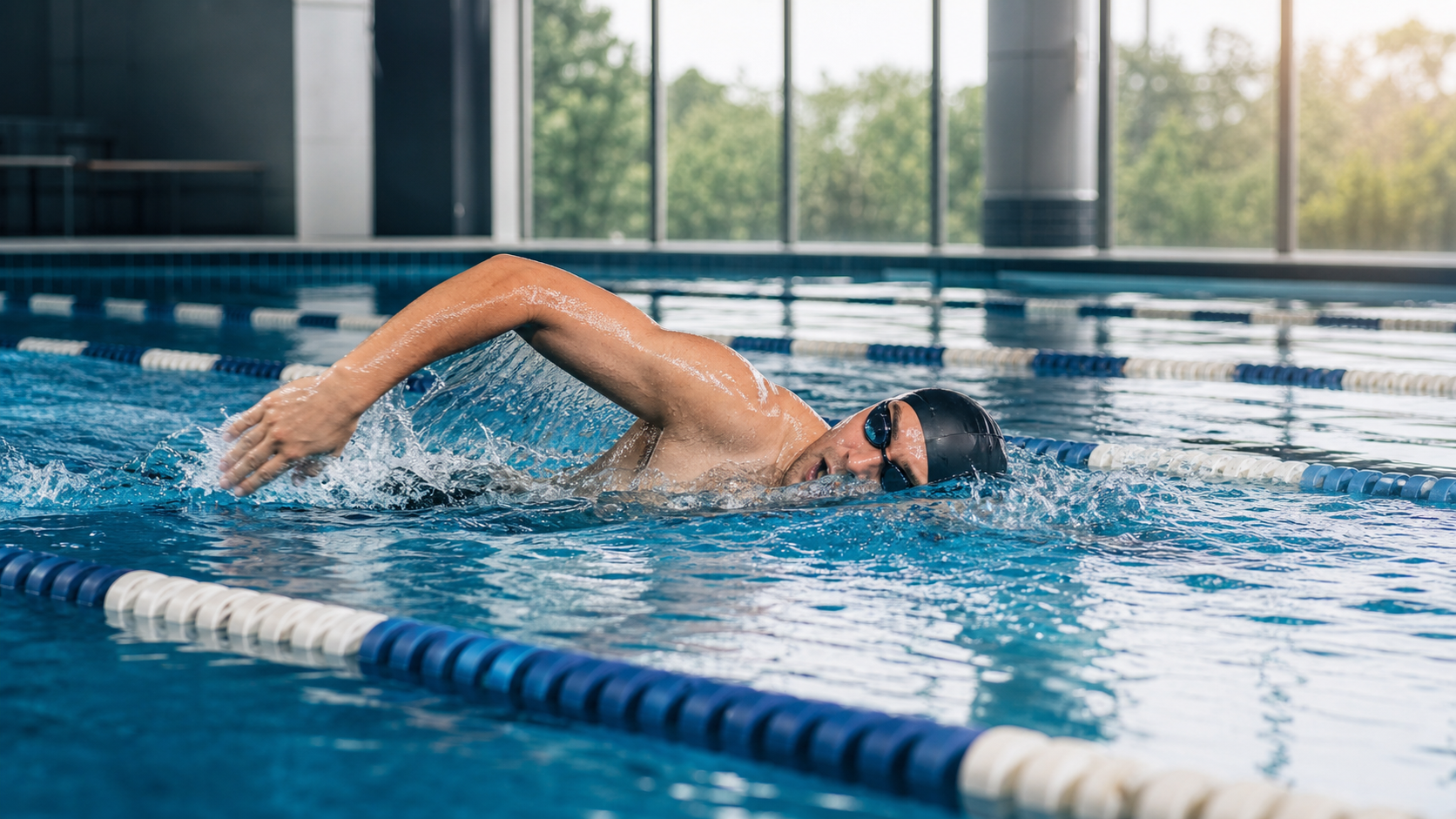
Why Does Progress Stall After 1000m?
Being able to swim 1000m consistently means you’ve crossed the steepest part of the learning curve. However, many swimmers encounter a peculiar phenomenon at this stage: no matter how long they train, they start slowing down at 1500m, and 2000m seems forever out of reach.
There are usually three root causes for this plateau: insufficient stroke efficiency (short distance per stroke), over-reliance on physical strength rather than technique, and an incomplete aerobic base. Simply increasing swimming volume won’t solve these problems; targeted training interventions are necessary.
Diagnose Your Plateau Type
Before starting a new training plan, do a simple diagnostic test:
| Test | Result Analysis |
|---|---|
| Swim 400m, record the time difference between the first 100m and the last 100m | Difference >30 seconds: Insufficient aerobic base |
| Count strokes per 25m | >22 strokes: Stroke efficiency needs improvement |
| Can your heart rate drop below 120bpm within 3 minutes after swimming? | No: Intensity may be too high |
| Fatigue level after completing 1000m | Exhausted: Pacing strategy needs adjustment |
Core Strategy 1: Improve Stroke Efficiency (SPL Management)
SPL (Strokes Per Length, strokes per 25m) is the most intuitive metric for measuring swimming efficiency. The goal for intermediate swimmers is to reduce SPL from 20+ to 16–18 while maintaining speed.
Training methods to reduce SPL:
- Catch-Up Drill: Keep the front hand extended until the rear hand catches up, forcing an extended glide phase in the water
- Breathe Every Stroke: Breathe on every stroke, forcing you to slow down and focus on stroke quality
- SPL Counting Game: Count strokes for a full 25m, and each week try to take 1 fewer stroke while maintaining the same speed
- Use paddles to strengthen the catch feel, practicing for 1/4 of each session
Core Strategy 2: Build an Aerobic Base
The biggest gap between 1000m and 2000m lies in aerobic capacity. Many intermediate swimmers do high-intensity sprints in every session, failing to build a sufficient aerobic base.
Recommended weekly training structure:
- Monday (Aerobic distance swim): 4×400m, 60 seconds rest between sets, at a comfortable pace where you “can speak a full sentence”
- Wednesday (Technique session): 1500m mixing kicking, paddles, and normal swimming, focusing on feeling the water flow
- Friday (Moderate intensity): 6×200m, 45 seconds rest between sets, maintaining a steady pace without sprinting
After 6–8 weeks of consistent execution, you’ll notice a significant reduction in the pace drop after 800m.
Core Strategy 3: Speed Endurance Training
Once the aerobic base is established, you need to add “speed endurance” training to teach your body to sustain a moderate intensity for longer periods.
Recommended workout: CSS Training Set
- Warm-up: 400m easy swim
- Main set: 8×100m, with each 100m target set at your best 400m time ÷ 4 (approximately 85% intensity)
- Rest between sets: 15–20 seconds (this short rest is the essence of CSS training)
- Cool-down: 200m easy swim
Attempting 2000m for the First Time
Once you can consistently meet the following conditions, you’re ready to attempt 2000m:
- Can complete 8×200m with time variation per set not exceeding 10 seconds
- 1500m completion time increases by no more than 50% compared to your 1000m time
- Heart rate recovers to below 130bpm within 5 minutes after swimming
When attempting 2000m for the first time, start at 85% of your 1000m target pace. Feeling still relaxed at the 500m mark is a good sign. Mentally break it down into 4×500m, giving yourself a 10-second “fake rest” (not stopping but slightly slowing down) at the end of each 500m.
Practical Tips
- Record your 1000m completion time once a week as a progress indicator rather than challenging your limits every time
- Purchase a waterproof sports watch or use a pool lap counter to avoid disrupting your rhythm due to miscounting laps
- If you feel more fatigued than the previous week for 2 consecutive weeks, immediately reduce training volume by 20%—this is an early sign of overtraining
- Schedule one “just soak in the water” recreational swim each month to maintain a positive feeling toward the water
Conclusion
The breakthrough from 1000m to 2000m is essentially a qualitative shift from “pushing through with willpower” to “swimming efficiently.” This process requires 3–4 months of patient cultivation, but every improvement in stroke efficiency and every reduction in late-stage pace drop is proof that you’re progressing. Keep recording, trust the process, and 2000m will eventually become your warm-up distance.
Related Reading
- Intermediate Swimming Improvement Plan: Structured Training 3 Times a Week, 2500m Per Session
- 8-Week Advanced Swimming Plan: Breakthrough Training for Those Who Can Swim 500m
- 12-Week Progress Plan for Intermediate Swimmers: Improving 100m Freestyle Performance
- Strategies for Breaking Through Swimming Plateaus: Technical Diagnosis and Intensity Adjustment When Performance Stalls
西進武嶺 免費訓練分析服務 Intervals | 練不夠還是練過頭?你哪一種類型選手?AI模型告訴你! | 備戰神器 | 公路車 訓練 | CT Yeh
4 年前
live) 超越北高 之一日北高12小時 策略
7 年前
西進武嶺 自製新版AI配速表產生器 x 賽前攻略 抱佛腳! 沒有功率計也可以產生配速表嗎?有什麼其他眉角賽前要注意的呢? | 西進武嶺 / 東進武嶺 KOM 攻略 | 公路車 | CT Yeh
4 年前
一日北高/長距離團騎 常見問題補充篇 / 組團或跟團的眉角 / 壯車友容易被瘦車友慢性拉爆 / 原來屁股痛可能是這個原因...? / 風場配速法 / 公路車 / CT Yeh
2 年前
#公路車 #西進武嶺 配速配瓦實驗 坡度分析 四小時內攻略 建大盃 NeverStop #西進武嶺攻略
6 年前
2026 輪霸西濱200K 挑戰VLOG / 第一集團 / 首次參加..經驗不足、膀胱不足 /死守6H內 / AI戰鬥力顯示系統 / 公路車 / CT Yeh
4 個月前
西進武嶺各路段 前8000名 大數據分析 配速攻略/功率/心律/推力比/維持率/踏頻/踏瓦比/牽車率 大公開 | 建大盃 NeverStop 可參考 | 公路車 | CT Yeh
5 年前
FTL 與 SYB 車隊專訪 西進武嶺 實用攻略分享! 2小時 如何練?!你不知道的眉角!新手準備武嶺必看 EP1 | 實力派女車友 | 精華版 | 公路車 | CTYeh
4 年前