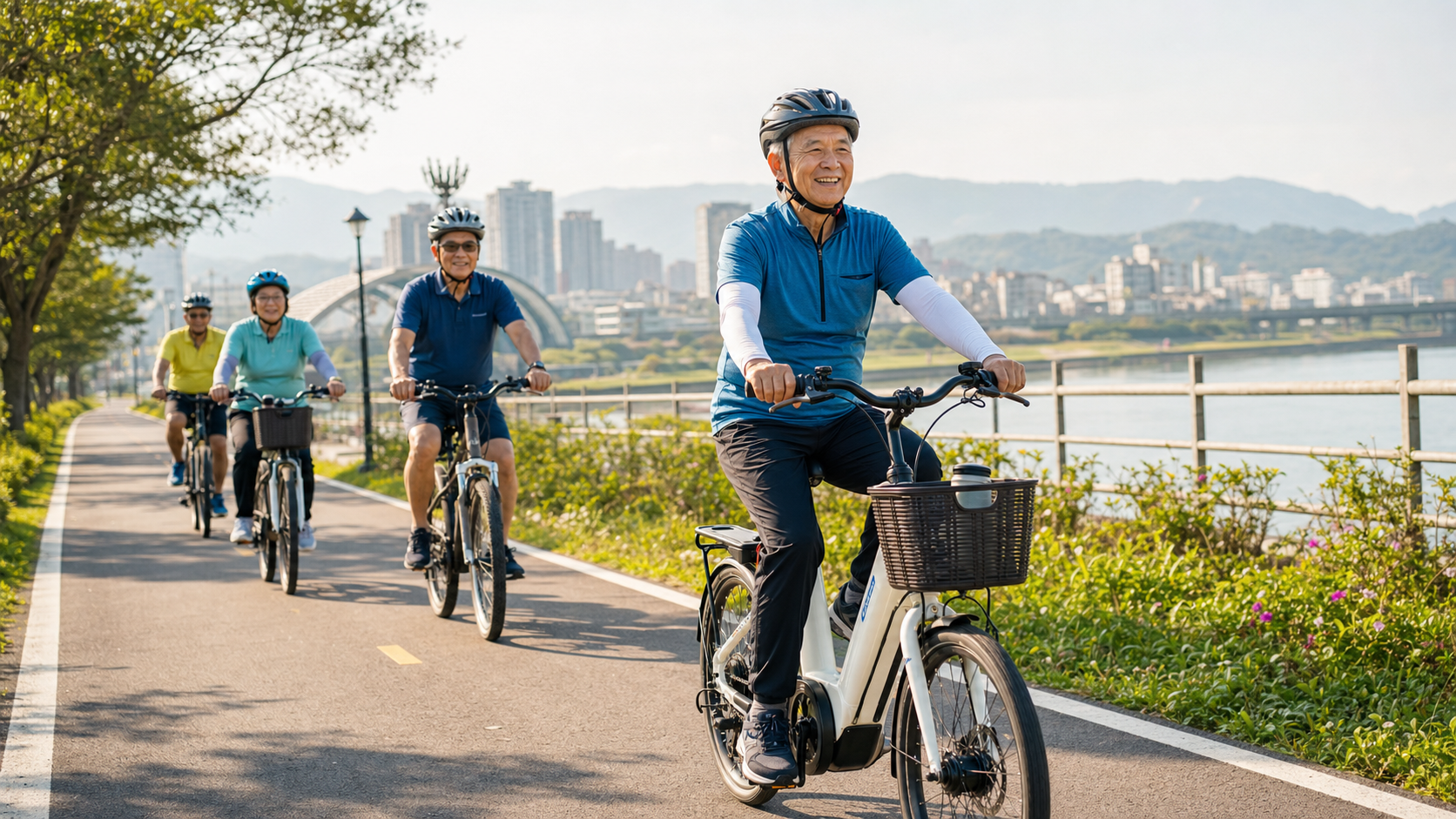
Cycling in Retirement: How Seniors Can Maintain an Active Quality of Life with Bicycles
Taiwan is rapidly entering a super-aged society. More and more retired seniors are looking for a form of exercise that can maintain physical fitness while also integrating into social life. Among the many options, cycling stands out for its advantages—low impact, adjustable intensity, outdoor environment, and suitability for all ages, making it an excellent companion for seniors’ active lifestyles.
Health Benefits of Cycling for Seniors
Cycling is a “non-weight-bearing” exercise; the impact on the knees during pedaling is far lower than running, making it especially suitable for seniors with knee joint degeneration. Additionally, the health benefits cycling brings to seniors include:
- Cardiovascular Maintenance: Aerobic exercise effectively improves heart and lung function, reducing the risk of cardiovascular disease
- Lower Limb Strength Training: The pedaling motion primarily works the quadriceps, glutes, and calf muscles, slowing muscle atrophy
- Balance Training: The neuromuscular control required to maintain balance while riding helps prevent falls in seniors
- Cognitive Stimulation: Outdoor riding provides rich sensory input, and studies show it helps delay cognitive decline
- Mental Health: Outdoor activity, social contact, and the sense of accomplishment from achieving goals combat loneliness and depression after retirement
Suitable Bicycle Types for Seniors
| Bike Type | Features | Suitable For | Considerations |
|---|---|---|---|
| City Bike | Upright riding position, relaxed and comfortable | Beginner seniors, leisure riding | Lower efficiency on long rides |
| Low-Step-Through Frame | Easy to step over, convenient to mount and dismount | Those with limited leg flexibility | Some models have lower structural strength |
| Tricycle (Adult) | No balance required, maximum stability | Seniors with poor balance or those recovering | Heavier, requires caution when turning |
| E-bike (Electric Assist) | Electric assist overcomes hills | Those with limited stamina or higher cardiac burden | Higher cost, requires learning to charge |
| Recumbent Bike | Reclined seating position with back support | Those with lower back pain or sciatic issues | Maintenance services harder to find in Taiwan |
For most seniors in Taiwan, a low-step-through city bike or an electric-assist bicycle (e-bike) are the top priorities worth considering. The e-bike is especially worth the investment—it allows seniors to overcome the challenges of Taiwan’s hilly terrain, ride farther and longer, without having to stop due to excessive fatigue.
A Tailored Cycling Plan: Starting from Scratch
For seniors who have never ridden or haven’t ridden in a long time, it is recommended to rebuild cycling habits gradually:
Weeks 1–2: Adaptation Period
- Ride 15–20 minutes each time, choosing flat, car-free bike paths
- The goal is to rebuild balance and pedaling rhythm, not to chase speed or distance
- Confirm the saddle height is correct (knee slightly bent at the bottom of the pedal stroke, not fully extended)
Weeks 3–4: Building the Habit
- Extend each ride to 30–40 minutes
- Add gentle slopes (a mild incline is enough) to increase muscular load
- Start riding with a companion to increase social interaction
Months 2–3: Stabilization Phase
- Ride 3–4 times per week, 40–60 minutes each session
- Try new routes to add a sense of exploration and fun
- Begin joining relaxed group rides with fellow cyclists
After 3 Months: Maintenance and Progression
- Set phased goals based on individual conditions (e.g., completing a well-known route)
- Integrate cycling into daily life (e.g., riding to the market or the park)
Important Safety Considerations
There are several safety points seniors need to pay special attention to when cycling:
- Consult a doctor before starting: If you have a history of heart disease, high blood pressure, diabetes, or osteoporosis, consult your primary physician before beginning a cycling plan
- Always wear a helmet: Head injuries from falls are harder to recover from in older adults than in younger people; a helmet is non-negotiable equipment
- Avoid high-traffic areas: Senior riders have slower reaction times; it is recommended to choose routes with dedicated bike lanes and avoid major thoroughfares
- Carry emergency contact information: Include emergency contact phone numbers, a medication list, and important medical history, preferably on a waterproof card stored in a saddlebag
- Avoid riding during peak heat: Seniors have weaker thermoregulation; in Taiwan’s summers, avoid riding between 10 a.m. and 4 p.m.
Community Resources for Senior Cyclists in Taiwan
Many cities and counties in Taiwan have cycling clubs that focus on or are friendly to seniors, and some municipal sports bureaus or long-term care centers regularly host cycling events suitable for older adults. Joining such communities not only increases riding safety (having companions), but more importantly, helps build a social network after retirement.
Many seniors report that after joining a cycling club, their sense of fulfillment and social satisfaction in retirement greatly improves, and the weekly group rides become a focal point and source of anticipation in their lives.
Conclusion
A Taiwanese senior rider once said: “I don’t ride because I’m old; I’m old because I don’t ride.” While somewhat exaggerated, the truth behind it is real. Cycling is not exclusive to young people—it is freedom and health that can be found at any age. Life after retirement can begin with pushing down on that first pedal, rediscovering the beauty of Taiwan, and sharing the joy of movement with peers.
Related Reading
靠單車減肥35公斤 心得分享與整理
7 年前
[海外單車] 日本 茨城 霞之浦單車 銀杏 慢遊體驗
7 年前
太平山單車員工旅遊 | 這樣玩CP值最高!| 公路車
5 年前
#公路車 #Fitting 靠人工智慧APP 幫你調整單車
6 年前
單車 一日北高 ( 雙城 ) 肥宅雙人瘋狂行 紀錄片 REACTO
10 年前
高雄綠園道鐵路自行車道 / 外地人能輕鬆駕馭 還是整路崩潰? / 2025 全線開通 春節實地探索一次!(附GPS連結)/ 公路車 / CT Yeh
1 年前
碟煞公路車 銑面器 !? 原來銑完差這麼多! 降低蹭碟機率! | TIME 公路車 保養小記錄 | CT Yeh
3 年前
大家都在開箱的...單車用藍芽對講耳機真的有幫助嗎? SENA BiKom 20 長距離旅遊 & 海鷗繞圈賽 實際體驗心得 / 公路車 / CT Yeh
9 個月前