Trail Running Gear Checklist: Complete Guide to Mandatory Gear, Hydration Packs, Trekking Poles, and Headlamps
單車訓練
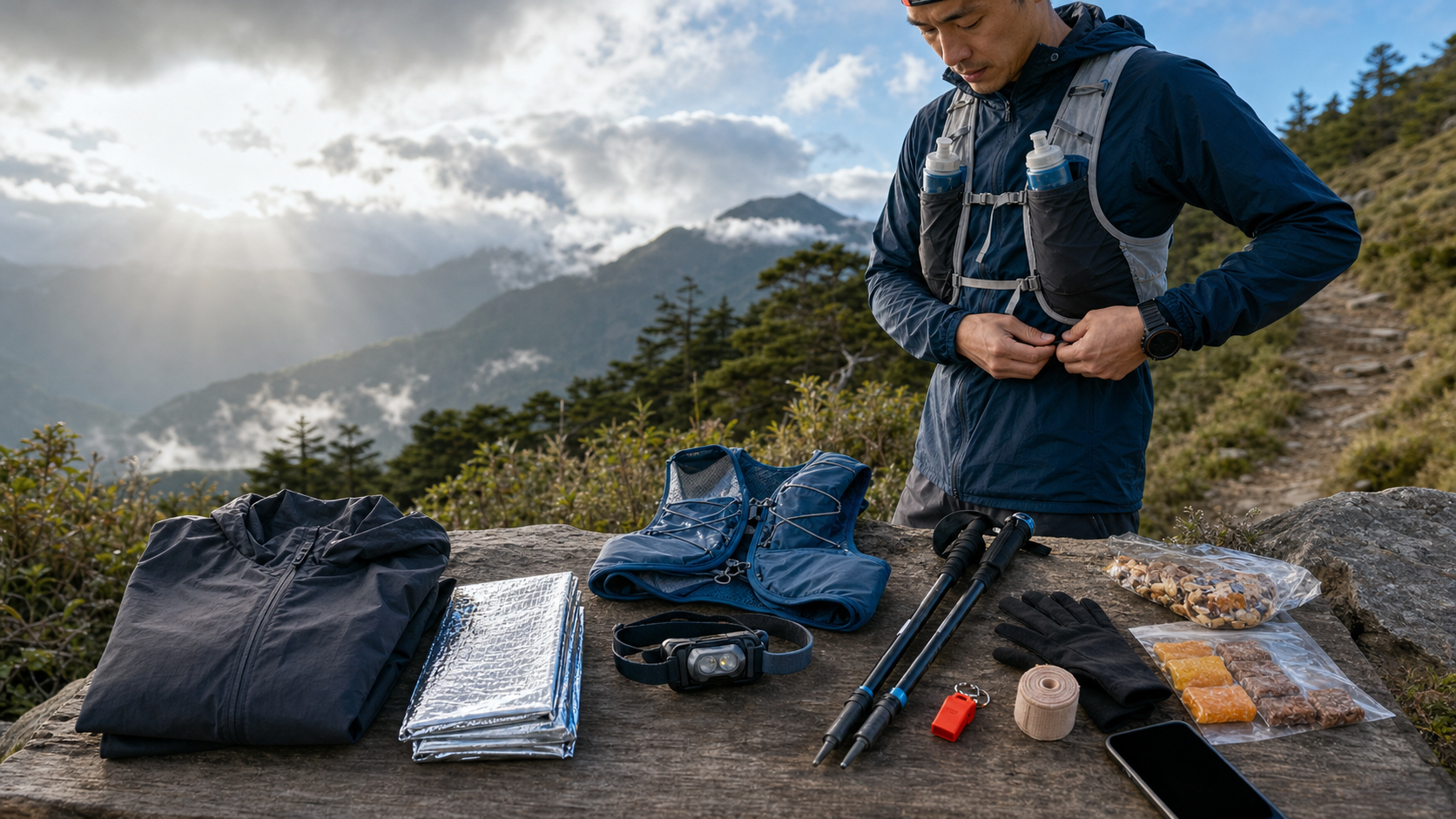
Why Is There “Mandatory Gear”?
Trail running races are mostly held in mountainous areas, where weather can shift from blazing sun to thunderstorms within an hour, and temperatures can drop from 30°C to 5°C. Mandatory gear is required by race organizers so you can self-rescue in the worst-case scenario—failing to carry all items may result in disqualification.
ITRA International Standard Mandatory Gear (Graded by Distance)
Short Distance (<25K)
- 500ml water capacity
- Thermal layer (waterproof or windproof)
- Emergency whistle
- Sun hat + sunscreen
- Mobile phone (fully charged)
Medium Distance (25-50K)
All of the above plus:
- Emergency blanket (140×200cm)
- Self-adhesive bandage
- Personal food supply (500-800 kcal)
- Headlamp (even for daytime races)
- Spare batteries
Long Distance/Ultramarathon (50K+)
All of the above plus:
- Waterproof jacket (with taped seams)
- Waterproof pants (for some races)
- Long-sleeve thermal layer (>180g/m² merino or equivalent)
- Gloves + thermal hat
- Second headlamp
- Whistle
- Cup (essential for zero-waste races)
High Mountain Races (UTMB / Yushan / Hehuan)
All of the above plus:
- Waterproof pants (mandatory)
- Emergency food (24-hour supply)
- Emergency flashlight
- Full thermal kit (rain jacket + thermal layer + gloves + hat)
- Some races require crampons and rope (very rare)
Choosing a Hydration Vest / Pack
Capacity Comparison
| Race Distance | Recommended Capacity |
|---|---|
| <25K | 2-5L |
| 25-50K | 5-8L |
| 50-100K | 8-12L |
| 100K+ | 10-15L |
Key Fit Points
- No vest bouncing: Jump around while wearing it—there should be no significant shifting
- Chest strap position: Should not press on your chest or constrict your breasts
- Bottle placement: Front chest bottles should be easy to access and stow
- Rear capacity: Must fit a rain jacket + thermal layer + food
Soft Flasks vs. Hydration Bladder
- Soft flasks (500ml ×2): Easy to access, you can see how much remains
- Hydration bladder (1.5-2L): Large capacity but more hassle to stop and refill
- Hybrid setup: Front soft flasks + rear bladder, commonly used in ultramarathons
Choosing Trekking Poles
| Pole Type | Weight | Foldability | Strength |
|---|---|---|---|
| 3-fold carbon fiber | 180-220g | Easy to stow | Medium |
| 3-fold aluminum alloy | 250-300g | Easy to stow | High |
| Telescopic | 280-350g | Longer when folded | Medium |
Pole length formula: Height × 0.66-0.68 (cm)
- Height 170cm → Pole length approx. 115cm
Choosing a Headlamp
Lumen Output Guide
| Lumens | Use Case |
|---|---|
| 100-200 | Park runs, light trail |
| 200-400 | General night trail running |
| 400-600 | Technical night trail running |
| 600+ | Ultramarathon main light / fast descents |
Battery Life
- Look at runtime at medium brightness (manufacturers often inflate numbers using the lowest setting)
- For 100-mile races, carry at least 12-16 hours of battery capacity
Recommended Headlamp Specs
- Main light: Petzl NAO+, Silva Trail Speed 5XT, BD Spot 400
- Backup light: Compact 100-200 lumen model that can attach to a waist pack or chest strap
Tips for Combining Hydration Vests and Headlamps
- Store headlamp batteries in the vest’s inner pocket (keeps them warm, prevents voltage drop in low temperatures)
- Keep the backup headlamp in a separate pocket so you can find it even in the rain
- Route the headlamp strap under the brim of your cap to reduce light bounce in front of your eyes
Common Mistakes
- Buying gear only right before the race: Blisters, poor fit, chafing
- Skimping on gear weight: Thermal layer too thin, hypothermia at the summit
- Not practicing putting gear on and off: Need to grab your rain jacket in a technical section but can’t get it on in 10 minutes
- Not checking batteries: Headlamp dies halfway through the race
One-Week Pre-Race Gear Checklist
- [ ] All mandatory gear gathered (per race regulations)
- [ ] Hydration vest test-fitted with weight (including water and food)
- [ ] Headlamp charged and fitted with fresh batteries
- [ ] Rain jacket waterproof test (spray water to confirm seams don’t leak)
- [ ] Poles extended and tested (telescoping sections don’t stick)
- [ ] First aid kit checked (no expired bandages)
Conclusion
Trail running gear isn’t about “the more you prepare, the better”—it’s about matching gear to risk scenarios. Think through the course elevation, estimated time, and weather conditions, and your gear list will practically write itself.
Related Reading
- Trail Running Gear Requirements: Mandatory Gear Checklist and Backpack Selection
- Choosing a Trail Running Hydration Pack: Mandatory Gear and Weight-Minimization Strategies
- Trail Running Gear System: Hydration Packs, Shoe Traction, and Mandatory Gear Checklist
- Ultramarathon Gear Checklist: Weight Trade-offs Between Mandatory Gear and Personal Choices
相關影片
訂閱CT的頻道 一日北高前的高裝檢 | 北高 360 | 挑戰11小時的裝備 | 一日雙塔 | 補給
6 年前
崇越盃「西進武嶺」挑戰! / 天堂路史詩空拍 / 秘密爬坡武器/ PGYTECH CapLock MantisPod Power 續航拍攝棒 / 廢物伙伴軍團再次出征 / 公路車 / CT Yeh
2 年前
西進武嶺 自製新版AI配速表產生器 x 賽前攻略 抱佛腳! 沒有功率計也可以產生配速表嗎?有什麼其他眉角賽前要注意的呢? | 西進武嶺 / 東進武嶺 KOM 攻略 | 公路車 | CT Yeh
4 年前
單車 一日北高 ( 雙城 ) 肥宅雙人瘋狂行 紀錄片 REACTO
10 年前
雨戰! 西進武嶺員工旅遊 加料 各路段大數據分析 | 同事端出5公斤的公路車來挑戰!? EP1
4 年前
塔塔加 員工旅遊 加料 各路段大數據分析 | EP2 | 公路車 | CT Yeh
4 年前
2024單車追雪全記錄,大屯山/助航台 衝山囉! / 裝備準備分享 / 很厲害的冰雕藝術 / 公路車 / CT Yeh
2 年前
富士山KOM 賽事篇 VLOG!/ 小野田出沒!/ 完整路段分析 / 武嶺要騎多快才能拿環?/ 台灣選手 第20回Mt.富士ヒルクライム 参加!/ 公路車 / CT Yeh
2 年前