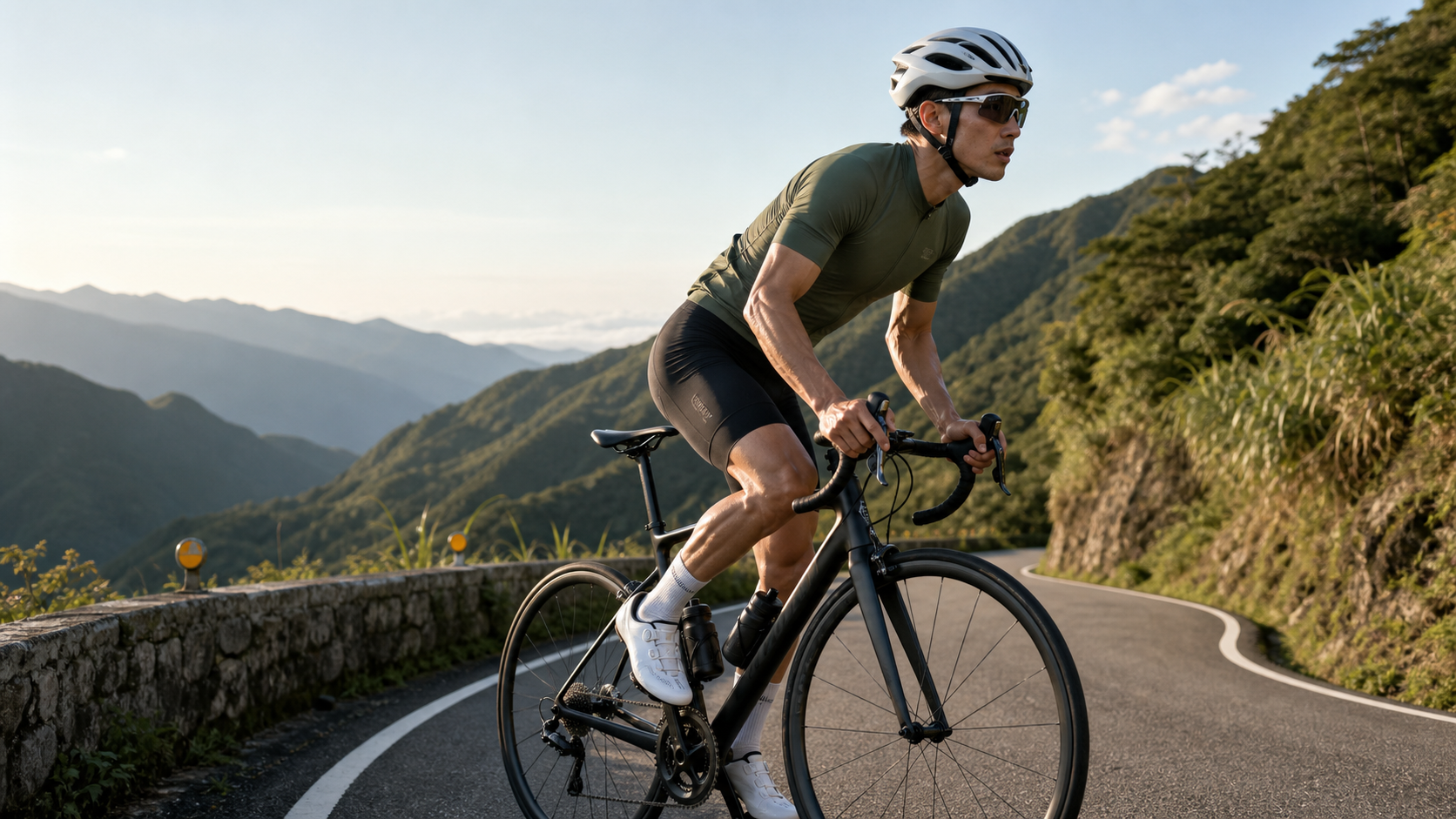
Standing vs. Seated Climbing Transition: Energy Expenditure and Muscle Recruitment Analysis
When should you stand up and when should you sit down while climbing? Watch Pogačar on Tour de France climbs—he switches between standing and seated positions frequently; watch Roglič—he stays seated almost the entire time. Both styles have won Grand Tours.
This article uses physiological data to break down the differences between standing and seated positions, helping you find a transition strategy that works for you.
1. Overview of Physiological Differences
| Metric | Seated | Standing |
|---|---|---|
| Heart Rate (at same power) | Baseline | +5–10 bpm |
| Oxygen Uptake | Baseline | +5–10% |
| Primary Muscle Groups | Quadriceps, Gluteus Maximus | Quadriceps + Gastrocnemius + Upper Body |
| Peak Torque | Lower | Higher (+30–50%) |
| Cadence Preference | 80–90 rpm | 60–75 rpm |
| Duration | Long (unlimited) | Short (30sec–3min) |
2. Muscle Recruitment Patterns
Seated Climbing
- Quadriceps: Primary power muscle
- Gluteus Maximus: Hip extension
- Hamstrings: Pulling motion of the pedal stroke
- Core: Stabilizes the pelvis, low range of motion
Muscle recruitment is concentrated in the lower body, with lower upper-body and cardiorespiratory load.
Standing Climbing
- Quadriceps: Recruitment rate increases by 20–30%
- Gastrocnemius (calf): Stabilizes the ankle joint, recruitment rate increases significantly
- Gluteus Medius, Gluteus Minimus: Stabilize lateral pelvic sway
- Upper Body (biceps, shoulders, back): Hands grip the handlebar to counter the pedal reaction force
- Core: Obliques and erector spinae are heavily involved
A full-body movement, so energy expenditure is naturally higher.
3. Energy Efficiency Analysis
2003 study by Millet et al.:
| Gradient (%) | Seated VO2 | Standing VO2 | Extra Cost of Standing |
|---|---|---|---|
| 0 | 50 ml/kg/min | 56 ml/kg/min | +12% |
| 6 | 55 ml/kg/min | 58 ml/kg/min | +5% |
| 10 | 58 ml/kg/min | 59 ml/kg/min | +2% |
| 14 | 60 ml/kg/min | 60 ml/kg/min | 0% |
Key Findings:
- Flat roads and gentle gradients: standing is significantly less energy-efficient
- Steep gradients (> 10%): standing and seated energy efficiency are similar
- Very steep gradients (> 14%): standing may be more efficient (gravity assists the pedal stroke)
4. When Standing Has the Advantage
Standing is more efficient in the following situations:
- Very steep gradients (> 12%): Body weight assists the pedal stroke, saving effort
- Short bursts: Responding to attacks, sprinting over the crest of a climb
- Shifting muscle load: After a long seated stretch, stand for 30 seconds to “switch legs”
- Low-cadence power: When stuck in a gear, use body weight to push down
- Relieving saddle pressure: Releasing perineal pressure on climbs > 1hr
5. When Seated Has the Advantage
Seated is the best choice in the following situations:
- Long climbs (> 15min): High energy efficiency
- Gentle gradients (< 8%): Standing is a pure waste
- Maintaining a steady rhythm: Heart rate won’t spike
- When aerodynamics matter: Standing increases CdA by 15–20%
- Late in the ride when fatigued: Core and upper body are already tired; standing can’t be sustained
6. Transition Strategy: Practical Examples
Long climb (30min, average gradient 7%) recommended transitions:
| Time | Action | Reason |
|---|---|---|
| 0–10min | Fully seated | Settle into rhythm, control heart rate |
| 10–11min | Standing 1min | Shift muscle groups, relieve perineal pressure |
| 11–20min | Seated | Steady in the middle section |
| 20min | Standing 30sec @ steep section | Get through the hard part |
| 20–28min | Seated | Maintain rhythm |
| 28–30min | Standing sprint | Final push to the finish |
Short steep climb (5min, average gradient 10%) recommendation:
- 0–3min: Seated, control heart rate, don’t blow up
- 3–4.5min: Standing, attack or maintain speed
- 4.5–5min: Choose based on remaining energy
7. Training Your Standing Ability
Standing climbs require more than just leg training; you also need:
- Core: plank, side plank, bird-dog
- Upper-body pulling strength: pull-ups, single-arm rows
- Gluteus medius: side-lying leg raises, single-leg bridges
- Balance: single-leg stance, yoga
On-bike training:
- 6×1min standing @ 100% FTP (6–8% gradient)
- Observe whether you can maintain a steady cadence without excessive lateral sway
8. Conclusion
Standing vs. seated isn’t about “which is stronger,” but “which fits the situation at hand.” Seated is the fundamental position—high energy efficiency, suited for long distances; standing is a tactical weapon—capable of short bursts of power and shifting muscle load. Pro riders can flow smoothly between the two based on terrain, race dynamics, and energy levels. If amateur riders master this transition, KOM times can improve by at least 5%.
Related Reading
- Seated Climbing vs. Standing Climbing: How to Decide When to Get Up
- Seated vs. Standing Transitions on Climbs: When to Stand Up for Maximum Efficiency
- Switching Between Seated and Standing on Climbs: When Standing Up to Pedal Is Most Effective
- Seated vs. Standing on Climbs: When to Switch for Maximum Efficiency
如果Pogačar騎西進武嶺可以多快?會破2嗎?各種情況深度推估探討 / 公路車 / CT Yeh
2 年前
一日北高/長距離團騎 常見問題補充篇 / 組團或跟團的眉角 / 壯車友容易被瘦車友慢性拉爆 / 原來屁股痛可能是這個原因...? / 風場配速法 / 公路車 / CT Yeh
2 年前
單車 一日北高 ( 雙城 ) 肥宅雙人瘋狂行 紀錄片 REACTO
10 年前
單車 梅山36灣 坡度介紹 路段介紹 空拍 (相關遊記影片,請參考說明或我的頻道喔,歡迎訂閱)
6 年前
Stages功率計 和 智騎 X7 Pro 訓練檯同時騎兩個 Rouvy 角色會一起進終點嗎?最後來點數據分析 | 公路車
5 年前
公路車 爬坡 破PR 紀錄 小技巧 分享
6 年前
白沙屯媽祖進香在家走!UREVO 坡度自調走步機 / 可連接訓練遊戲APP MyWhoosh / 邊看直播邊走起來 / CT Yeh
11 個月前
一日北高常見問題大集合 | 攻略 | 路線 | 訓練 | 補給 | 自行車 單車 | 一日雙城 | 雙塔 | TWB北高360 | 屁股痛
6 年前