Open-Water Cold Water Acclimatization: Training for the "Cold Shock Response" When Entering Cold Water
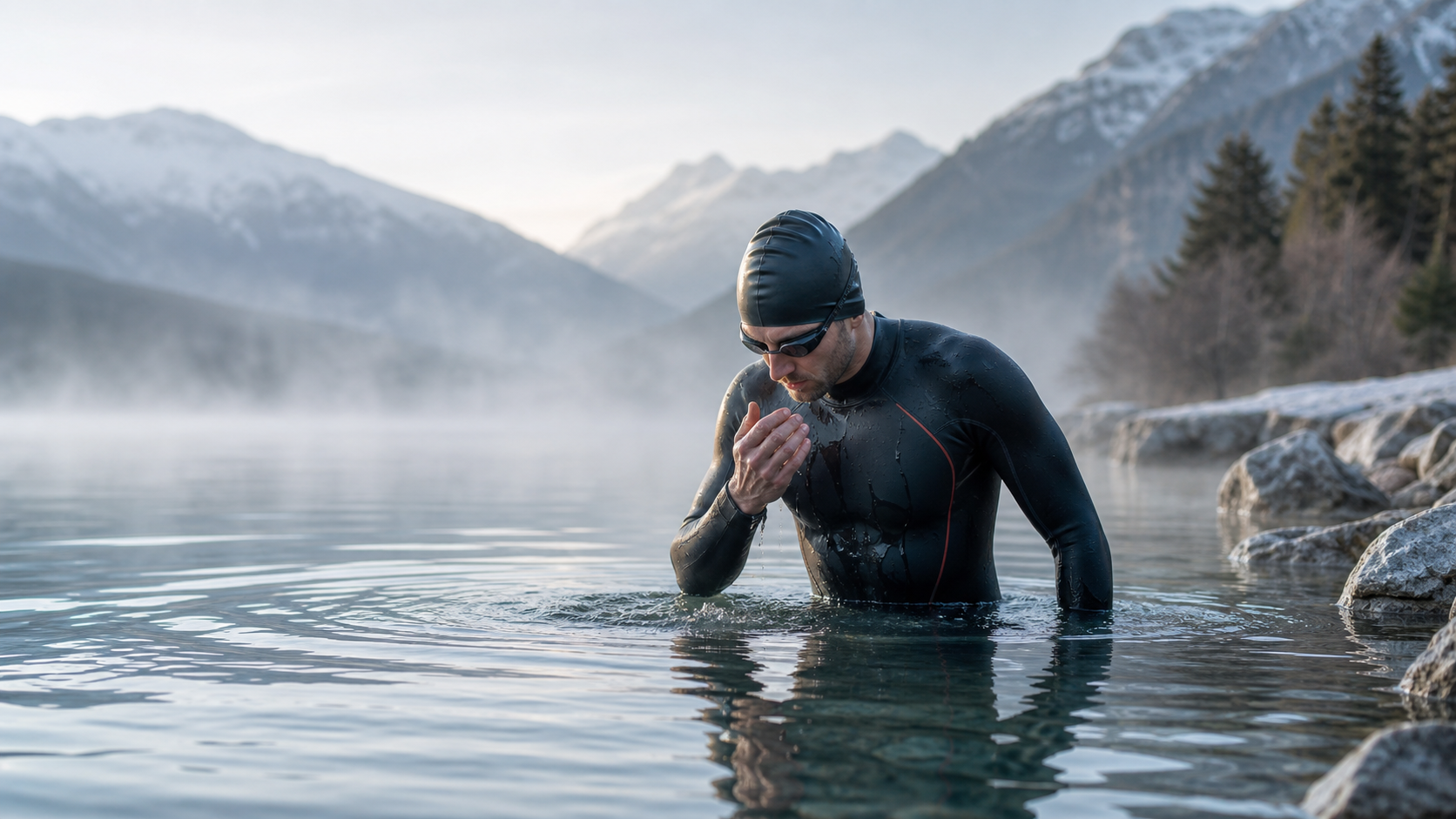
What Is the Cold Shock Response
When the human body suddenly comes into contact with cold water (below 18°C), a series of reflex reactions occur within 30 seconds:
- Involuntary deep breathing: Inhaling 2-4 times the normal air volume
- Hyperventilation: Breathing rate reaches 60-80 breaths per minute (normally 12-20)
- Spiking heart rate: Surges from a resting 60 bpm to 130-160 bpm
- Vasoconstriction: Blood pressure rises rapidly by 20-30 mmHg
- Muscle tension: Stiff hands and feet, uncoordinated movements
This reaction lasts 1-3 minutes and is the leading cause of drowning in cold water (accounting for 60-80% of cold-water deaths).
Physiological Effects of Different Water Temperatures
| Water Temperature | Reaction Intensity | Suitable Gear | Notes |
|---|---|---|---|
| Above 25°C | No cold shock | Swimwear | Watch for heatstroke |
| 20-25°C | Mild | Thin wetsuit or swimwear | Most athletes can adapt |
| 18-20°C | Moderate | Wetsuit | Needs 30 seconds to adapt |
| 15-18°C | Noticeable | Full wetsuit | High risk of cold shock |
| 12-15°C | Strong | Wetsuit + swim cap + earplugs | Requires specialized training |
| 10-12°C | Dangerous | Double-layer wetsuit | Only suitable for trained winter swimmers |
| Below 10°C | Lethal | Not recommended | Extremely high risk of hypothermia |
Three-Phase Cold Water Adaptation Training
Phase 1: Face Immersion Training (Can Be Done Anywhere)
Practice at home using a cold-water bathtub or large basin:
- Week 1: Immerse your face in 15°C water for 5 seconds, 5 times a day
- Week 2: Extend to 15 seconds, 5 times a day
- Week 3: 30 seconds, adding breath-holding
- Week 4: 60 seconds, simulating one full stroke cycle
Effect: Trains the “diving reflex,” helping the body adapt to the reaction when water contacts the face.
Phase 2: Cold Water Immersion in the Bathtub
Fill the bathtub with 12-15°C cold water:
- Week 1: Immerse feet for 1 minute
- Week 2: Up to the knees for 2 minutes
- Week 3: Up to the waist for 3 minutes
- Week 4: Up to the chest for 5 minutes
Effect: Trains the body’s blood vessels to adapt to cold stimuli, reducing the magnitude of blood pressure spikes.
Phase 3: Actual Cold Water Swimming
Train in 15-18°C open water:
- 1st session: Swim 100 meters, focusing on “not panicking”
- 2nd session: Swim 300 meters, establishing a rhythm
- 3rd session: Swim 800 meters, simulating the early part of a race
- 4th session: Swim 1500 meters or more, fully adapting
Gradual Water Entry Method
On race day, the correct water entry procedure:
Step 1: 30 Minutes Before the Race
- Wipe your face with cold water (to let the face adapt)
- Rinse your hands and feet with cold water (to start cooling the extremities)
- Avoid drinking too many hot beverages (to prevent an excessive internal-external temperature difference)
Step 2: Enter the Water 10 Minutes Before the Race
- Slowly enter the water up to the knees (10 seconds to adapt)
- Squat down to waist depth (10 seconds to adapt)
- Submerge fully but remain standing (10 seconds to adapt)
- Before starting to swim, immerse your face 3 times
Step 3: 1 Minute Before Starting to Swim
- Swim 10 meters at a very slow pace
- Confirm your breathing rhythm
- Confirm there are no signs of cramping
- Only then begin your normal pace
Wetsuit Selection and Wearing
Wetsuit Thickness Reference
| Water Temperature | Recommended Thickness | Body Area |
|---|---|---|
| 22-25°C | 1.5-2mm short-sleeve | Upper body |
| 18-22°C | 3mm full suit | Full body |
| 15-18°C | 4-5mm full suit | Full body |
| 12-15°C | 5mm + thermal cap | Full body + head |
| 10-12°C | Double-layer 5mm | Full body |
Wearing Tips
- Place a thin layer of water between the wetsuit and skin (to reduce friction)
- The collar, cuffs, and leg openings must fit snugly (to prevent water entry)
- Zip up fully and secure the Velcro
Coping with Low Temperatures During a Race
If you feel too cold halfway through the swim:
- Increase kick frequency: To generate body heat
- Clench your fingers: To reduce the surface area for heat loss
- Press your tongue against the roof of your mouth: To reduce heat loss from the oral cavity
- If your hands and feet become numb: Immediately roll onto your back and signal for help; this may be a precursor to hypothermia
Signs of Hypothermia and How to Handle It
Early Signs
- Involuntary shivering
- Deteriorating coordination
- Slowed thinking
Moderate Signs (Must Exit the Water Immediately)
- Shivering suddenly stops (more dangerous!)
- Slurred speech
- Blurred vision
- Complete numbness in hands and feet
Post-Exit Care
- Change into dry clothes immediately
- Drink warm beverages (not too hot)
- Wrap in a blanket
- Seek medical attention for severe cases
Training Methods
- Cold showers: Rinse with cold water for 30 seconds every morning
- Low-temperature pool training: Find an outdoor pool with low water temperatures for swimming
- Winter open water: Northern Taiwan’s winter water temperature of 16-20°C is suitable for training
- Sea swimming training: 2-4 adaptation swims at the beach per month
Conclusion
Cold water adaptation is a skill that cannot be rushed. From deciding to participate in a low-temperature event to achieving full adaptation, at least 4-8 weeks of progressive training is required. Attempting to challenge water temperatures below 15°C without preparation is extremely dangerous. It is recommended to start adapting at 18-20°C, then gradually lower the water temperature as a challenge.
Related Reading
- Open Water Temperature Management: Cold Water Adaptation Training and Hypothermia Prevention
- Cold Water Swimming Adaptation Training: A Progressive Guide to Acclimating to Low-Temperature Waters
- Cold Water Swimming: Physiological Effects, Risks, and Progressive Adaptation Training in Low Water Temperatures
- Open Water Safety and the Science of Hypothermia: Water Temperature, Wetsuit Limits, and Self-Rescue from Cold Shock
CT暗黑廚房) 車友必備 宇宙無敵鮮蚵湯 幫助訓練恢復 天然食補 好市多 超肥鮮蚵 破PR
7 年前
[防寒衣體驗] 鐵人魂 三鐵 防寒衣試穿會 於松運 深水游泳池 鯨魚池
8 年前
西進武嶺 免費訓練分析服務 Intervals | 練不夠還是練過頭?你哪一種類型選手?AI模型告訴你! | 備戰神器 | 公路車 訓練 | CT Yeh
4 年前
水金九不厭五分 10度寒流冷到不願停!feat. 卡卡 / 公路車 / CT Yeh
6 個月前
2016/05/13 單車 冷水坑下滑
10 年前
[教學] Premiere 影片 手震 修正 教學 防抖 單眼 影像 GoPro 穩定 Video Stabilization
8 年前
教學) 如何做出專業 慢動作 影片 Slow Motion 120fps GoPro 7 ActionCam AX700 A99II
7 年前
實景訓練台) 彰化經典百K 高強度喵團 90分鐘 跟著一起練功 2019 Indoor workout Changhua Classic 100 Taiwan
7 年前