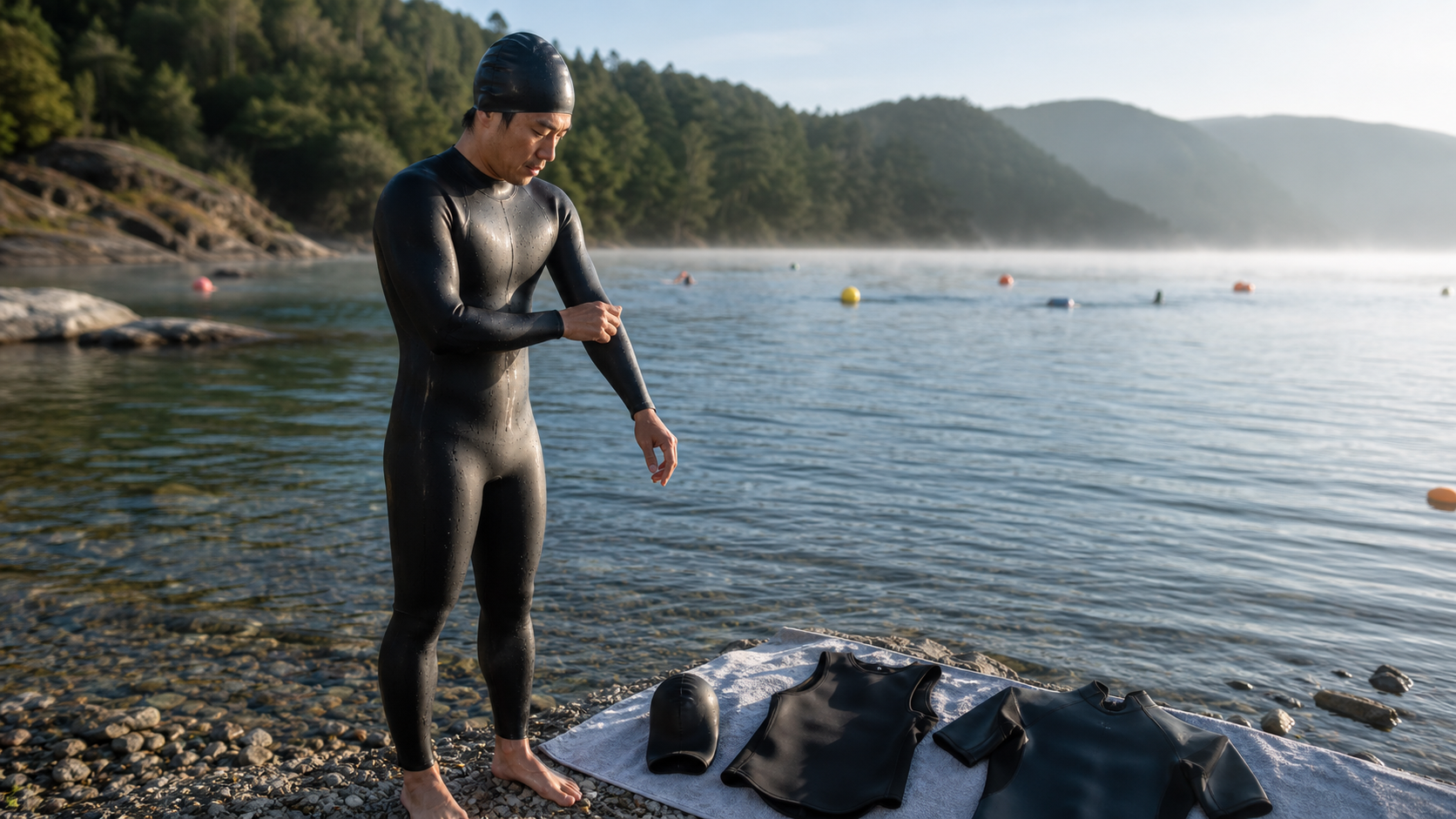
The Dual Role of a Wetsuit
Many people think a wetsuit is only for warmth, but it actually serves two major functions:
- Insulation: Reduces heat loss and prevents hypothermia
- Buoyancy: Increases body buoyancy, saving leg-kick energy (saves 5–15% effort)
That’s why even when the water isn’t cold, triathlon rules allow wetsuits (below 25°C).
Water Temperature × Thickness Reference Table
Triathlon Rules
According to ITU (International Triathlon Union) regulations:
| Water Temp | Mandatory/Allowed | Max Thickness |
|---|---|---|
| Below 16°C | Mandatory | 5mm |
| 16–22°C | Allowed | 5mm |
| 22–24.6°C | Allowed with time limit | 5mm |
| Above 24.6°C | Prohibited (Elite category) | - |
| Above 28°C | Race cancelled | - |
Recommended Thickness
| Water Temp | Recommended Thickness | Suitable Body Type |
|---|---|---|
| 14–16°C | 5mm full suit + neoprene cap | Everyone |
| 16–18°C | 4–5mm full suit | Everyone |
| 18–20°C | 3–4mm full suit | Everyone |
| 20–22°C | 2–3mm full suit or short-sleeve | Those who feel cold: full suit; those who overheat: short-sleeve |
| 22–24°C | 1.5–2mm short-sleeve | Most people |
| 24–25°C | 1.5mm vest-style or none | Those with high body fat can skip it |
The Three-Dimension Selection Method
Choosing a wetsuit isn’t just about water temperature; you also need to consider:
Dimension 1: Water Temperature
Baseline reference, but not the only factor
Dimension 2: Body Fat Percentage
- Body fat < 10% (lean athletes): Prone to feeling cold; can go 1mm thicker
- Body fat 10–15% (average athletes): Standard thickness
- Body fat > 20% (higher body fat athletes): Prone to overheating; can go 1mm thinner
Dimension 3: Swim Duration
- < 30 minutes: Can go 0.5–1mm thinner (won’t get cold)
- 30–60 minutes: Standard thickness
- > 60 minutes: Go 0.5–1mm thicker (longer time means higher hypothermia risk)
Advanced Wetsuit Knowledge
1. Thickness Design by Body Part
A good wetsuit isn’t uniform in thickness—it uses zoned design:
- Torso: 5mm (insulates the core)
- Thighs: 4mm (buoyancy + warmth)
- Calves: 3mm (warmth + doesn’t hinder kicking)
- Arms: 1.5–2mm (doesn’t hinder stroke)
- Shoulders: 1.5mm flexible material (range of motion)
2. Differences in SCS Coating
SCS (Super Composite Skin) is a surface coating that affects:
- No SCS: Entry-level, higher drag
- Half SCS: Mid-range, coating on the chest
- Full SCS: High-end, reduces drag by 10–15%
3. Buoyancy Distribution
The buoyancy distribution of a wetsuit affects your swimming posture:
- Higher lower-body buoyancy: Easier to keep legs up; suits those with sinking legs
- Higher upper-body buoyancy: Suits those whose legs float but torso sinks
- Even buoyancy: Standard option, suits most people
Common Wetsuit Problems
Problem 1: Feels too tight, difficulty breathing
Cause: Size too small or zipper pulled too tight
Solution: Loosen the chest area by 2 cm and do a deep-breathing test
Problem 2: Neck chafing and skin irritation
Cause: Rubber friction
Solution: Apply Vaseline or a dedicated anti-chafe balm on the neck
Problem 3: Body warms up and gets too hot after swimming for a while
Cause: High water temperature + wetsuit too thick
Solution: Unzip slightly to let water circulate in
Problem 4: Ankles stuck, can’t get the suit off after exiting the water
Cause: Ankle area too tight or swollen after soaking
Solution: Apply Vaseline on the ankles before the race; pull down firmly in T2
Water Temperature Changes on Race Day
Water temperature isn’t constant throughout the event:
Changes Within a Day
- Early morning: Coldest (1–2°C lower than midday)
- Midday: Warmest
- Late afternoon: Starts to cool down
Different Depths
- Surface 0–50cm: Exposed to sunlight, higher temperature
- 50–200cm: Moderate
- Below 200cm: Cold water layer, can be 3–5°C lower
Different Race Stages
- 30 minutes before the start: Waiting in cold water at the shore, body temperature already drops
- 5 minutes after the start: Muscles generate heat, feels warmer
- Mid-race: Body reaches equilibrium with water temperature
- Near the finish: May lose body heat due to fatigue
When Not to Wear a Wetsuit
Consider skipping the wetsuit in these situations:
- Water temperature above 24°C
- Expected swim time < 30 minutes
- Your body fat > 20%
- Short-distance races (under 500m)
- Pure swim events (no subsequent triathlon disciplines)
Training Methods
- Test in multiple temperatures: Test your tolerance at different water temperatures
- Long-distance testing: Swim 2km in different thicknesses during training and compare how they feel
- Race rehearsal: One month before the race, swim the full distance with the same gear
- Gear maintenance: Rinse with fresh water, dry in the shade, and lay flat after every use
Conclusion
Choosing a wetsuit is both science and experience. Beginners often rely on race recommendations, while veterans adjust based on their own body condition. Investing in a good wetsuit (NT$ 8,000–20,000) can last 3–5 years, offering excellent value. Train in it at least 10–15 times a year to get the most out of your gear on race day.
Related Reading
- Complete Wetsuit Rules Explained: Water Temperature Thresholds, Thickness Limits, and Whether You Should Wear One
- Open-Water Wetsuit Buying Guide: Thickness Selection, Buoyancy Assistance, and Full Tips on Putting On and Taking Off
- Wetsuit Buying Guide: Thickness, Buoyancy, and Flexibility for Triathlon Wetsuits
- The Complete Wetsuit Guide: Selection, Putting On and Taking Off, and Adjusting Your Swim Feel
[防寒衣體驗] 鐵人魂 三鐵 防寒衣試穿會 於松運 深水游泳池 鯨魚池
8 年前
松運深水池拍攝 作品 防寒衣品牌
8 年前
水金九不厭五分 10度寒流冷到不願停!feat. 卡卡 / 公路車 / CT Yeh
6 個月前
3D 列印車褲墊 / 舒適改善? / 無痕 x 分區壓縮 / ATK & Decider系列 / JE22黑科技 / #公路車 #CTYEH
11 個月前
CT 喇低賽) 武嶺牽車 才是王道 西進牽車四小時內秘訣 攝手位置 如何判斷 防抽筋小秘訣
7 年前
洗單車神器 吹水機! 實際洗車用用看 暴力洗鍊條大法 | 公路車 | CT Yeh
4 年前
西進武嶺 免費訓練分析服務 Intervals | 練不夠還是練過頭?你哪一種類型選手?AI模型告訴你! | 備戰神器 | 公路車 訓練 | CT Yeh
4 年前
靠單車減肥35公斤 心得分享與整理
7 年前