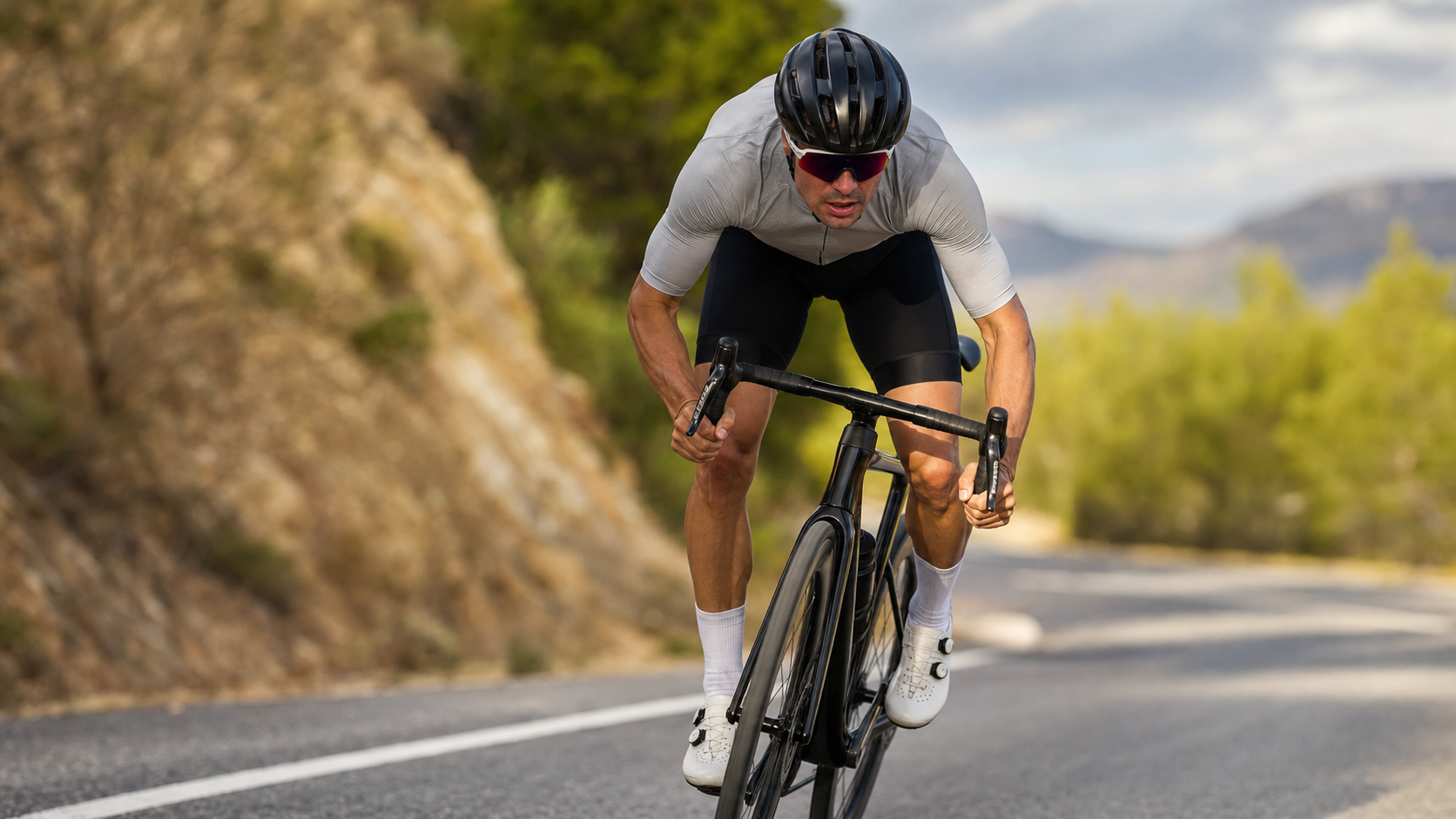
Sprint Standing Position: Analyzing the Out-of-Saddle Power Transfer
Watching the Tour de France finish-line sprints, no one wins a sprint while seated. The out-of-saddle position can produce an extra 200-400 watts, but the cost is reduced efficiency and increased cardiovascular strain. This article breaks down the biomechanics of standing sprints.
Why Does Standing Produce More Power?
Muscle groups that can be engaged while standing:
- Quadriceps: Same as when seated
- Glutes: Can fully contract when standing (compressed by the saddle when seated)
- Obliques and back muscles: Engage during torso rotation
- Arms and shoulders: “Throw” upper-body weight into the pedals when pulling on the bars
A 70 kg rider can generate an additional 300-400 W of “weight power” in a standing sprint, because the entire body weight is pressed onto the pedals with each downstroke.
Standard Standing Position Breakdown
1. Hand Position
- On the drops: Lowest aerodynamic drag, and allows for a powerful pull
- Thumbs hooked over the hoods: Prevents hands from slipping during side-to-side rocking
- Elbows slightly bent: Absorb vibration and prepare to generate force
2. Body Position
- Hips 5-10 cm off the saddle: Too high wastes energy, too low prevents glute contraction
- Slight forward lean: Shifts center of gravity over the front wheel to aid the downstroke
- Core braced: Prevents vertical bobbing (wasted vertical energy)
3. Bike Rocking
- Rock side-to-side about 15-20 degrees: As the pedal goes down, the bike tilts to the opposite side
- Hands and feet coordinated: Right foot downstroke → left hand pulls the bar, bike leans left
- Frequency synchronized with cadence: 120 rpm = 4 rocks per second
The Cost of Standing Sprints
| Metric | Seated Sprint | Standing Sprint |
|---|---|---|
| Average Power | 600 W | 900 W |
| Heart Rate | 175 bpm | 188 bpm |
| VO2 | 60 ml/kg/min | 75 ml/kg/min |
| Efficiency | 23% | 19% |
| Sustainable Duration | 60 seconds | 15-20 seconds |
Standing consumes 25% more oxygen, yet efficiency actually drops. So it should only be used in the final sprint; standing while cruising on flat roads is a waste of energy.
Training the Standing Sprint
Workout 1: Low-Speed Standing Start
- From 30 km/h, use a 53×14 gear and sprint standing for 10 seconds
- Practice explosive power from a near-standstill
- 5 reps, 5 minutes rest between reps
Workout 2: High-Speed Standing Continuation
- From 50 km/h, stand up and sprint for another 8 seconds
- Practice “re-accelerating” at high speed
- 5 reps
Workout 3: Standing on Climbs
- On a 5-8% grade, stand for 30 seconds each time
- Build full-body coordination and endurance
- 4 reps
Common Mistakes
- Hips too high: Like bouncing on a trampoline, energy goes upward instead of forward
- Elbows locked: Cannot absorb vibration, the bike rocks out of control
- Bike rocking too much: Lateral sway > 30 degrees, wasting horizontal momentum
- Cadence too low: Standing below 90 rpm increases the risk of knee injury
Conclusion
The standing sprint is a “full-body movement,” not just legs. Hands, hips, core, and glutes are all indispensable. Next time you train, record yourself on video to check your rocking angle and hip height—5 minutes of adjustment is more effective than 1 hour of mindless riding.
Related Reading
- Uphill Sprinting on the Bike: Power Differences and Training Strategies Between Seated and Standing Explosive Power
- Seated vs. Standing: How to Transition for Better Efficiency When Climbing
- Seated and Standing Transitions on Climbs: When Standing to Pedal Is Most Efficient
- Switching Between Standing and Seated Climbing: Analysis of Energy Expenditure and Muscle Recruitment
CT 喇低賽) 武嶺牽車 才是王道 西進牽車四小時內秘訣 攝手位置 如何判斷 防抽筋小秘訣
7 年前
CT 喇低賽) 單車 比賽總是沒照片? 攝影師的觀點大公開 姿勢就是力量! 請加速1.25倍收看
7 年前
一日北高/長距離團騎 常見問題補充篇 / 組團或跟團的眉角 / 壯車友容易被瘦車友慢性拉爆 / 原來屁股痛可能是這個原因...? / 風場配速法 / 公路車 / CT Yeh
2 年前
風櫃嘴 | 全台最多大砲的單車路線 | 尋寶網攝影師告訴你怎麼擺拍起來才好看 | 熱門攝影地點巡禮
6 年前
戰略) Zwift Race 如何咬在第一集團 如何評估自己要開多少推力 (請開1.5倍速看)
7 年前
福隆鐵人團練隨拍
8 年前
多機位拍片神器 DJI Action 2 拍出速度張力感 | 類空拍機視角 4陣列麥克風超強降風噪 實測! | 公路車 | CT Yeh
3 年前
如果Pogačar騎西進武嶺可以多快?會破2嗎?各種情況深度推估探討 / 公路車 / CT Yeh
2 年前