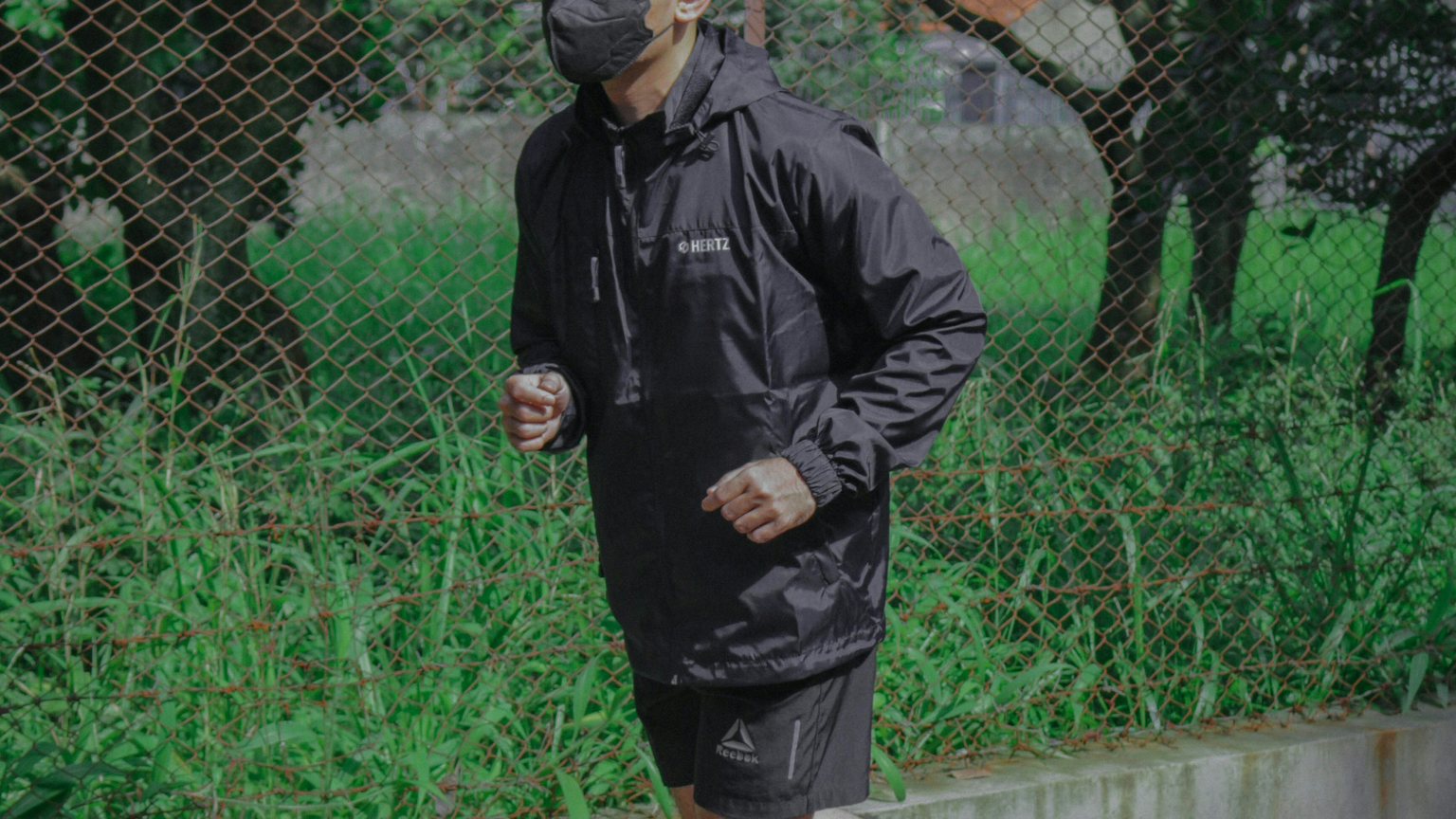
Pollution Exposure While Running
Your minute ventilation while running is 8-15 times higher than at rest, which means the amount of pollutant you inhale per unit of time is also 8-15 times higher.
Comparison:
| Activity | Minute Ventilation | 1-Hour PM2.5 Exposure (at PM2.5=50) |
|---|---|---|
| Resting | 6 L | 18 μg |
| Walking | 20 L | 60 μg |
| Easy jog | 50 L | 150 μg |
| Moderate-intensity run | 80 L | 240 μg |
| Race intensity | 120 L | 360 μg |
Bottom line: One hour of running produces roughly the same PM2.5 exposure as eight hours at rest.
Reading Air Quality Indicators
AQI (Air Quality Index)
| AQI | Category | Color | PM2.5 (μg/m³) | Outdoor Exercise Guidance |
|---|---|---|---|---|
| 0-50 | Good | Green | 0-15.4 | Train freely |
| 51-100 | Moderate | Yellow | 15.5-35.4 | Normal training is fine |
| 101-150 | Unhealthy for Sensitive Groups | Orange | 35.5-54.4 | Sensitive groups should scale back |
| 151-200 | Unhealthy | Red | 54.5-150.4 | Everyone should scale back |
| 201-300 | Very Unhealthy | Purple | 150.5-250.4 | Cancel outdoor activity |
| 301+ | Hazardous | Maroon | 250.5+ | Outdoor activity fully prohibited |
PM2.5 vs. AQI: Which One Matters More
A common scenario in Taiwan: PM2.5 is moderate but ozone and PM10 are high, pushing the overall AQI into the red.
For runners, PM2.5 is the number that matters most, because:
- Particles under 2.5 μm can penetrate deep into the alveoli
- They enter the bloodstream and affect cardiovascular health
- Deeper breathing during running amplifies the damage
Training Decisions by PM2.5 Level
0-15 μg/m³ (Green)
- Full-intensity training is fine
- General population: train freely
- Sensitive groups: train freely
16-35 μg/m³ (Yellow)
- General population: train freely
- Sensitive groups: reduce volume by 20%
- Intensity guidance: threshold (T) and interval (I) sessions are fine
36-54 μg/m³ (Orange)
- General population: reduce volume by 20%, avoid high intensity
- Sensitive groups: move indoors or rest
- Intensity guidance: stick mainly to easy (E) and marathon (M) pace
55-150 μg/m³ (Red)
- General population: reduce volume by 50% or move indoors
- Sensitive groups: stay indoors, no exceptions
- Intensity guidance: easy (E) pace only, under 60 minutes
151+ μg/m³ (Purple and above)
- Everyone: cancel outdoor exercise
- Indoors: treadmill + air purifier (HEPA H13 or higher)
High-Risk Groups
The following groups are more sensitive to air pollution:
- Asthma, chronic bronchitis
- History of cardiovascular disease
- Diabetes
- Pregnant women
- Adults over 65
- Children under 12
- New runners (less than 3 months of experience)
For sensitive groups, the “red alert” threshold comes one level earlier than for the general population — indoor training is advised once PM2.5 exceeds 35.
Choosing Your Time and Location
PM2.5 Daily Pattern
A typical daily PM2.5 pattern in Taiwan:
- 06:00-08:00: Elevated (stable morning atmosphere + commuter emissions)
- 08:00-10:00: Rising (traffic rush hour)
- 10:00-14:00: Lower (sunlight disperses pollutants)
- 14:00-17:00: Lowest (active afternoon convection)
- 17:00-19:00: Rising (evening commute + restaurant kitchen emissions)
- 19:00-22:00: Elevated
- 22:00-06:00: High plateau (nighttime temperature inversion)
Bottom line: PM2.5 is usually lowest in the afternoon, between 14:00 and 17:00.
Choosing a Running Location
Priority order on days with heavy pollution:
- Indoor treadmill + HEPA air purifier ★★★★★
- Indoor gym (most have air-conditioning filtration) ★★★★
- Mountain areas (above 500m elevation, better pollutant dispersion) ★★★★
- Center of a large park (away from roads) ★★★
- Riverside path (windier, better dispersion) ★★★
- School track ★★
- Urban sidewalk ★ (worst option)
Distance From Traffic
Compared to background levels, by distance from a major road:
- Right at the roadside: PM2.5 is 2-3 times higher than in suburban areas
- 50m away: 1.5 times higher
- 200m away: 1.2 times higher
- 500m away: roughly matches background levels
Protective Masks
Effectiveness by Mask Type
| Mask Type | PM2.5 Filtration Efficiency | Breathability | Suitable for Running |
|---|---|---|---|
| Standard medical mask | 30-50% | Medium | OK for easy jogging |
| Standard N95 | 95%+ | Low | Not suitable for running (oxygen restriction) |
| Sport-specific N95 | 90%+ | Higher | Easy (E) pace or below |
| Activated carbon mask | 50-70% | Medium-high | Easy (E) and marathon (M) pace |
| Anti-smog sport mask | 70-90% | Medium | OK for moderate intensity |
The Cost of Running in a Mask
- Heart rate rises 5-12 bpm at the same intensity
- VO2max drops 8-15%
- Perceived exertion (RPE) rises by about 2 points
- High-intensity training becomes essentially impossible
Bottom line: A mask protects your heart and lungs, but it comes at the cost of training quality. At the orange level, wearing a mask and continuing to train is reasonable; at the red level, move indoors.
Indoor Treadmill Training
The best substitute on polluted days:
Treadmill-to-Outdoor Pace Conversion
Differences between outdoor pace and treadmill pace:
- Treadmill at 0% incline = roughly 10 seconds/km faster than the equivalent outdoor pace (no wind resistance)
- Treadmill at 1% incline = roughly matches outdoor pace
- Treadmill at 2% incline = roughly 10 seconds/km slower than outdoor pace (comparable to a slight uphill)
Recommendation: Set the treadmill to a 1% incline to match your outdoor pace.
Advantages of Treadmill Training
- Precise pace control
- Unaffected by weather
- Well-suited to interval training (programmable)
- Allows structured incline work
Disadvantages of Treadmill Training
- No wind resistance; running form is slightly different
- Can feel mentally monotonous
- No terrain variation
- Long runs (over 90 minutes) can get tedious
Indoor Training Equipment
Recommendations for training at home on polluted days:
- Air purifier: HEPA H13 or higher, CADR above 350 m³/h
- Humidity control: 50-60% is ideal (too dry irritates the airways)
- Cooling: place a fan next to the treadmill (to simulate outdoor wind resistance and aid cooling)
- iPad/screen: watching videos while running helps cut the monotony
A Sample Week of Training Around Pollution
Assuming 3 out of 5 weekdays exceed pollution thresholds:
- Monday (Red): 60-minute easy (E) run on the treadmill
- Tuesday (Green): 30-minute outdoor threshold (T) pace session
- Wednesday (Orange): 60-minute outdoor easy (E) run (afternoon)
- Thursday (Red): rest or gym strength training
- Friday (Yellow): 60-minute outdoor marathon (M) pace run
- Saturday (Green): 90-minute outdoor long run
- Sunday: recovery / rest
Key point: Training on red-level days doesn’t disappear — it just changes venue.
Long-Term Strategy: Monitoring + Planning
Daily Routine Checks
- Check the day’s AQI forecast right after waking up
- Set up push notifications from the environmental agency’s app (trigger at PM2.5 > 35)
- On red-level days, decide to move training indoors one day ahead
Planning Your Race Season
Winter and spring (November to March) is Taiwan’s peak air-pollution season:
- Schedule key workouts on green/yellow days whenever possible
- Reserve red-level days for rest or cross-training (strength work, yoga)
- Have your treadmill setup ready in advance
Conclusion: Running Is for Health, Not Harm
The core question behind running in polluted air is this: is the short-term training benefit worth the long-term damage to your heart and lungs?
The answer is: run freely on green and yellow days, run smart on orange and red days, and don’t run at all on purple days.
Sacrificing a 5km session to protect your heart and lungs is a good trade — it buys you the ability to keep running next year, too.
Related Reading
- Air Pollution and Exercise: How PM2.5 and Ozone Undermine Your Training
- Cycling Strategy Under Air Pollution: How PM2.5 Affects Performance and How to Protect Yourself
- Exercise and Air Quality: Should You Train on Polluted Days? A Coach’s Guide to Reading AQI, Assessing Risk, and Protecting Yourself
- Air Quality Index and Outdoor Exercise: The AQI Decision Guide Every Cyclist Should Read
#公路車 #Vo2Max #最大攝氧量 測驗 體驗 | 心肺測試
6 年前
一日北高前的高裝檢 | 北高 360 | 挑戰11小時的裝備 | 一日雙塔 | 補給
6 年前
半日 小台灣 極限單車路線挑戰實錄
7 年前
西進武嶺 免費訓練分析服務 Intervals | 練不夠還是練過頭?你哪一種類型選手?AI模型告訴你! | 備戰神器 | 公路車 訓練 | CT Yeh
4 年前
Live) 備戰2019彰化經典百K 賽前攻略 (已完賽請看新影片
7 年前
一日北高 11小時 賽後心得分享篇 | TWB北高360 | 一日雙城 | 單車 | 公路車
6 年前
實景訓練台) 彰化經典百K 高強度喵團 90分鐘 跟著一起練功 2019 Indoor workout Changhua Classic 100 Taiwan
7 年前
TBA 北高360 逆風爆熱再送空汙 苦行挑戰賽全記錄 4K沈浸式臨空畫質| 公路車 | CT Yeh
3 年前